
REVIEW · JEITA GROTTO, HARISSA & BYBLOS DAY TRIPS
Beirut to Jeita Grotto and Byblos: Daily Tours with Lunch
Two Lebanon icons, one efficient day. This small-group tour strings together Jeita Grotto and the ancient Phoenician city of Byblos with round-trip transfers, a local guide, and lunch, all in about 6 hours. I especially like the small group size (max 15), because you get real back-and-forth with your guide instead of just drifting along. I also like that lunch is included, so you are not forced to scramble mid-route. One possible drawback: Jeita Grotto admission is listed as not included, so you should confirm what you still need to pay before you go.
You start in Beirut at 8:30 am, ride in an air-conditioned vehicle, then spend your first stop in one of the Middle East’s most dramatic cave systems. After that, the day shifts gears to Byblos, where you can walk the Old Souk, climb into Byblos Castle, and stroll down to Byblos Port. It is a classic “big sights, calm pace” plan, as long as you are okay with a full morning that does not leave much downtime.
In This Review
- Key highlights worth getting excited about
- How this Jeita Grotto and Byblos day fits together
- Jeita Grotto galleries: limestone formations and the long underwater river
- Byblos castle and the archaeological site: where the ruins make sense
- Old Souk and Byblos Port: easy strolling with real atmosphere
- Price and value: what $65 buys you on a full half-day
- Timing, transport, and how to make the day feel easy
- Should you book this tour for your Beirut visit?
- FAQ
- How long is the tour from Beirut to Jeita Grotto and Byblos?
- What time does the tour start?
- Is hotel pickup and drop-off included?
- What is included with the price?
- Is lunch included in the tour?
- How big is the group?
- Are admission tickets included for every stop?
- How much time do you spend at Jeita Grotto?
- Do I need a mobile ticket?
- Can I cancel for a full refund?
Key highlights worth getting excited about
- Small group, personal attention: Max 15 travelers, with a tour leader plus a local guide in Byblos.
- Jeita Grotto’s two-level cave system: Upper and lower galleries connected through the same cave complex.
- Byblos Castle viewpoint: A restored 12th-century Crusader castle with a strong view over the archaeological ruins.
- Most Byblos entries are free: Old Souk, Byblos Port, and Byblos sites are listed as free, with castle entry included.
- Lunch without extra cost: You get a planned lunch stop so the day stays smooth.
Other ways to fit Jeita, Harissa and Byblos into one day
- Guided Small-Group Tour to Jeita, Harissa, Byblos with Lunch★ 5.0 · 361 reviews
- Jeita Grotto,Harissa&Byblos Full-Day PRIVATE-CAR Trip from Beirut★ 5.0 · 222 reviews
- Jeita Grotto – Harissa – Byblos Trip★ 5.0 · 169 reviews
- Byblos, Jeita Grotto & Harissa Day Trip -With Lunch (4G on Board)★ 4.5 · 145 reviews
How this Jeita Grotto and Byblos day fits together
This is the kind of tour that works well when you want “top highlights” but do not want to drive, plan, and self-navigate across two very different settings. You get round-trip pickup and drop-off from your Beirut hotel or residence, then you are guided through Jeita Grotto and Byblos in a logical order.
The pacing is also realistic. Jeita Grotto gets about 1 hour 30 minutes, then the Byblos portion adds up to roughly 3.5 hours with castle time, then walking through the Old Souk and around Byblos Port. If you like structure, this route will feel easy.
Jeita Grotto galleries: limestone formations and the long underwater river
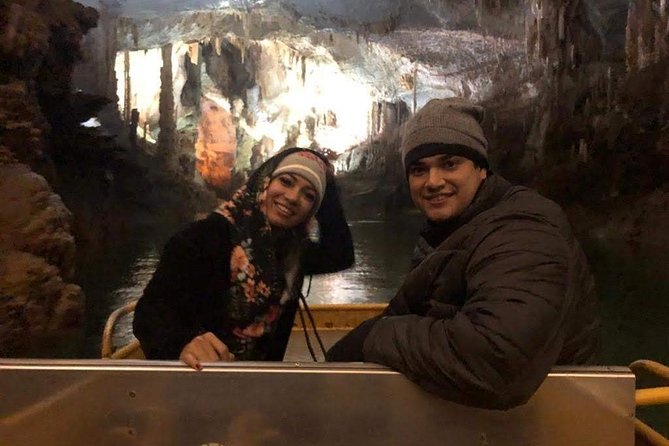
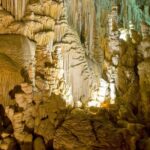
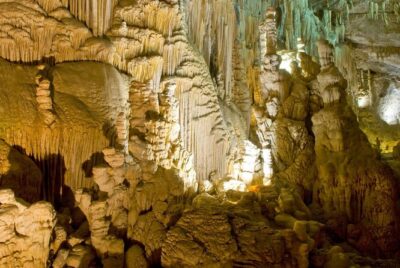
Jeita Grotto is a karstic limestone cave system made over millions of years, and it is famous for having two separate cave galleries that are interconnected within the larger system. One sits higher, one lower, with a height difference of 305 metres. You also get a sense of scale quickly, since the complex is described as the longest cave system in the Middle East.
In the upper cave, the overall length is listed at about 2,130 metres. This gallery is known for the kinds of crystallized formations you usually picture with caves, like stalactites, stalagmites, columns, and also more unusual shapes such as mushroom formations and curtain or drapery-like mineral layers. Time here matters, because you want enough minutes to look closely instead of only snapping photos.
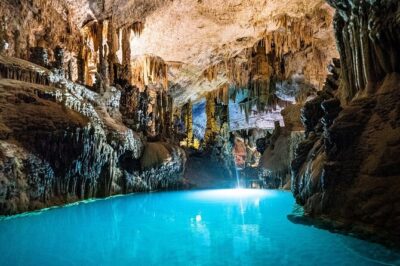
Then you shift to the lower gallery. This one is far longer, about 6,200 metres, and it is positioned 60 metres below the upper gallery. The lower gallery is described as being traversed by a smooth underwater river, plus there is a lake along the route. Even without getting technical, that detail changes the feel of the visit, because the cave becomes more like a slow, watery corridor than a dry rock hall.
One important practical note: the Jeita Grotto admission ticket is listed as not included in the tour. Meanwhile, other sites in Byblos are listed as free or included. So before your day starts, double-check what the tour price covers for Jeita admission so you do not get surprised at the gate.
Byblos castle and the archaeological site: where the ruins make sense
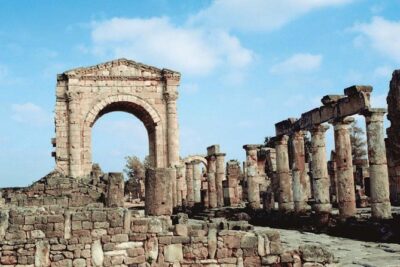
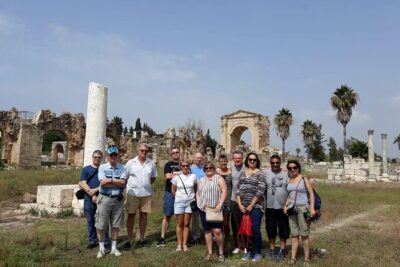
Byblos is one of the oldest Phoenician cities, with settlement reaching back to Neolithic times. It is also closely tied to Mediterranean legends and to the diffusion of the Phoenician alphabet, which is the kind of connection that makes an old city feel more than just scenic.
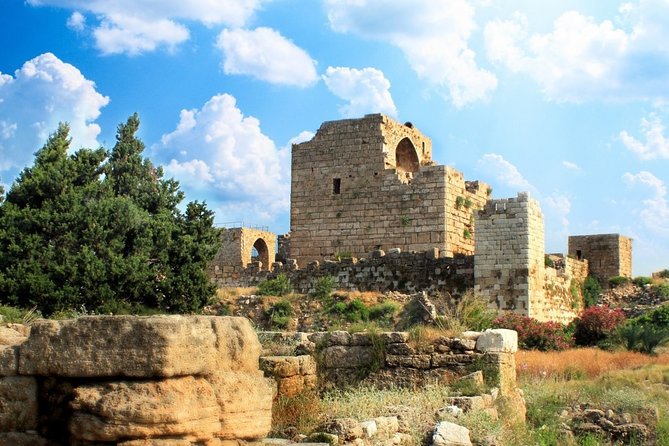
At this stop, you get Byblos Castle, a restored 12th-century Crusader castle. It is set just inside an archaeological site, and the setting is part of the point: you are not only looking at a standalone building. The castle sits near ruins tied to older temples, including the Temple of Baalat Gebal and the Temple of the Obelisks.
The castle has an extra defensive detail that you can actually picture: a 10-metre-wide dry moat. Once inside, the best payoff is the view. There is a foursquare keep, and from the top you get an excellent perspective over the ruins below, plus a visual sweep toward the sea. If you like understanding how cities were laid out, that viewpoint helps you connect the dots between the buildings you see and the coastline beyond.
Inside, there is a small museum and a set of information panels that outline the city’s history. This matters because Byblos spans so many time periods. A guided context here can turn a “cool place to walk” into a “now I get what I am looking at” moment.
Trips where the mezze stop is part of the deal
Old Souk and Byblos Port: easy strolling with real atmosphere
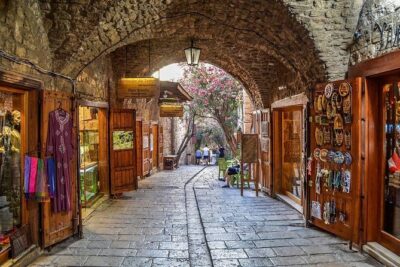
After the castle, the day shifts from heights and viewpoints to street-level wandering. The Old Souk in Byblos is an old market where you can shop for souvenirs and antiques, but it is also simply a good stretch of cobblestone walking. If you enjoy architecture, this is the kind of place where you can slow down and notice details without needing a long explanation.
The Old Souk stop is about 30 minutes, which is short enough that you probably will not do major shopping unless you spot something you genuinely want. Think of it as your chance to pick up small, portable items or just get your bearings after the castle.
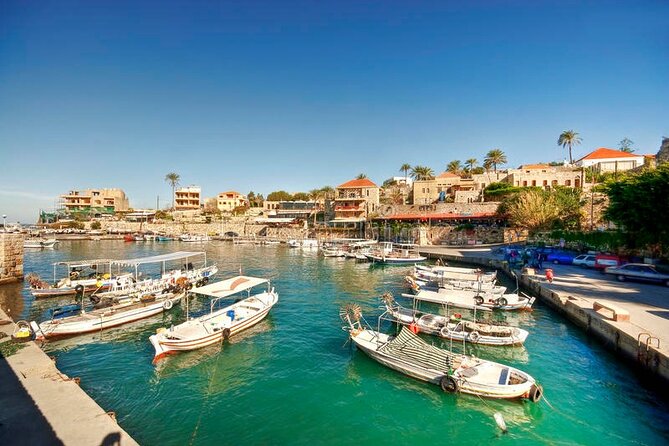
Then you head to Byblos Port. The port is ancient, and local belief credits it as the oldest port in the world. The timing clue is huge for imagining what you are looking at: around 3000 BC, Byblos Port is described as the most important timber shipping center in the eastern Mediterranean. Even if you do not try to picture every ship, that one fact makes the waterfront feel historically weighted.
This stop is short too, around 15 minutes. It works best if you treat it like a quick see, feel, and photograph stop rather than a full sit-down experience.
Price and value: what $65 buys you on a full half-day
At $65 per person for an approximately 6-hour tour, you are paying for more than sightseeing tickets. You are paying for round-trip hotel transfers from Beirut, an air-conditioned vehicle, and a guided program that keeps the timing tight.
Here is where the value gets clearer: lunch is included with no extra cost. That is not a small perk in practice. It reduces your mental load and helps you avoid turning the day into a patchwork of short taxi rides and last-minute meal searches.
On the entrance side, the mix is a little nuanced. The castle entry is listed as included, while Byblos and the Old Souk and Byblos Port are listed as free. Jeita Grotto admission is listed as not included. So the real question for value is simple: are you comfortable adding the Jeita ticket on your end, or do you want to confirm total costs before you commit?
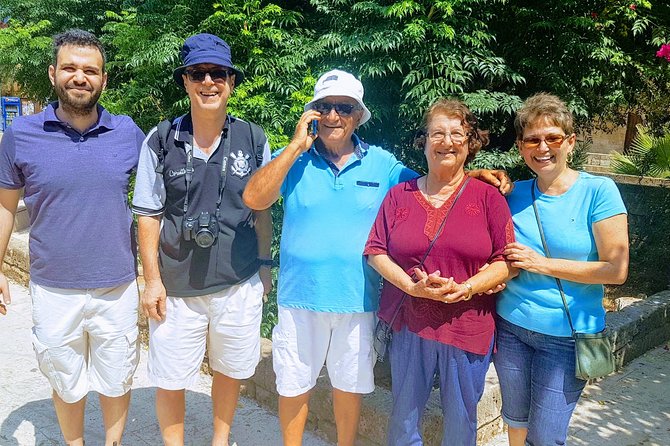
The small-group size (max 15) is also part of the value story. For a day that includes a cave system plus an ancient city walk, having a guide who can slow down for questions is worth a lot, especially if Arabic, French, or English explanations are your preference. In the most positive comments tied to this operator, a guide named Albert stands out for being kind and funny, with explanations that are clear. That kind of delivery matters as much as the sites themselves.
Timing, transport, and how to make the day feel easy

You start at 8:30 am, which is early enough to feel like a real outing but not so early that it ruins your whole day. You should plan your morning so you can stay focused after pickup, because once you are in transit the day starts moving.
The tour uses an air-conditioned vehicle, which is a practical comfort upgrade when Beirut traffic and coastal heat are factors. It also helps that pickup and drop-off are included from your hotel or residence. That removes the most annoying part of doing Byblos and Jeita on your own, which is arranging transport twice.
Group size also affects how smoothly the day runs. With a maximum of 15 travelers, the stops feel organized instead of rushed crowd-control. You are still on a schedule, though. Jeita is about 1 hour 30 minutes, and Byblos Castle is about 1 hour, with only 30 minutes for the Old Souk and 15 minutes for the port. If you like lingering, you will feel a gentle push to move along at each site.
So my advice is simple: decide what you care about most. If it is cave formations, you will spend your time watching details in the galleries. If it is archaeology and old cities, you will prioritize the castle viewpoints and the information panels. Trying to do everything deeply at every stop can make the day feel like a checklist.
Should you book this tour for your Beirut visit?
Book it if you want a structured day that hits two major highlights without the hassle of planning transport. This one is especially good if you like having a guide connect the dots in Byblos, because the castle viewpoint and the history panels can make the archaeological area much more meaningful.
Skip or reconsider if you are sensitive to ticket add-ons or strict schedules. Since Jeita Grotto admission is listed as not included, you should confirm what you will pay in total. Also, the time at each Byblos area is short, so if you want long, slow hangs at markets or waterfront, you might prefer a different plan with more free time.
If you fit the sweet spot of this tour, you will likely enjoy the balance. You get dramatic cave time up front, then the day becomes a walk through ancient city layers, including castle views, Old Souk wandering, and a quick look at an ancient port. In other words, it is a tight itinerary that still leaves room to actually see things, not just pass by them.
FAQ
How long is the tour from Beirut to Jeita Grotto and Byblos?
The tour lasts about 6 hours.
What time does the tour start?
The start time is 8:30 am.
Is hotel pickup and drop-off included?
Yes. Hotel pick up and drop off are included.
What is included with the price?
The price includes hotel transfers, an air-conditioned vehicle, a local guide at Byblos, lunch, and a tour leader.
Is lunch included in the tour?
Yes, lunch is served with no extra cost.
How big is the group?
The maximum group size is 15 travelers.
Are admission tickets included for every stop?
Byblos and the Old Souk and Byblos Port are listed as free, and Byblos Castle admission is listed as included. Jeita Grotto admission is listed as not included, so you may need to pay for that separately.
How much time do you spend at Jeita Grotto?
Jeita Grotto stop time is listed as 1 hour 30 minutes.
Do I need a mobile ticket?
Yes, mobile ticket is included.
Can I cancel for a full refund?
Yes. Free cancellation is available, and you can cancel up to 24 hours in advance for a full refund. If you cancel less than 24 hours before the start time, you will not receive a refund.
More of Lebanon, Reviewed
- Guided Small-Group Tour to Baalbek, Anjar and Ksara with Lunch
★ 5.0 · 511 reviews - Guided Small-Group Tour to Jeita, Harissa, Byblos with Lunch
★ 5.0 · 361 reviews - City Sightseeing Beirut Hop-On Hop-Off Bus Tour
★ 4.5 · 87 reviews - Private Anjar and Baalbek Tour from Beirut with Departure Ticket
★ 5.0 · 79 reviews - Guided Private Full Day Tour to Baalbek, Anjar and Chateau Ksara
★ 5.0 · 60 reviews
Elsewhere in Lebanon
- Guided Small-Group Tour to Baalbek, Anjar and Ksara with Lunch
★ 5.0 · 511 reviews - Guided Small-Group Tour to Jeita, Harissa, Byblos with Lunch
★ 5.0 · 361 reviews - Paragliding Trip Over Lebanon – Jounieh Bay
★ 5.0 · 257 reviews - Jeita Grotto,Harissa&Byblos Full-Day PRIVATE-CAR Trip from Beirut
★ 5.0 · 222 reviews - First Paragliding Club in Lebanon – Since 1992
★ 5.0 · 193 reviews
Jeita, Harissa and Byblos: Three More Ways
- Guided Small-Group Tour to Jeita, Harissa, Byblos with Lunch
★ 5.0 · 361 reviews - Jeita Grotto,Harissa&Byblos Full-Day PRIVATE-CAR Trip from Beirut
★ 5.0 · 222 reviews - Jeita Grotto – Harissa – Byblos Trip
★ 5.0 · 169 reviews - Byblos, Jeita Grotto & Harissa Day Trip -With Lunch (4G on Board)
★ 4.5 · 145 reviews - Semi-Private Tour to Jeita Grotto, Harissa & Byblos with Lunch
★ 5.0 · 52 reviews
Other Lebanon trips we have written up



Jeita Grotto, Harissa & Byblos Day Trips, compared.
 ★ 5.0Guided Small-Group Tour to Jeita, Harissa, Byblos with LunchFrom $60361 reviews
 ★ 5.0Jeita Grotto,Harissa&Byblos Full-Day PRIVATE-CAR Trip from BeirutFrom $75222 reviews
 ★ 5.0Jeita Grotto – Harissa – Byblos TripFrom $37169 reviews
 ★ 4.5Byblos, Jeita Grotto & Harissa Day Trip -With Lunch (4G on Board)From $98145 reviews
 ★ 5.0Semi-Private Tour to Jeita Grotto, Harissa & Byblos with LunchFrom $5552 reviews
 ★ 5.0Small Group Tour to Jeita Grotto, Harisa & Byblos with Hotel pickupFrom $1049 reviews
 ★ 5.0Private Guided Tour to Jeita Grotto through Harissa and ByblosFrom $7548 reviews
 ★ 5.0New Guided Semi-Private Tour to Jeita Grotto, Harissa & ByblosFrom $5547 reviews
Every list this tour turns up in