
REVIEW · SIDON, TYRE & MAGHDOUCHE DAY TRIPS
Guided Small-Group Tour to Sidon, Tyre & Maghdouche with Lunch
A single day in southern Lebanon feels like a time machine. This small-group tour strings together Sidon, Tyre, and the Marian shrine in Maghdouché, with a guide, lunch, bottled water, and hotel transfers doing the heavy lifting. I especially like the mix of well-known ruins and everyday places like Sidon’s souks, plus the fact that you do not have to coordinate taxis. One drawback to plan for: a few key sights have entrance fees that are not included in the price.
You start early, ride in comfort, and spend your time where it matters, with enough stops to feel complete but not enough to wander off on your own. The route focuses on Phoenician, Roman, Crusader, and Ottoman layers, ending with the big UNESCO site of Tyre. If you are the type who wants maximum free time at every stop, this may feel a bit structured, but the pace is built for first-timers.
In This Review
- Key points worth knowing before you go
- Southern Lebanon in One Day: What This 9-Hour Route Really Means
- Beirut Pickup and the Comfort Factor That Saves Your Energy
- Sidon: Purple Dye Fame, Old Castles, and Real Street Buzz
- Crusaders Sea Castle: What Remains of a Fortress Story
- Khan al-Franj: A Courtyard That Explains Trade and Diplomacy
- Soap Museum in Saida: Craft History You Can Actually See
- Basilica of Our Lady of Mantara in Maghdouché: Faith, Cave, and Quiet Space
- Tyre on the Coast: Phoenician Port Energy and a UNESCO Site
- Al-Bass Archaeological Site: The Roman Hippodrome You Came For
- Lunch and Timing: Stay Fed, Stay Moving, Use the Shade
- Value and Price: Is $65 a Good Deal?
- Who Should Book This Tour, and Who Should Skip It
- Should You Book This Sidon, Tyre, and Maghdouché Day Trip?
- FAQ
- What is the duration of the tour?
- What time does the tour start?
- Is hotel pickup and drop-off included?
- What is included for food and drinks?
- Is the tour wheelchair-accessible or suitable for everyone?
- Are entrance tickets included for all stops?
- How big is the group?
- Is free cancellation available?
Key points worth knowing before you go
- Hotel pickup and drop-off remove the hassle of getting to and from southern Lebanon
- Small group size (up to 20) keeps the day from turning into a moving crowd
- Lunch plus bottled water means you are not hunting for food between ruins
- Tyre’s Al-Bass Roman hippodrome is the big payoff for archaeology fans
- Some entrances are extra, especially at a few Sidon and Tyre sites
- Sidon souks and old-world crafts add texture beyond the main monuments
Heading south? Compare these Sidon and Tyre days
- Small-Group Adventure Tour to Sidon Tyre & Maghdouche-Day Trip★ 5.0 · 45 reviews
- Sidon, Tyre & Maghdouche Day Trip – With Lunch (4G on Board)★ 4.5 · 44 reviews
- Sidon – Tyre – Maghdouche Trip, From Beirut★ 5.0 · 25 reviews
- Small Group Tour to Sidon, Tyre & Maghdouche with lunch★ 5.0 · 11 reviews
Southern Lebanon in One Day: What This 9-Hour Route Really Means
This is a classic “see the highlights without driving” day. The total time is about 9 hours, starting at 8:30 am from Beirut, so you get a full sweep of three destinations without losing the day to traffic. For most people, that is the sweet spot.
The best part is how the tour is organized around themes, not checklists. You are moving from Phoenician ports (Sidon and Tyre) into Roman showpieces (Tyre’s hippodrome) and then into a spiritual stop at Maghdouché. That structure makes it easier to connect the dots while you walk.
You should also know the practical side. This route includes lunch and bottled water, and you travel in an air-conditioned vehicle. That matters, because you will spend real time outdoors in coastal towns.
Beirut Pickup and the Comfort Factor That Saves Your Energy
Hotel pickup and drop-off is included, which is a big deal in Lebanon. It means your morning starts with people and schedules you can rely on, not a quick prayer and a phone call.
Transportation is handled by a small group experience with comfortable transport and a tour leader. The vehicle is air-conditioned, which helps a lot on a hot coastal day. With a maximum of 20 travelers, you still have a chance to ask questions and hear the guide without shouting.
If you are sensitive to early starts, plan your night before carefully. The day begins at 8:30 am, so you will want an unhurried breakfast and maybe a little extra water before pickup.
Sidon: Purple Dye Fame, Old Castles, and Real Street Buzz
Sidon is one of those places that makes history feel physical. The city goes back to Phoenician times, prospered early, and became known for purple dyes and glassware. It is also the kind of town where you can stand near ancient foundations and still watch daily life happen nearby.
Stop 1 gives you an overview time to orient yourself: about 1 hour. The theme here is layered succession. Sidon has been ruled and rebuilt through Crusader times and beyond, so your guide can point out why the city looks the way it does today.
Then the tour shifts from monuments to atmosphere with Sidon Souks, where you will spend about 15 minutes. This is not just a pretty alley moment. It is the working heart of retail and craft, with narrow lanes and small kiosks. If you like street-level travel, you get a fast dose without losing too much time.
Tip for getting value from Sidon: wear shoes that handle uneven pavement and pack sun protection. Coastal towns can go from pleasant to aggressively bright quickly, and you will be walking.
Guided departures across Lebanon we have looked at

Crusaders Sea Castle: What Remains of a Fortress Story
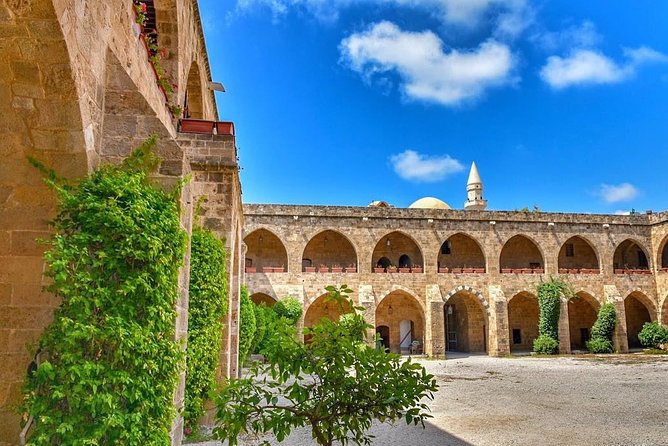
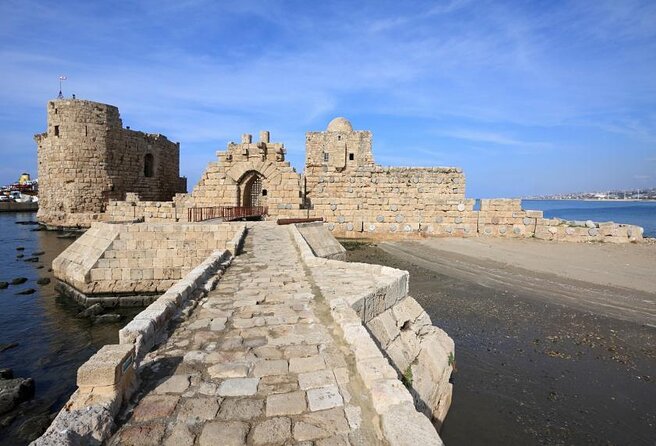
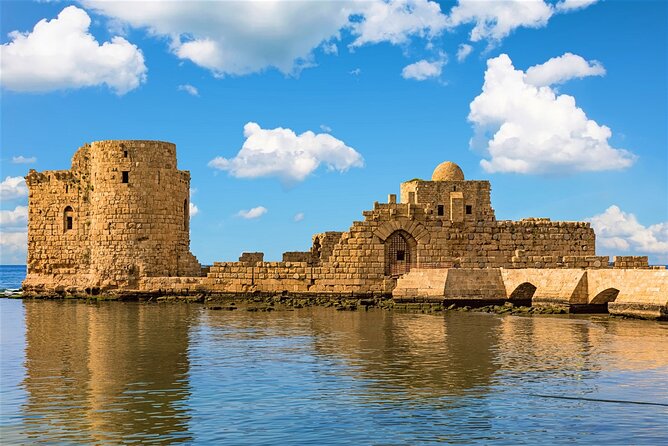
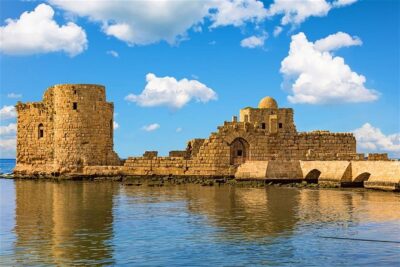
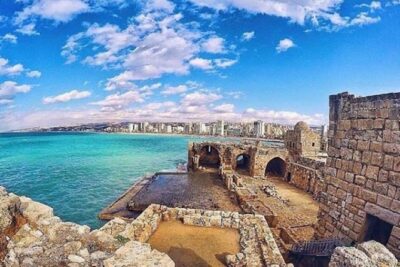
Sidon’s Sea Castle is a highlight with a specific visual hook. Built by Crusaders in the 13th century, it sat on a small island and was connected to the mainland by a causeway, acting as a fortress of the Holy Land. Later, it was largely destroyed by the Mamluks in 1291, and then restored in the early 17th century by Fakhr el-Dine Maan II.
You will have about 30 minutes here. The reality check is that it is not a fully intact showpiece. What you can see is still meaningful, but you are looking at the shapes of what once was, plus big-picture context.
Also, plan for this: the Sea Castle stop lists an entrance ticket that is not included. If you want to budget tightly, this is one of the places to remember.
Khan al-Franj: A Courtyard That Explains Trade and Diplomacy
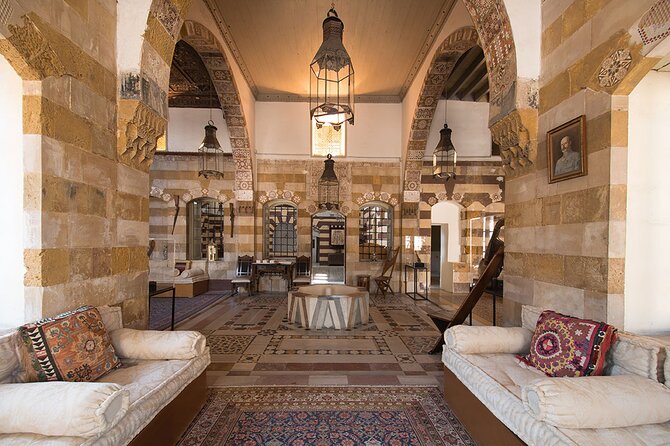
Next up is Khan al-Franj, about 15 minutes. This is the kind of stop that helps history click in your head. It was built in the beginning of the 17th century by Emir Fakhreddine II as a hotel for ambassadors and a center for commercial exchange between Lebanon and France.
What I like about this stop is the way it is set up like a working pause. You get a large rectangular courtyard, a central fountain, and covered galleries around it. It feels made for travelers waiting on arrivals and negotiations.
Even if you are not a museum person, you will still get value here, because the architecture does the storytelling. It is also a good reset point before the day’s next transitions.
Soap Museum in Saida: Craft History You Can Actually See
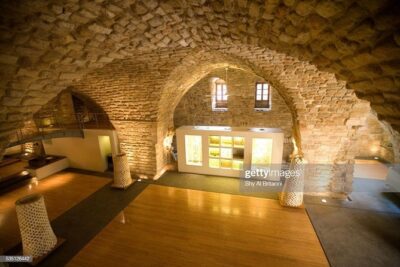
The Soap Museum in Sidon (Saida) is about 30 minutes, and it focuses on Levantine soap making. The workshop was originally built by the Hammoud family in the 17th century. The museum tracks how soap making developed in the region and how traditional olive oil soaps are made.
This stop is a nice change of pace from stone ruins. You get a practical, sensory look at everyday technology. You might also catch a demonstration of how the soaps are made and learn how soap links into bath traditions, the hammam culture.
It is not all “just a shop.” There is a historical section with artifacts found during onsite excavation, including remains of clay pipe heads from the 17th to 19th centuries and pottery fragments. The building itself is an old soap factory from the 17th century, with parts thought to date back to the 13th.
One key detail for your budget: the museum entrance is not included in the tour price.
If you hate being pushed into buying things, this is where you can breathe. This experience includes a craft stop, but it is not built like a sales trap. The focus is on learning and viewing the process.
Basilica of Our Lady of Mantara in Maghdouché: Faith, Cave, and Quiet Space
Then you head to Maghdouché for the Marian shrine, about 15 minutes. This is Our Lady of Awaiting, also known as Our Lady of Mantara. The shrine is Melkite Greek Catholic, and it is often associated with a sacred wait.
The story starts with a discovery on 8 September 1721 by a young shepherd. The shrine includes a tower crowned with the statue of the Virgin and Child, a cathedral, a cemetery, and a sacred cave believed to be where the Virgin Mary rested while she waited for Jesus.
What makes this stop work, even if you are not religious, is the atmosphere. Shrines like this are built to slow you down. You get a spiritual break between the archaeology and the UNESCO site.
Dress tip: keep shoulders and knees covered if you can. Even when rules are not strictly enforced, it is the respectful choice for a religious space.
Tyre on the Coast: Phoenician Port Energy and a UNESCO Site
After Maghdouché, you move to Tyre, with about 2 hours on the ground. Tyre is an ancient Phoenician port city, tied to the legend of Elissar, who founded Carthage. It was famous worldwide for purple dye made from murex sea snails, and it still feels coastal in a way that makes the archaeology feel less abstract.
The town’s roots are ancient, around 2750 BC, and it was ruled by Egyptians before King Hiram brought prosperity. Then came waves of rule, including Assyrians, Neo-Babylonians, Greeks, Seleucids, Romans, Byzantines, Arabs, Crusaders, Mamluks, and Ottomans. That long sequence is why Tyre is a UNESCO standout: the layers stack up over time.
You will also appreciate the setting. Tyre has a seaside location and is known as a popular holiday destination with beaches. That means the area around the ruins is not dead and empty. It is real town life plus big monuments nearby.
The tour itself frames Tyre around its main archaeological zones, especially the Al-Bass area you visit next.
Al-Bass Archaeological Site: The Roman Hippodrome You Came For
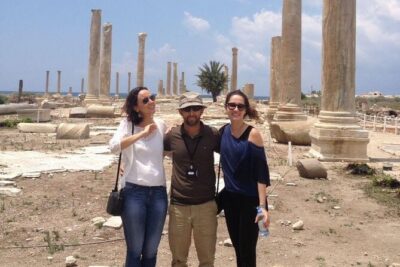
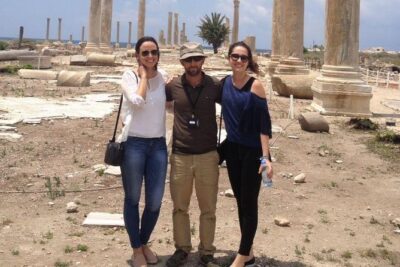
This is the big archaeology moment, about 1 hour, and it is worth treating as your main stop. Al-Bass is described as the largest and best-preserved Roman hippodrome example. It sits at the principal entrance area of Tyre in ancient times.
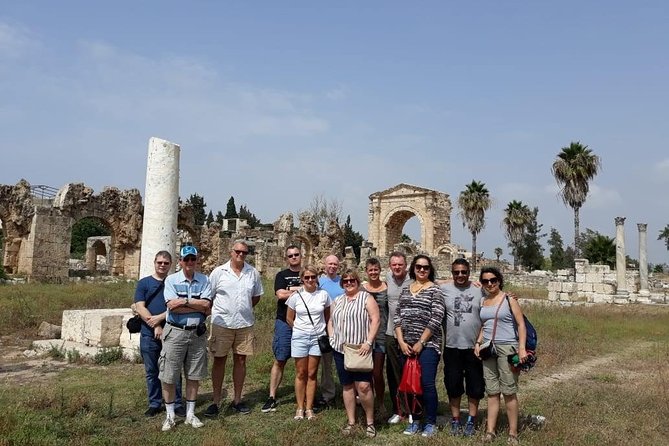
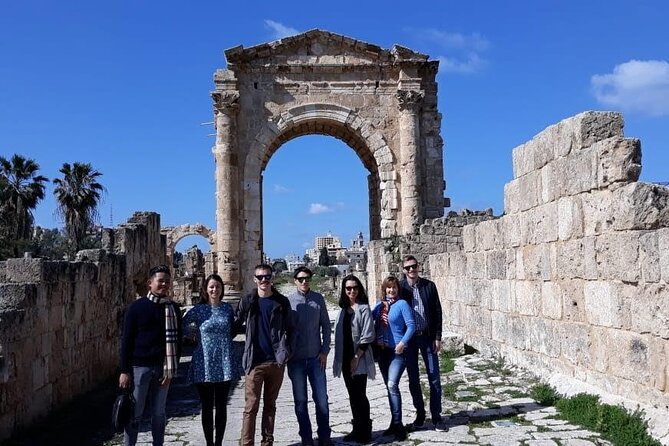
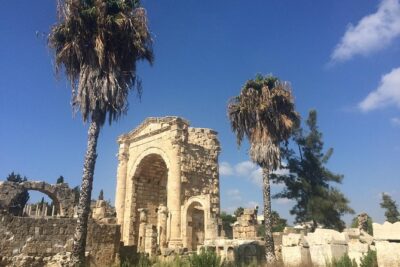
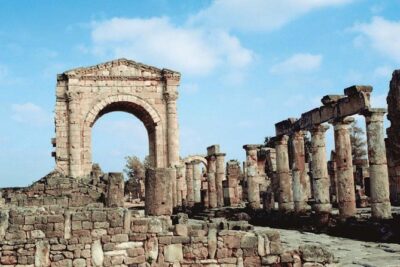
You will see a wide causeway flanked by ruins and a Roman triumphal arch dating to the 2nd century AD. Inside the larger site complex, there are multiple layers of things to look at: a necropolis with several hundred well-preserved sarcophagi, an intact Roman road, an aqueduct, and the hippodrome structure itself.
If you love architecture and city planning, this is where the guide can bring meaning. The hippodrome is not just an arena. It is part of a larger urban statement. It tells you how Romans organized crowds, movement, and spectacle.
Budget note: this stop lists an entrance ticket that is not included. Plan for that so you do not end up surprised at the site.
Lunch and Timing: Stay Fed, Stay Moving, Use the Shade
Lunch is included, and so is bottled water. That is one of the best value points of this tour. You are not stuck paying restaurant prices while also trying to catch up with a group schedule.
One nice practical detail: lunch tends to be a sit-down meal, and it can be a fish-focused option depending on the day. The main thing is that it is described as healthy and filling, and it is there to keep you energized for the afternoon ruins.
Now the small caution. Food spots in coastal areas sometimes mean outdoor seating with partial shade. If you sunburn easily, bring sunscreen and consider a hat. You might also pack sunglasses that actually block well, because you will be exposed during breaks and site transitions.
Value and Price: Is $65 a Good Deal?
At $65 per person, this tour is positioned as a budget-friendly way to cover a lot of ground. What justifies that price is not just the sites. It is the combination of hotel transfers, air-conditioned transport, a professional guide, and included lunch plus bottled water.
A self-guided day would cost you time, plus multiple taxi or driver arrangements. Even if you are a strong planner, coordinating all the transfers and timing is the hard part, not the sightseeing itself.
The main value trade-off is that a few attractions have entrance fees not included, like the Sea Castle, the Soap Museum, and the Al-Bass area. So you may end up paying some extra at the sites. Still, even with those additions, the day is structured so you get a full itinerary without the logistics headaches.
Who Should Book This Tour, and Who Should Skip It
This fits best if you want:
- A first day in Beirut and you do not want to handle driving for southern Lebanon
- Phoenician and Roman sites plus one spiritual stop, without changing plans all day
- A day built around small group comfort and a guide to connect the layers
You might want to skip it or choose a different option if:
- You prefer totally free time, with long unstructured wandering
- You want to linger for long periods at museums or ruins without time pressure
- You strongly dislike paying extra site entrances along the way
For everyone else, this is the kind of tour that makes a short vacation feel bigger.
Should You Book This Sidon, Tyre, and Maghdouché Day Trip?
I think it is a smart booking for most people visiting Beirut. The route hits the classics, adds a spiritual stop, and keeps the day moving with included lunch and water. The small group cap and hotel pickup also make it feel easy, which is exactly what you want on a long day.
If you book, go in with two simple priorities. First, bring sun protection, because you will be outside a lot. Second, mentally budget for a few site entrance fees not included, especially at the Sea Castle and Al-Bass.
If you want a structured, guided way to experience southern Lebanon without the stress, this is a clear yes.
FAQ
What is the duration of the tour?
The tour runs for about 9 hours.
What time does the tour start?
The start time is 8:30 am.
Is hotel pickup and drop-off included?
Yes. Hotel pickup and drop-off are included.
What is included for food and drinks?
Lunch is included, and you also get bottled water.
Is the tour wheelchair-accessible or suitable for everyone?
The information provided says most travelers can participate. No additional accessibility details are listed.
Are entrance tickets included for all stops?
No. Some stops list admission as free, while others list tickets as not included, such as the Crusaders Sea Castle, the Soap Museum, and the Al-Bass archaeological site.
How big is the group?
This tour is a small group with a maximum of 20 travelers.
Is free cancellation available?
Yes. Free cancellation is available if you cancel at least 24 hours before the experience starts for a full refund.
More of Lebanon, Reviewed
- Guided Small-Group Tour to Baalbek, Anjar and Ksara with Lunch
★ 5.0 · 511 reviews - Guided Small-Group Tour to Jeita, Harissa, Byblos with Lunch
★ 5.0 · 361 reviews - City Sightseeing Beirut Hop-On Hop-Off Bus Tour
★ 4.5 · 87 reviews - Private Anjar and Baalbek Tour from Beirut with Departure Ticket
★ 5.0 · 79 reviews - Guided Private Full Day Tour to Baalbek, Anjar and Chateau Ksara
★ 5.0 · 60 reviews
Elsewhere in Lebanon
- Guided Small-Group Tour to Baalbek, Anjar and Ksara with Lunch
★ 5.0 · 511 reviews - Guided Small-Group Tour to Jeita, Harissa, Byblos with Lunch
★ 5.0 · 361 reviews - Paragliding Trip Over Lebanon – Jounieh Bay
★ 5.0 · 257 reviews - Jeita Grotto,Harissa&Byblos Full-Day PRIVATE-CAR Trip from Beirut
★ 5.0 · 222 reviews - First Paragliding Club in Lebanon – Since 1992
★ 5.0 · 193 reviews
South to Sidon and Tyre
- Small-Group Adventure Tour to Sidon Tyre & Maghdouche-Day Trip
★ 5.0 · 45 reviews - Sidon, Tyre & Maghdouche Day Trip – With Lunch (4G on Board)
★ 4.5 · 44 reviews - Sidon – Tyre – Maghdouche Trip, From Beirut
★ 5.0 · 25 reviews - Small Group Tour to Sidon, Tyre & Maghdouche with lunch
★ 5.0 · 11 reviews - Temple of Eshmun – Mleeta Landmark – Beaufort Castle
★ 5.0 · 9 reviews
Other Lebanon trips we have written up
Sidon, Tyre & Maghdouche Day Trips, compared.
 ★ 5.0Small-Group Adventure Tour to Sidon Tyre & Maghdouche-Day TripFrom $6545 reviews
 ★ 4.5Sidon, Tyre & Maghdouche Day Trip – With Lunch (4G on Board)From $9544 reviews
 ★ 5.0Sidon – Tyre – Maghdouche Trip, From BeirutFrom $4525 reviews
 ★ 5.0Small Group Tour to Sidon, Tyre & Maghdouche with lunchFrom $9911 reviews
 ★ 5.0Temple of Eshmun – Mleeta Landmark – Beaufort CastleFrom $749 reviews
 ★ 4.5Private Guided Tour to Sidon, Tyre and Maghdouche from BeirutFrom $1009 reviews
 ★ 5.0Lebanon tour Sidon & Tyre ruins with pick-up, guide,lunch+entriesFrom $1559 reviews
 ★ 5.0Lebanon Unveiled: Exclusive Private Tours to Sidon & TyreFrom $757 reviews
Every list this tour turns up in