
REVIEW · BAALBEK, ANJAR & KSARA DAY TRIPS
Small-Group Tour with Lunch to Baalbek, Anjar and Ksara
Roman temples and wine in one day.
If you like history that feels huge and personal, this Bekaa Valley trip hits the sweet spot. You get Baalbek’s Roman grandeur, the Umayyad ruins of Anjar, and a winery stop at Château Ksara, all tied together with door-to-door A/C transport and a proper Lebanese lunch. It is a packed day, but the pacing is designed for a small group, so you are not stuck with a busload of noise.
I especially love the way Baalbek doesn’t just show ruins, it explains why people came here for centuries. And I like that Anjar adds a totally different chapter, with Umayyad architecture laid over older influences. One thing to think about: some site admissions are listed as not included (especially the temples complex at Baalbek, Anjar, and the winery admission), so you may want a little extra budget for entry fees on the day.
In This Review
- Key points to know before you go
- Why this Bekaa day trip works so well from Beirut
- Morning pickup, A/C comfort, and how the timing feels
- Baalbek: Roman colossals, Phoenician roots, and the UNESCO moment
- A practical note on what you pay for
- Two grand temples plus a quick win at the Stone of the Pregnant Woman
- Anjar’s Umayyad ruins: an inland city built for routes and power
- What you actually look for on the ground
- Château Ksara and the wine tasting: a Lebanon story from 1857
- What is included vs. what might cost extra
- Lunch in the Bekaa: real Lebanese food, not an afterthought
- Guides and pacing: where the trip really wins
- Price and value: what you get for $65, and what to budget
- Who should book this tour, and who might want another style
- Should you book this Baalbek, Anjar and Ksara tour?
- FAQ
- What time does the tour start?
- How long is the tour?
- How many people are in the group?
- Is pickup and drop-off included?
- Is lunch included?
- Is there a wine tasting?
- Are admission tickets included for all stops?
- Is the transportation air-conditioned?
- What is the cancellation policy?
- Is a mobile ticket used?
Key points to know before you go
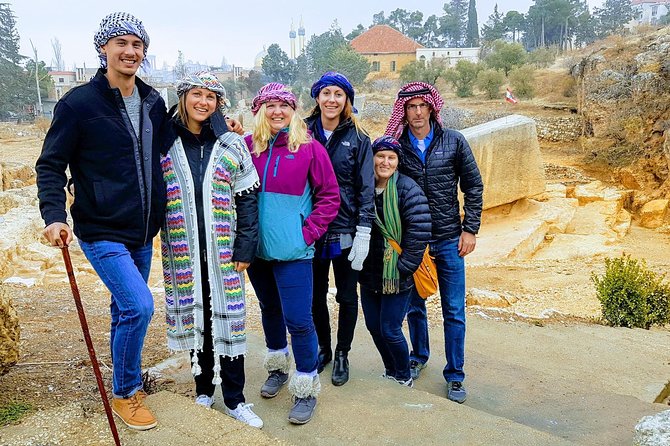
- Small group size (15 max): easier questions, faster movement between stops, and more personal guiding.
- A/C door-to-door transport: pickup and drop-off from within the Beirut city center keeps your day sane.
- Baalbek in focused blocks: you see the big ticket Roman temples plus a quick monolith stop.
- Anjar’s Umayyad story at a crossroads: the site connects routes linking Beirut, Damascus, Homs, and Tiberiade.
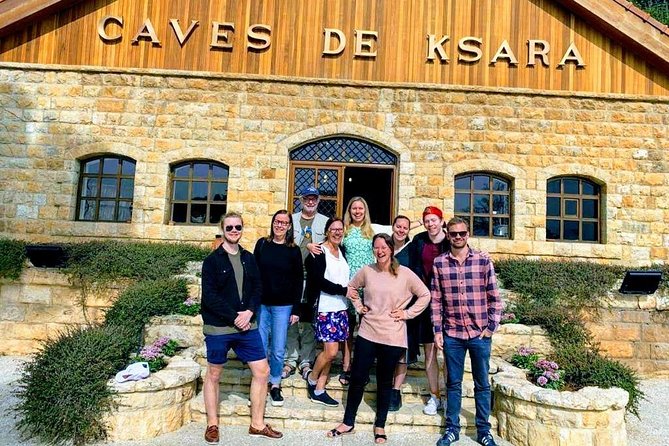
- Château Ksara winery visit: founded in 1857, famous for early dry wine production, with a tasting included.
- Lunch is included: you get authentic Lebanese food, so you are not scrambling between ancient stops.
More runs out to Baalbek, Anjar and the Ksara cellars
- Guided Small-Group Tour to Baalbek, Anjar and Ksara with Lunch★ 5.0 · 511 reviews
- Anjar, Baalbek & Ksara Day Trip – With Lunch (4G on Board)★ 4.5 · 181 reviews
- Baalbek – Anjar – Ksara Trip From Beirut★ 4.5 · 80 reviews
- Private Anjar and Baalbek Tour from Beirut with Departure Ticket★ 5.0 · 79 reviews
Why this Bekaa day trip works so well from Beirut
This is the kind of day trip that makes sense if you want maximum payoff without turning your day into a logistics project. Beirut to the Bekaa Valley is a real ride, and this tour gives you comfort doing that part, with an air-conditioned vehicle and pickup and drop-off from anywhere within the city center.
The biggest value is the combination. Baalbek gives you Roman imperial-scale architecture and a long religious legacy. Anjar flips the scene to the Umayyad period, showing a different power and planning style. Then you finish with Château Ksara, where the day stops being about monuments and starts being about local craft and flavors.
For the price point, the mix of guided context, lunch, transport, and group size matters more than any single stop. You are paying for time saved and for someone to help you see what you are looking at, not just to get you from point A to point B.
Morning pickup, A/C comfort, and how the timing feels
You start at 8:30 am, with confirmation provided at booking. If you are staying in Beirut’s city center, pickup is included, and the same goes for drop-off when you get back. That matters because starting early gives you the best chance to enjoy Baalbek without feeling rushed.
This is an 8-hour tour (approx.), which means you will be on the road at least part of the time. That can feel like a lot if you hate car time, but the trade is that you see three major places you would otherwise need multiple separate plans to cover.
Small group size helps here. With a maximum of 15 people, you typically get smoother movement and fewer delays when the group needs to pause for photos, questions, or bathroom breaks.
Baalbek: Roman colossals, Phoenician roots, and the UNESCO moment
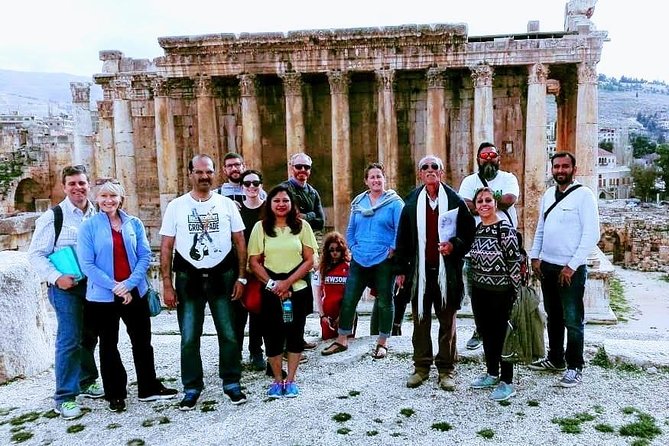
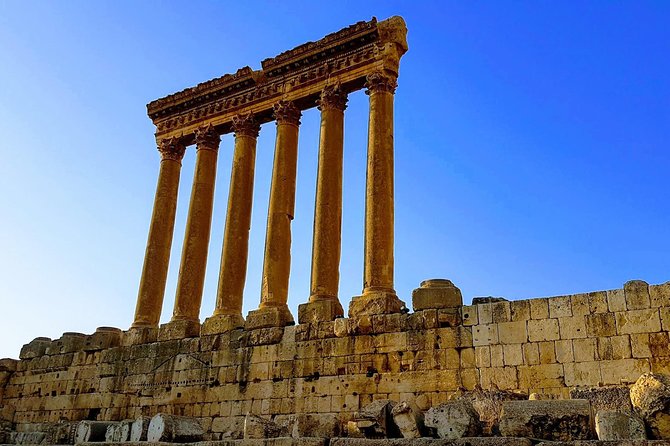
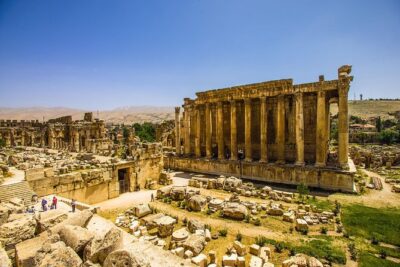
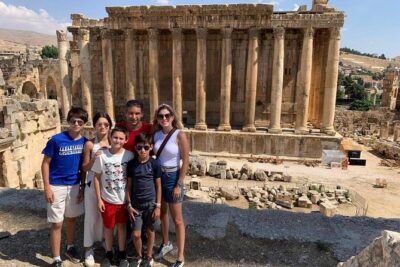
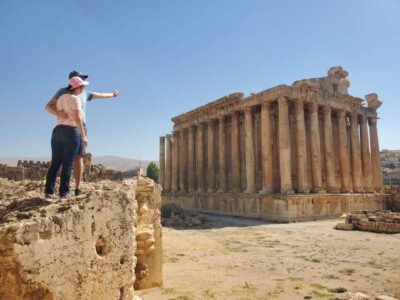
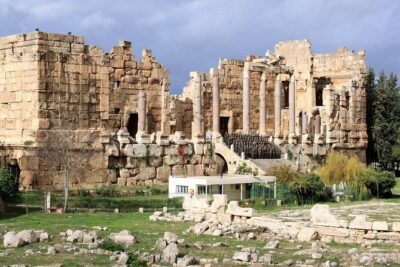
Baalbek is famous for a reason. The centerpiece is the Baalbek temple complex, including the Temple of Bacchus and the Temple of Jupiter. These are among the grandest Roman temple ruins you can find, and the complex was marked as a UNESCO World Heritage site in 1984.
What makes this stop more than sightseeing is the layers beneath the stones. This place traces back to a Phoenician city known as Heliopolis during the Hellenistic period. Even when the Romans took over, the religious role continued, and the sanctuary of Jupiter drew pilgrims for worship.
If you like your ancient history with real explanations, the best part of Baalbek is how the guide helps you read the site. You do not just see columns and blocks. You learn what the Romans were doing here, how it connected to older worship, and why the complex grew over time.
Trips where the mezze stop is part of the deal
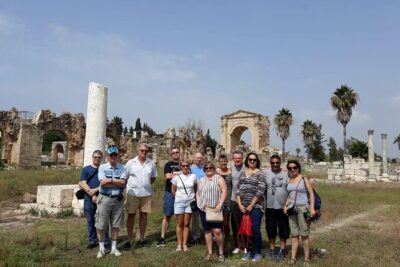
A practical note on what you pay for
The tour schedule shows a split for Baalbek:
- One Baalbek stop is listed with admission ticket free for about 1 hour 30 minutes.
- Another Baalbek temples stop is listed at admission not included for about 1 hour 30 minutes.
So, expect that at least part of Baalbek’s main complex may require a ticket you handle on the day. The guide can usually help you understand what’s covered and what isn’t, but budget time and a little money just in case.
Two grand temples plus a quick win at the Stone of the Pregnant Woman
After the main temple focus, you get a short stop that is easy to miss if you rush on your own. The Stone of the Pregnant Woman is a worked Roman monolith in Baalbek. Along with another nearby massive block, it is among the largest monoliths ever quarried.
The value of this quick visit is that it changes how you look at the rest of the site. When you see a single block on that scale, the Roman building effort starts to feel real. It also gives you a brief break from the large temple layout, so the day does not feel like nonstop heavy walking.
This stop is about 15 minutes, and it is listed as admission free. In other words, you get a lot of impact for a very short time.
Anjar’s Umayyad ruins: an inland city built for routes and power
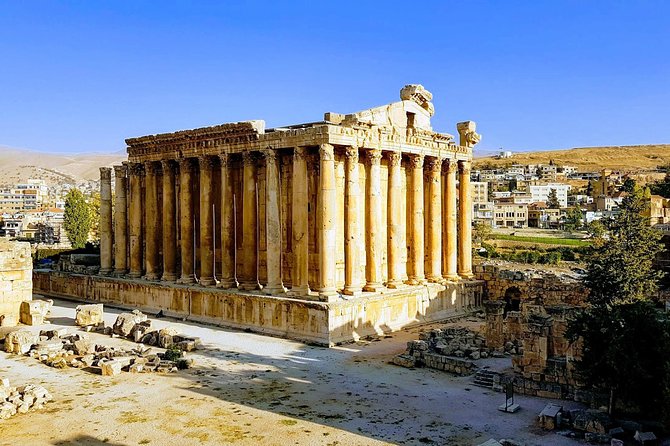
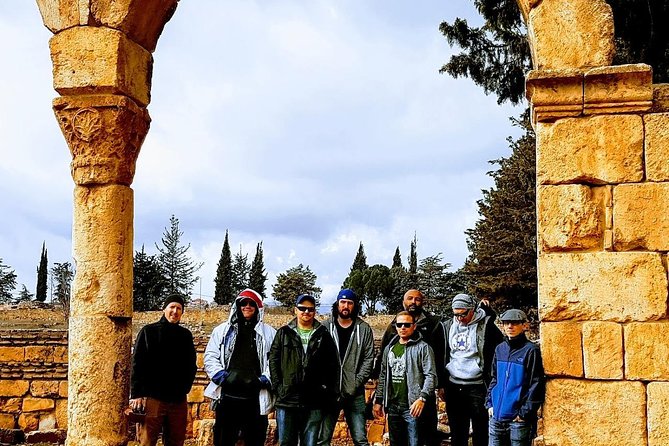
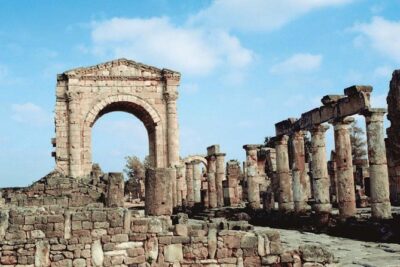
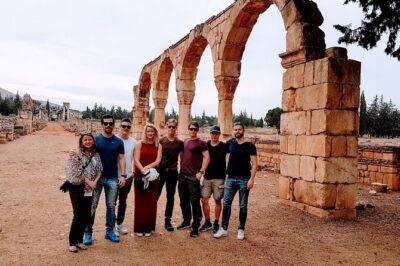
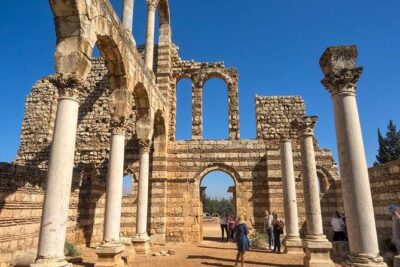
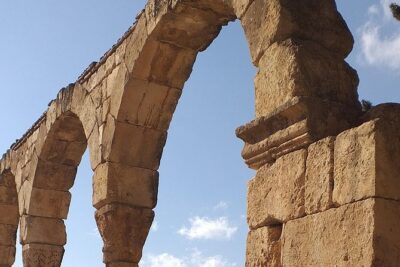
Then the day turns from Roman sanctuaries to Umayyad planning at Anjar. The Umayyad Ruins of Aanjar are a standout because they reflect the Umayyad civilization in a very visible way, and because Anjar was an inland commercial center positioned at a crossroads.
The tour context makes the location click: routes connected Beirut to Damascus, and other routes crossed the Bekaa and led from Homs to Tiberiade. So when you see walls, palace remnants, and the shape of the site, you can connect it to how people and goods moved.
What you actually look for on the ground
At Anjar, you are not just looking at one temple or one building. You see:
- the walls of the Umayyad palace
- harems
- a mosque
- the great palace of the Caliph
- thermal baths
- many pillars with Roman architectural elements
That mix helps explain why Anjar feels like a layered city, not a single-style monument.
One more detail that helps your brain while walking around: the site was only discovered by archaeologists at the end of the 1940s. That means you are seeing a place that was long lost in daily life, then carefully uncovered. It can feel more like an archaeological presentation than a living town, but that is part of the charm.
Admission for Anjar is listed as not included, and the stop is about 45 minutes, so plan for a shorter, focused walk rather than an all-day exploration.
Château Ksara and the wine tasting: a Lebanon story from 1857
After history comes a reset, and it is a good one. Château Ksara is one of Lebanon’s well-known names in wine, and it is based in the Bekaa Valley. The company was founded in 1857 by Jesuit priests, and Château Ksara is noted for developing the first dry wine in Lebanon.
This is where you get a break from stone dust and start paying attention to local craft. The winery produces around 3 million bottles annually and exports to over 40 countries, so you are tasting something local that also has an international track record.
What is included vs. what might cost extra
The tour highlights mention a complimentary tasting of local wines, and that is the part you should plan around. The winery stop is listed with admission not included, so you might find that the tasting is covered by the tour while other on-site costs may not be. The simplest approach is to think of it as you are paying for the experience and guidance, and you may still be asked to handle certain entry-related charges.
Expect about 1 hour here, which is enough time to taste, ask questions, and get back on the road without turning the day into a slow afternoon.
Lunch in the Bekaa: real Lebanese food, not an afterthought
Lunch is included, and the tour promises an authentic Lebanese lunch served in a way that feels local rather than tourist-only. That matters more than people think on day trips.
When your day includes Baalbek and Anjar, you want energy that does not just fill you up, it keeps you comfortable while walking and standing around. A included lunch also prevents that annoying cycle of rushing to find food at each stop. You spend less time solving a hunger problem and more time enjoying the actual sights.
If you are picky about timing, lean into it. The tour is designed so lunch sits between long-interest stops. That rhythm helps you digest the history, literally and mentally.
Guides and pacing: where the trip really wins
The difference between a good day trip and a great one is the guide. The strongest praise for this tour is how smoothly it runs and how well the history gets explained at the right moments.
On one example, the tour ran with Albert, and the timing was described as perfect, with clear planning so nothing felt chaotic. Another guide, Ghofran, is noted for a detailed presentation of Baalbek, walking through locations with specific explanations that help you understand what you are seeing instead of just photographing it.
In other instances, Ziad is cited as both driver and guide, with strong explanations and solid question handling. That is the key here: at major sites like Baalbek, you often have a lot of questions, and the best tours treat your questions like part of the experience.
Small group size supports this. With up to 15 people, your questions do not get swallowed.
Price and value: what you get for $65, and what to budget
At $65 per person, this tour looks like a bargain if you compare what you would spend on transport, guide time, and a full day of organized entry.
What you are clearly getting:
- air-conditioned vehicle
- hotel pickup and drop-off in Beirut city center
- lunch
- professional guides plus a tour leader
- small group size up to 15
- a complimentary wine tasting
Where you should expect extra costs:
- Some admissions are listed as not included, including Baalbek temples, Anjar, and Château Ksara admission (even though the tasting is part of the experience).
So my advice is simple. Think of the $65 as covering the structure: transport, guidance, and included meals and tasting. For the sites marked not included, have a little cash or card ready for entry fees so you are not stuck deciding on the spot.
Given that you are seeing three major destinations in one day, the value still holds. You are paying for convenience plus interpretation, not only for a ride.
Who should book this tour, and who might want another style
This is a strong fit if you want:
- a time-efficient day from Beirut
- guided context for Roman and Umayyad history
- a manageable group size
- included food and wine
It is also a good choice if you do not want to plan driving, parking, and ticket logistics across multiple sites.
You might consider a different format if you:
- want a slow, unstructured day with lots of extra time at each site
- hate any chance of extra fees at the door for admissions not included
- are extremely sensitive to long car days, since this is roughly 8 hours total
Overall, this is the kind of tour that makes a single day feel meaningful. You leave with photos, but also with a clearer story of how different empires shaped this region.
Should you book this Baalbek, Anjar and Ksara tour?
Yes, if you want an organized, high-impact day in the Bekaa that combines Baalbek’s Roman scale, Anjar’s Umayyad layout, and a real winery stop with wine tasting. The small group size and door-to-door A/C transport make it feel far less stressful than trying to piece it together yourself.
Just go in knowing that not every admission is included, so budget for possible entry fees. If you can do that, the $65 price becomes a lot easier to justify, because you are buying a full guided day with lunch and tasting wrapped into the ride.
FAQ
What time does the tour start?
The tour starts at 8:30 am.
How long is the tour?
It is approximately 8 hours.
How many people are in the group?
The tour has a maximum of 15 travelers.
Is pickup and drop-off included?
Yes. Hotel pickup and drop-off are included, and pickup is offered from within Beirut city center locations.
Is lunch included?
Yes. Lunch is included on the tour.
Is there a wine tasting?
Yes. You get a complimentary tasting of local wines at a wine company during the visit to Château Ksara.
Are admission tickets included for all stops?
Not for all stops. Some items are listed as free, while others are listed as admission not included, including parts of the Baalbek temples area, Anjar, and Château Ksara admission.
Is the transportation air-conditioned?
Yes. The tour includes air-conditioned transportation.
What is the cancellation policy?
You can cancel for free up to 24 hours in advance for a full refund. If you cancel less than 24 hours before the start time, the amount paid is not refunded.
Is a mobile ticket used?
Yes. The tour includes a mobile ticket.
More of Lebanon, Reviewed
- Guided Small-Group Tour to Baalbek, Anjar and Ksara with Lunch
★ 5.0 · 511 reviews - Guided Small-Group Tour to Jeita, Harissa, Byblos with Lunch
★ 5.0 · 361 reviews - City Sightseeing Beirut Hop-On Hop-Off Bus Tour
★ 4.5 · 87 reviews - Private Anjar and Baalbek Tour from Beirut with Departure Ticket
★ 5.0 · 79 reviews - Guided Private Full Day Tour to Baalbek, Anjar and Chateau Ksara
★ 5.0 · 60 reviews
Elsewhere in Lebanon
- Guided Small-Group Tour to Baalbek, Anjar and Ksara with Lunch
★ 5.0 · 511 reviews - Guided Small-Group Tour to Jeita, Harissa, Byblos with Lunch
★ 5.0 · 361 reviews - Paragliding Trip Over Lebanon – Jounieh Bay
★ 5.0 · 257 reviews - Jeita Grotto,Harissa&Byblos Full-Day PRIVATE-CAR Trip from Beirut
★ 5.0 · 222 reviews - First Paragliding Club in Lebanon – Since 1992
★ 5.0 · 193 reviews
Baalbek and the Bekaa, Compared
- Guided Small-Group Tour to Baalbek, Anjar and Ksara with Lunch
★ 5.0 · 511 reviews - Anjar, Baalbek & Ksara Day Trip – With Lunch (4G on Board)
★ 4.5 · 181 reviews - Baalbek – Anjar – Ksara Trip From Beirut
★ 4.5 · 80 reviews - Private Anjar and Baalbek Tour from Beirut with Departure Ticket
★ 5.0 · 79 reviews - Guided Private Full Day Tour to Baalbek, Anjar and Chateau Ksara
★ 5.0 · 60 reviews
Other Lebanon trips we have written up
Baalbek, Anjar & Ksara Day Trips, compared.
 ★ 5.0Guided Small-Group Tour to Baalbek, Anjar and Ksara with LunchFrom $65511 reviews
 ★ 4.5Anjar, Baalbek & Ksara Day Trip – With Lunch (4G on Board)From $95181 reviews
 ★ 4.5Baalbek – Anjar – Ksara Trip From BeirutFrom $3480 reviews
 ★ 5.0Private Anjar and Baalbek Tour from Beirut with Departure TicketFrom $7579 reviews
 ★ 5.0Guided Private Full Day Tour to Baalbek, Anjar and Chateau KsaraFrom $10060 reviews
 ★ 5.0Lebanon tour Baalbek ruins & Ksara w/pick-up, lunch,guide+entriesFrom $13035 reviews
 ★ 4.9Baalbek Temples & Ksara Caves w/pick-up,guide, entries+lunchFrom $14034 reviews
 ★ 5.0Small Group Tours to Baalbek, Anjar & Chateau Ksara with lunch and TicketsFrom $7529 reviews
Every list this tour turns up in