
REVIEW · BEKAA VALLEY WINE TOURS
Wine Tasting and Culture
Roman ruins, then wine tasting, all in one day.
This is a strong combo because you start with Baalbek’s massive Roman temples and end in Lebanon’s Beqaa Valley with real winery time. I especially like the way the day mixes big visual history, like the temples of Bacchus and Jupiter, with hands-on wine experiences you can actually learn from. The second thing I liked is the focus on Lebanese wine makers in two very different settings, Château Ksara and Château St Thomas.
One possible drawback: it is a full day (about 8 hours), and since lunch is not included, you’ll want to plan for your own midday break so the schedule stays comfortable.
In This Review
- Key highlights you should care about
- Baalbek and Beqaa in one efficient 8-hour flow
- Entering Baalbek: Temple of Bacchus and Temple of Jupiter
- The wider temple complex, Romanized triad, and why pilgrims came
- Stone of the Pregnant Woman: a short stop with big-scale impact
- Château Ksara: Jesuit roots and Lebanon’s first dry wine claim
- Château St Thomas: Bekaa hillside vineyards and a second tasting viewpoint
- Price and value: what $100 buys in real terms
- Getting the most from the guides, Hassane and Kefraya
- How to plan your day: timing, lunch, and comfort
- Who this tour is best for (and who should skip it)
- Should you book this Baalbek and wine day?
- FAQ
- What time does the tour start in Beirut?
- How long is the tour?
- Is hotel pickup and drop-off included?
- Is lunch included in the tour price?
- Are admission tickets included?
- What is included in the tour package?
- Is this tour private or shared?
- Can I cancel for a full refund?
- Is there a mobile ticket?
Key highlights you should care about
- Baalbek Temple Complex: Temple of Bacchus and Temple of Jupiter, plus the broader Roman sanctuary context
- UNESCO World Heritage setting: The Baalbek complex was inscribed in 1984, which helps explain why it matters
- Stone of the Pregnant Woman: A quick stop that still hits you with monolith-scale ambition
- Château Ksara: Founded in 1857 by Jesuit priests, and credited with developing Lebanon’s first dry wine
- Château St Thomas: Established in 1990, with vineyards in fertile Bekaa soil and views over the valley
- Guide-led tasting learning: Reviews single out Hassane and Kefraya for making the wine-making process easier to understand
More cellar visits out in the Bekaa
- Lebanon Wine Tasting Tour From Beirut★ 4.5 · 25 reviews
- PRIVATE Tour of Baalbek Temples, Umayyad Anjar & Ksara Winery★ 5.0 · 12 reviews
- Anjar, Baalbek & Ksara Winery★ 5.0 · 11 reviews
- PRIVATE Wine Tasting Tour to the Bekaa Valey Fabulous Wineries★ 5.0 · 7 reviews
Baalbek and Beqaa in one efficient 8-hour flow
This tour works well if you want one day that feels like two different sides of Lebanon, history first, then wine. You start with an early morning departure from Beirut (start time is 8:30 am), and you get an air-conditioned vehicle with private transportation plus a tour leader and a professional guide.
What makes the timing work is the structure. The Baalbek portion is built around a few high-impact stops, then you transition to the wineries in the Bekaa Valley. It’s long, but it is not “wander and hope” long. Each stop has a clear purpose, and the guide helps you connect what you are seeing with how wine culture fits into the wider idea of place.
Entering Baalbek: Temple of Bacchus and Temple of Jupiter
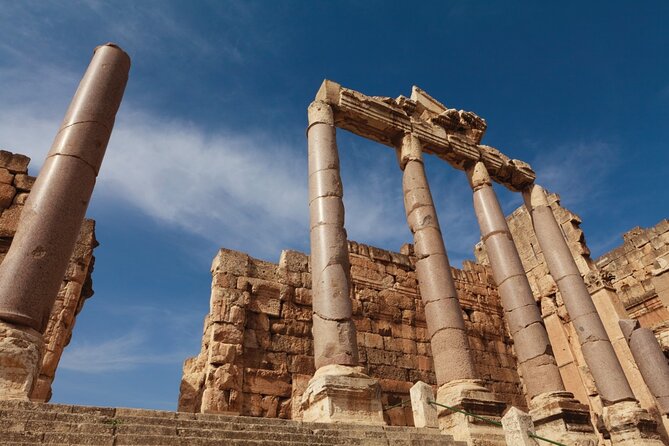
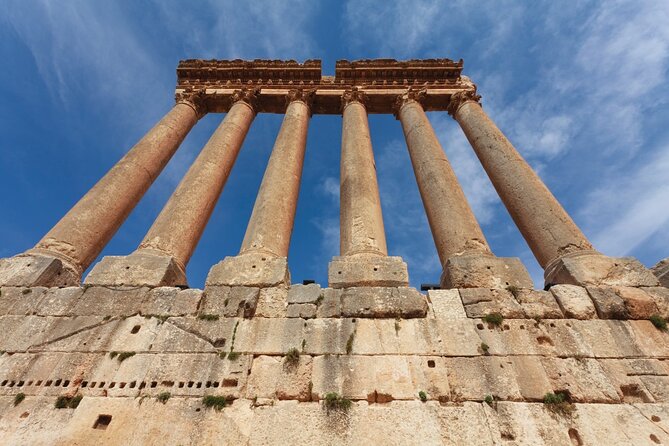
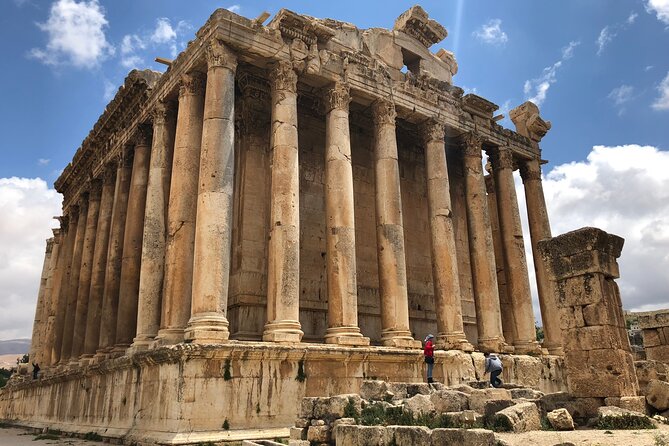
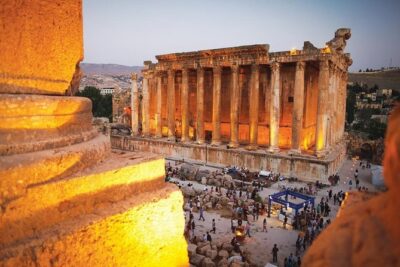
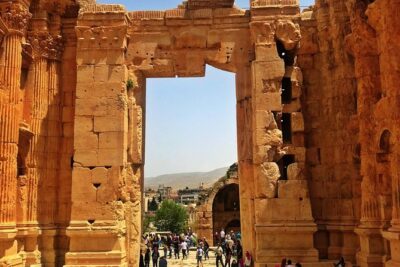
If you only have a limited amount of time in Lebanon, Baalbek is one of those places that instantly justifies itself. The complex is home to two of the largest and grandest Roman temple ruins: the Temple of Bacchus and the Temple of Jupiter. These are not small “nice ruins” either. You’re dealing with colossal structures that reflect imperial Roman architecture at its peak.
Here’s why this stop feels more meaningful than just taking photos. Baalbek was not created from nothing as a Roman site. It’s tied to an older Phoenician city tradition, known as Heliopolis during the Hellenistic period, where a triad of deities was worshipped. In Roman times, the sanctuary remained a major religious destination, with the Heliopolitan Jupiter pulling in thousands of pilgrims. When you stand among these temples, you can understand how religion, politics, and travel routes shaped the city for centuries.
Practical note on tickets: the tour information lists admission for the first Baalbek stop as free. Still, a second Baalbek stop is listed as admission not included, so expect that you may need to pay something if you want full access to every section.
The wider temple complex, Romanized triad, and why pilgrims came
The second Baalbek segment keeps you in the same sacred zone but expands what you understand while you are there. The complex sits at the foot of the south-west slope of Anti-Lebanon, near the fertile plain of the Bekaa, and it is at an altitude of about 1,150 m. That setting matters because it explains the mix of dramatic ruins and agricultural country just a short distance away.
This is also where you get the clearer “who worshipped what” story. Pilgrims thronged to the sanctuary to venerate the Romanized Triad of Heliopolis, essentially linking Phoenician cult roots to Roman names: Jupiter, Venus, and Bacchus. That matters for the day’s second half, because Baalbek is also tied to Bacchus, the god of wine, even if the wine portion of your day is about learning from modern producers.
The itinerary lists the admission ticket for this part as not included, so budget for it if you’re planning to cover everything the complex offers.
Other Lebanese tables worth a booking
Stone of the Pregnant Woman: a short stop with big-scale impact
Then you hit a smaller time block, the Stone of the Pregnant Woman, which is a worked Roman monolith in Baalbek. It’s a fast stop, but it has a strong effect because you’re looking at human ambition in stone at a scale that is hard to picture until you see it.
It’s one of the largest monoliths ever quarried, and it is described as being part of a planned set of blocks for the nearby Roman temple complex. If you like archaeology that feels physical and measurable, this is a good pause.
The tour information lists this stop as free admission, so it is one of the best “value per minute” parts of the day.
Château Ksara: Jesuit roots and Lebanon’s first dry wine claim
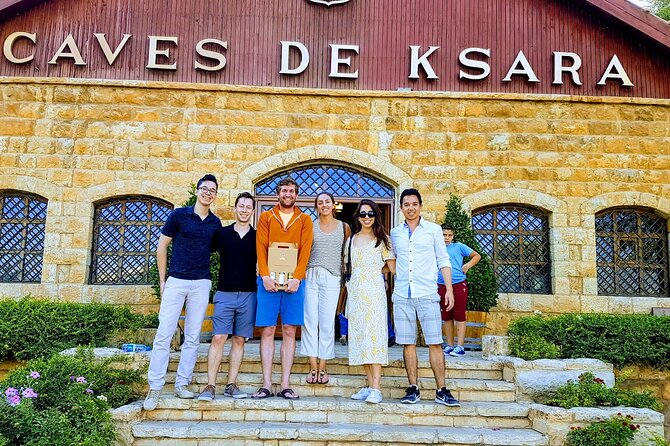
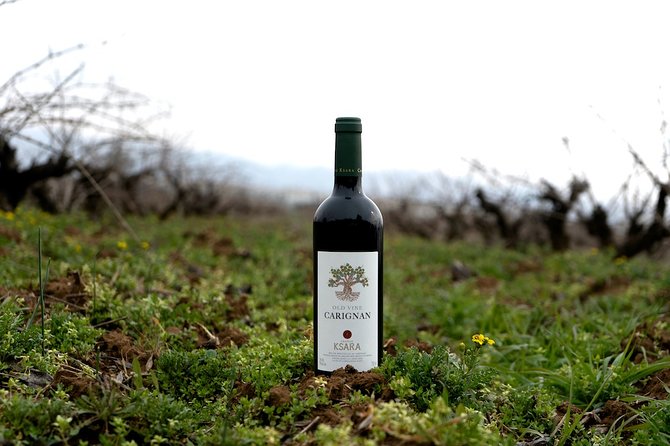
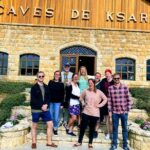
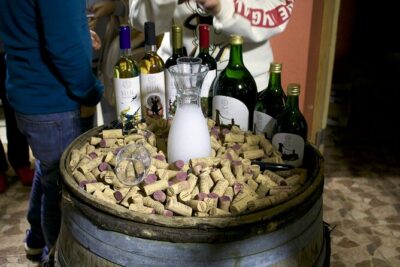
When the day turns toward wine, you go to Château Ksara in the Bekaa Valley. This is the kind of winery history that adds context to the tasting. Château Ksara was founded in 1857 by Jesuit priests, and it developed the first dry wine in Lebanon. That is a specific, memorable milestone, and it helps you listen differently when you taste, because you’re tasting not only flavors but also a long-running idea about style.
This winery also has serious production scale, producing about 3 million bottles annually and exporting to over 40 countries. That matters because large-scale wineries often still have craft details, but you may notice a more polished approach to tourism, scheduling, and tasting structure.
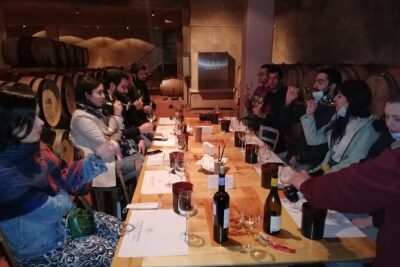
Your tour info lists admission for the winery portion as not included, so plan for a tasting fee if you want to be sure you are covered. On the plus side, the review highlights mention a guide named Kefraya explaining the scientific process behind making and tasting wine. That is exactly the kind of help that turns wine from vague enjoyment into something you can actually repeat later at home.
Château St Thomas: Bekaa hillside vineyards and a second tasting viewpoint
After Ksara, you continue to Château St Thomas. It was established in 1990 and is set on a hill overlooking the Bekaa Valley. Again, the point is context. The description ties wine quality to the fertile Bekaa soil where the vineyards are located.
If Ksara is the story of a long-running institution, Château St Thomas gives you a different kind of feel, newer in age but still tied to the same regional advantages. A second winery visit is also valuable because it lets you compare wine-making choices rather than just learning one style from one producer.
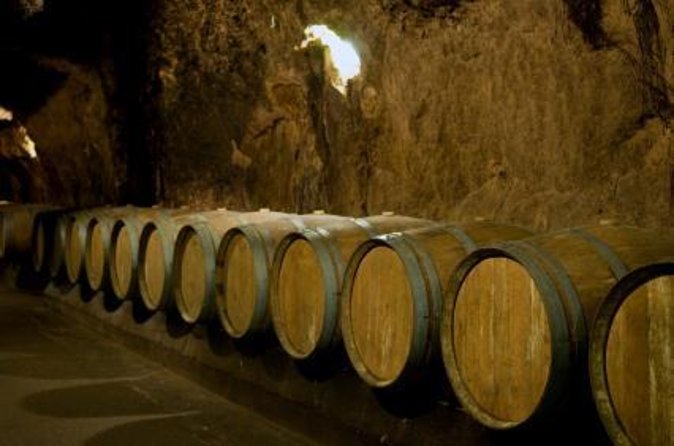
This winery stop is listed as admission not included, so treat the wine tastings as a paid experience on top of the tour fee. That said, going to two wineries is often where you start to learn what you personally like, because the tasting notes stop being theoretical.
Price and value: what $100 buys in real terms
At $100 per person, this tour is trying to do a lot: UNESCO-grade site time, guided history, a winery day in the Bekaa, and transportation with hotel pickup and drop-off.
Here’s how I would judge the value:
- You are paying for more than transport. You’re paying for a guide and structured time at major stops.
- You get private transportation and a tour leader, which usually means less friction and less waiting around.
- The admission situation is mixed. Some parts are listed free, while other parts and both wineries are listed as not included. So the final cost depends on how fully you plan to pay your way through each paid entry and tasting.
If you want an easy day that bundles major history and two winery experiences without needing to piece together directions, taxis, and timing, this price can make sense. If you already plan to visit Baalbek on your own and you only want one tasting, you might get better value by picking just the wine side or just the history side.
Getting the most from the guides, Hassane and Kefraya
The standout from the reviews is the human touch. One review thanks Hassane and Kefraya directly. The notes say Hassane was courteous and helpful, and Kefraya explained the scientific process of making and tasting wine. Another review calls the day excellent and praises Hassane as amazing with lots of information, plus a knowledgeable Baalbek guide.
What does this mean for you in practical terms? It means you are not just standing in front of temples and staring at tasting glasses. You should get help connecting details. For example, when someone breaks down how wine is made and how you taste, you can do more than nod politely. You can look for aromas, pick up on differences, and ask questions without feeling awkward.
Also, a comfortable car matters on a day like this. Reviews explicitly mention the car as comfortable, which is a big deal when you’re leaving Beirut early and spending hours on the road.
How to plan your day: timing, lunch, and comfort
This is an 8-hour tour, starting at 8:30 am, with hotel pickup and drop-off. That means your day starts early, and you should treat it like a full outing, not a quick half-day.
Two practical points:
- Lunch is not included. So either plan to buy lunch during the day, or eat earlier and keep snacks handy if that fits your style. Do not assume there will be a sit-down meal included.
- Wear shoes that work for uneven surfaces at ancient sites. Baalbek ruins are impressive, but the ground and steps can be more demanding than you expect.
If you’re sensitive to long driving days, the air-conditioned vehicle helps, but you’ll still want water and a bit of patience. The tour is private for your group, so you’ll get more flexibility than a big bus crowd.
Who this tour is best for (and who should skip it)
This tour is ideal if you want:
- A first-time Baalbek day, without worrying about how to structure it
- A wine experience that includes actual guidance, not just a quick sip-and-go
- A balanced pairing, Roman history plus two Bekaa winery visits
It might be less ideal if:
- You only want one winery stop and don’t care about the rest of the day
- You dislike early starts or long days
- You want lunch handled for you as part of the package
Should you book this Baalbek and wine day?
I think you should book it if you want a single, well-paced day that mixes major Roman ruins with Lebanese wine tasting in the Bekaa. The guide-led approach is the big reason. When Kefraya helps explain how wine is made and how to taste, the day stops being only sightseeing and turns into learning you can carry home.
If you book, come prepared for a full day and budget for the parts marked as admission not included, especially the winery entries and the extra Baalbek sections. For the right person, this is exactly the kind of Lebanon day that feels both memorable and practical.
FAQ
What time does the tour start in Beirut?
The tour starts at 8:30 am.
How long is the tour?
The duration is about 8 hours.
Is hotel pickup and drop-off included?
Yes. Hotel pickup and drop-off are included.
Is lunch included in the tour price?
No. Lunch is not included.
Are admission tickets included?
Not all of them. The Baalbek first stop is listed as admission ticket free, the Stone of the Pregnant Woman is also listed as free, but other parts are listed as not included, including one Baalbek stop and both winery stops.
What is included in the tour package?
Included items are air-conditioned vehicle, private transportation, tour leader, hotel pickup and drop-off, and a professional guide.
Is this tour private or shared?
This is private. Only your group will participate.
Can I cancel for a full refund?
Yes, free cancellation is available. You can cancel up to 24 hours in advance for a full refund.
Is there a mobile ticket?
Yes, mobile ticket is listed as one of the features.
Eating and Drinking in Lebanon
- Lebanon Wine Tasting Tour From Beirut
★ 4.5 · 25 reviews - PRIVATE Wine Tasting Tour to the Bekaa Valey Fabulous Wineries
★ 5.0 · 7 reviews - Full-Day Private Wine Tasting Tour
★ 5.0 · 6 reviews
Elsewhere in Lebanon
- Guided Small-Group Tour to Baalbek, Anjar and Ksara with Lunch
★ 5.0 · 511 reviews - Guided Small-Group Tour to Jeita, Harissa, Byblos with Lunch
★ 5.0 · 361 reviews - Paragliding Trip Over Lebanon – Jounieh Bay
★ 5.0 · 257 reviews - Jeita Grotto,Harissa&Byblos Full-Day PRIVATE-CAR Trip from Beirut
★ 5.0 · 222 reviews - First Paragliding Club in Lebanon – Since 1992
★ 5.0 · 193 reviews
The Bekaa, by the Glass
- Lebanon Wine Tasting Tour From Beirut
★ 4.5 · 25 reviews - PRIVATE Tour of Baalbek Temples, Umayyad Anjar & Ksara Winery
★ 5.0 · 12 reviews - Anjar, Baalbek & Ksara Winery
★ 5.0 · 11 reviews - PRIVATE Wine Tasting Tour to the Bekaa Valey Fabulous Wineries
★ 5.0 · 7 reviews - Full-Day Private Wine Tasting Tour
★ 5.0 · 6 reviews
Other Lebanon trips we have written up
Bekaa Valley Wine Tours, compared.
 ★ 4.5Lebanon Wine Tasting Tour From BeirutFrom $9125 reviews
 ★ 5.0PRIVATE Tour of Baalbek Temples, Umayyad Anjar & Ksara WineryFrom $11312 reviews
 ★ 5.0Anjar, Baalbek & Ksara WineryFrom $20811 reviews
 ★ 5.0PRIVATE Wine Tasting Tour to the Bekaa Valey Fabulous WineriesFrom $1137 reviews
 ★ 5.0Full-Day Private Wine Tasting TourFrom $1046 reviews
 ★ 5.0Journey Through Lebanese Wine: A Private Tour in the Beqaa ValleyFrom $654 reviews
 ★ 5.0Baalbek, Anjar & Wine: A Journey Through Lebanon’s HeritageFrom $553 reviews
 ★ 4.9Lebanese wineries guided tour with tastings & lunchFrom $1403 reviews
Every list this tour turns up in