
REVIEW · TOURS
Best Tours in Lebanon, 3-days-with Pick-up & Drop-off
A few ancient wonders, packed tight. This 3-day Lebanon combo tour from Beirut strings together Jeita Grotto and Baalbek with hotel pickup, an English-speaking group leader, and a route built for short trips. You’ll also get mountain viewpoints and coastal cities without worrying about timing or transportation.
I like that you start and end each day with 2-way transfers. You are not doing the math on buses or hiring separate rides, and the group stays small, up to 15 people, which makes the days feel manageable.
One thing to consider is that the schedule is full. If you want lots of story time on every stop, you may need to ask your guide for extra background, because some days are more about seeing than lecturing.
In This Review
- Key things I’d plan around before you go
- From Beirut hotel pickup to a tight 3-day route
- Day 1: Jeita Grotto, Harissa views, and Byblos old port
- Jeita Grotto, the fairytale caves you can walk through
- Harissa and the Marian statues above Jounieh Bay
- Téléferique du Liban, then Byblos in the UNESCO zone
- Day 2: Sidon souks, Maghdoucheh cave shrine, and Tyre’s Roman remains
- Sidon’s Sea Castle and the old city feel
- Sidon souks, crafts, coffee, and the working market vibe
- Musée du Savon, soap history you can actually picture
- A restored Great Mosque, formerly a Crusader church
- Khan El Franj, Sidon’s merchant-hub courtyard
- Maghdoucheh shrine, the cave where waiting is part of the story
- Tyre beach and Tyre’s Roman monuments
- Day 3: Anjar’s Umayyad grid, then Baalbek’s colossal Roman scale
- Anjar, Umayyad planning in the Bekaa Valley
- Hajar al-Hibla, the Stone of the Pregnant Woman
- Baalbek temples, Bacchus and Jupiter up close
- Price, group size, and what you get for $225
- Entrance fees: what is included, what is not, and how to budget
- Timing and comfort hacks for a packed 3-day plan
- Should you book this 3-day Lebanon combo tour?
- FAQ
- What time does the tour pick up from my Beirut hotel?
- How long is the tour over the three days?
- Is the group small?
- Does the tour include hotel pickup and drop-off?
- Are entrance fees included?
- Is lunch included?
- Will I ride cable cars?
- Are the sites all focused on history?
- What is the cancellation window?
Key things I’d plan around before you go

- Morning starts matter: departures are around 8:30am (Day 1 and Day 3) and 8:15am (Day 2), so plan an easy evening before.
- Jeita Grotto first, crowds later: you get about 1.5 hours in the grotto system before moving on.
- Cable car is included in the plan, not guaranteed: if the Harissa ride is closed, you switch to by-car travel.
- Old Phoenician ports and Roman monuments: the route hits UNESCO-level sites across Byblos, Sidon, Tyre, Anjar, and Baalbek.
- On-the-ground expertise helps: at major sites like Baalbek, you might meet local specialists who add detail beyond the main driver-guide.
- Meals are partly handled for you: the tour notes an included lunch on one day, while other eating times are set aside for you to use locally.
Still weighing up the options? These Lebanon trips scored well when we reviewed them.
- Guided Small-Group Tour to Baalbek, Anjar and Ksara with Lunch★ 5.0 · 511 reviews
- Guided Small-Group Tour to Jeita, Harissa, Byblos with Lunch★ 5.0 · 361 reviews
- Paragliding Trip Over Lebanon – Jounieh Bay★ 5.0 · 257 reviews
- Jeita Grotto,Harissa&Byblos Full-Day PRIVATE-CAR Trip from Beirut★ 5.0 · 222 reviews
From Beirut hotel pickup to a tight 3-day route
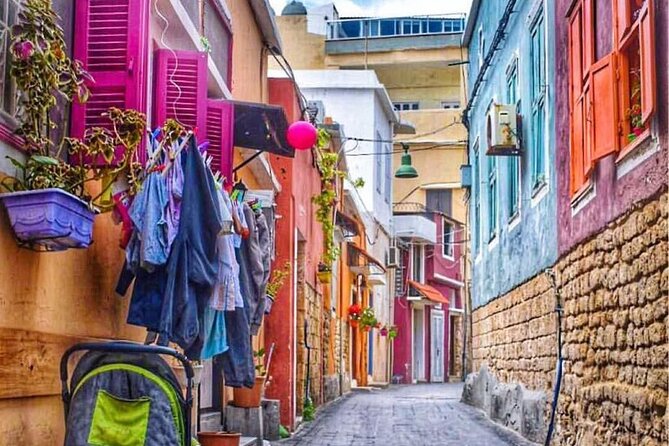
This tour works best if your main goal is efficiency with comfort. You get hotel pickup and drop-off, driven in an air-conditioned vehicle, plus an English-speaking local group leader to keep the day from turning into a random checklist.
You also get time buffers built into the rhythm. Stops are often about 30 to 60 minutes, with a longer window at the big-ticket places, like Jeita Grotto and several archaeological sites. That pacing is the trade-off: you see a lot, but you won’t have half a day to linger at just one ruin.
The group size cap, up to 15 people, is a big deal in Lebanon. Smaller groups move more cleanly through cities and viewpoints, and you have a better chance of hearing explanations instead of only catching the gist.
Day 1: Jeita Grotto, Harissa views, and Byblos old port
Day 1 is the day of wow-factor scenery, then a gradual shift into Phoenician city life.
Jeita Grotto, the fairytale caves you can walk through
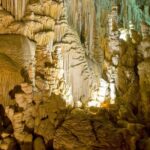
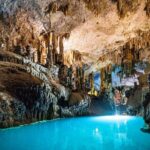
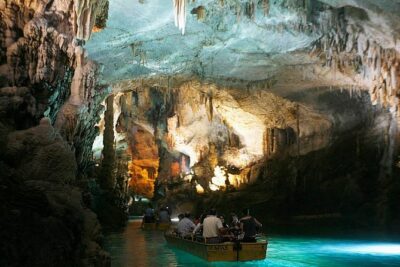
You start with pickup around 8:30am and head straight to Jeita Grotto. You’ll have about 1.5 hours to explore the famous cave system. It is made of two connected karstic limestone caves, spanning nearly 10 kilometers overall, but you walk just the parts open to visitors.
What I like about starting here is simple: you get your dramatic, underground moment before the rest of the day adds heat and traffic. Wear shoes with good grip. Cave floors can be slick, and you’ll want steady footing while taking in the stalactites and the changing light.
Admission is listed as not included for this stop, so budget for the ticket.

Harissa and the Marian statues above Jounieh Bay
Next comes Harissa, where you go by car up the mountain to see the major Virgin Mary statue viewpoint area. You also get a quick stop at the Shrine of Our Lady of Lebanon for panoramic scenery over Jounieh Bay.
After that, the plan includes the Téléferique Harissa cable car from Harissa to Jounieh for about 30 minutes. If the cable car is closed, the tour switches to car travel, so you still get the viewpoint payoff.
In other words, this day isn’t only ruins. It also gives you the kind of wide coastal view that makes Beirut feel connected to the rest of the country.
Some transport tickets here are marked not included, so if you want to ride for sure, plan a little extra for cable car costs.
Téléferique du Liban, then Byblos in the UNESCO zone
Then you ride the Téléferique du Liban for about 30 minutes. The tour marks admission there as free, but the key point for you is that this is built into the route, so you do not need to arrange anything.
Byblos is next, and it’s a great pairing with the cable car because it shifts from modern mountain views back to one of Lebanon’s oldest continuously occupied places. You get about 1.5 hours for the UNESCO World Heritage site of Byblos, plus additional time walking the Byblos Port, the marina area, and nearby streets.
One helpful detail is that the tour includes the Byblos old souk area too, with time for small shops selling antiques, souvenirs, and local crafts.
If you feel like going deeper, you have an option to enter the Crusader castle (Gibelet), and that’s listed as admission not included. Even if you skip the ticket, the mix of ruins, harbor atmosphere, and markets is a solid “arrive in town” experience.
Lunch is scheduled with a restaurant stop at the Byblos port area. The tour summary says lunch is included on one day, so treat this as your best chance to eat without planning. After lunch, you return to Beirut and get dropped back at your accommodation.
Day 2: Sidon souks, Maghdoucheh cave shrine, and Tyre’s Roman remains
Day 2 is the coastal-history sweep, moving from markets to Marian shrine to Roman monuments.
Sidon’s Sea Castle and the old city feel
You’re picked up earlier, around 8:15am, then head to Sidon. The first big stop is the Crusaders Sea Castle, where you get about 1 hour.
The value of Sidon here is that it is not only a pretty coastal town. It also has the sense of a trading city over centuries, with religious, political, and commercial importance going back a long way. The tour gives you enough time to understand the layers without making you memorize dates.
Admission is marked not included for this stop.
Sidon souks, crafts, coffee, and the working market vibe
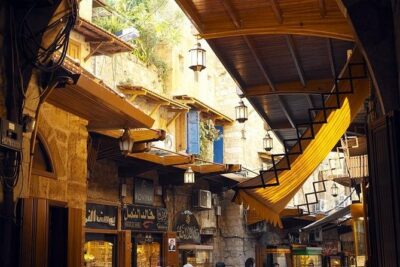
Then you move into Sidon souks, including sections of vaulted alleys and market areas that still feel active. You also get time to visit places like the coffee house area near the markets, where you might see local routines tied to water pipe culture and Turkish coffee.
This part of the day is where your group leader’s explanations matter. A market visit can be just shopping, or it can help you understand what kind of city Sidon used to be and still tries to be.
Musée du Savon, soap history you can actually picture
A unique detour comes next: the Musée du Savon. It covers the history of soap making in the region, and there is a demonstration of traditional olive oil soaps plus context around the hammam bath tradition.
The museum is based in an older soap factory building. That kind of setting makes the history feel grounded, not abstract.
Admission is marked not included here, but even a short visit can be a nice switch from purely archaeological stops.
A restored Great Mosque, formerly a Crusader church
Next is the Great al-Omari Mosque, formerly the Church of St. John of the Hospitalers. You get a short time on this stop, and the tour frames it well: the four walls date to the 13th century, and the structure still looks imposing, especially from the seaside.
It’s a quick stop, but it helps you see how buildings can change hands and purposes over time without losing their “big footprint” presence.
Khan El Franj, Sidon’s merchant-hub courtyard
The day also includes the Khan El Franj, a classic khan built by Fakhredine II for merchants. You get a stop at the large rectangular courtyard with a central fountain and covered galleries, plus context about how it functioned as a commercial center in the 19th century.
Maghdoucheh shrine, the cave where waiting is part of the story
Then you head to the village of Maghdoucheh for Our Lady of Awaiting, a Melkite Greek Catholic Marian shrine with a sacred cave, discovered in 1721.
You’ll have time to walk through the shrine area, including the tower crowned with the statue, a cathedral space, a cemetery, and the sacred cave believed to be where Mary rested while waiting for Jesus.
This stop is important because it adds a spiritual rhythm to your history-heavy schedule. It can also be a good moment to slow down.
Admission is listed as free.
Tyre beach and Tyre’s Roman monuments
Tyre begins with a short break at the Tyre Beach area, then time walking through the old port streets to explore traditional houses and the second side of Tyre.
After that, you visit major UNESCO-level Roman sites:
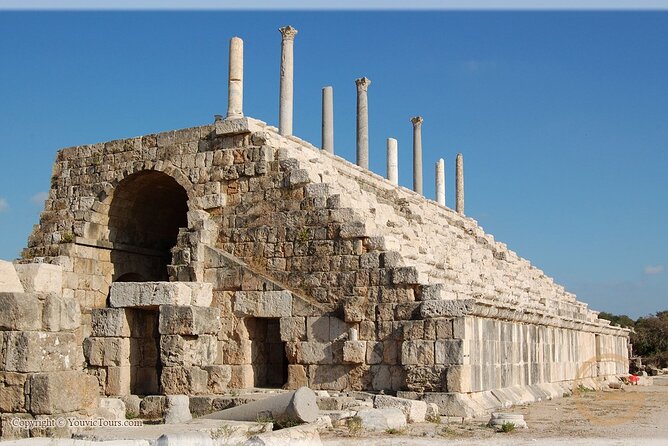
- Roman Hippodrome (about 1 hour), listed as a large, well-preserved hippodrome, horseshoe shaped, with seating capacity around 20,000.
- Al-Bass Archaeological Site (about 1 hour), noted for Byzantine road remains, triumphal arch, Roman road with aqueduct remnants, and large structures.
Admissions for those are marked not included.
The day ends with time to eat, then a return drop-off back in Beirut.
Day 3: Anjar’s Umayyad grid, then Baalbek’s colossal Roman scale
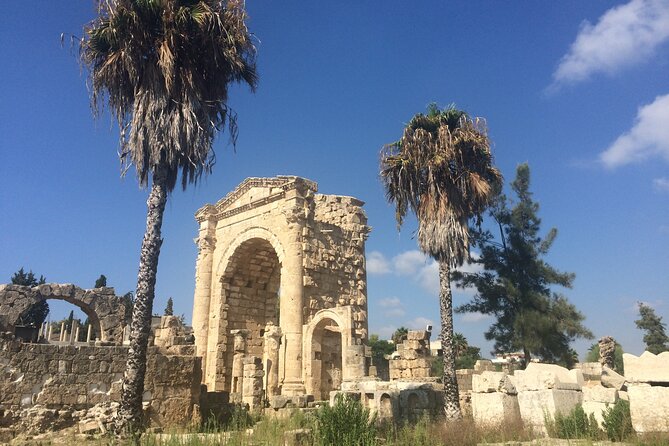
Day 3 is the “big monuments” day, starting in the Bekaa Valley and ending in Baalbek.
Anjar, Umayyad planning in the Bekaa Valley
You’re picked up again around 8:30am and head to the Bekaa, Lebanon’s major farming region. The route passes green fields with mountain scenery between Mount Lebanon and the Anti-Lebanon range.
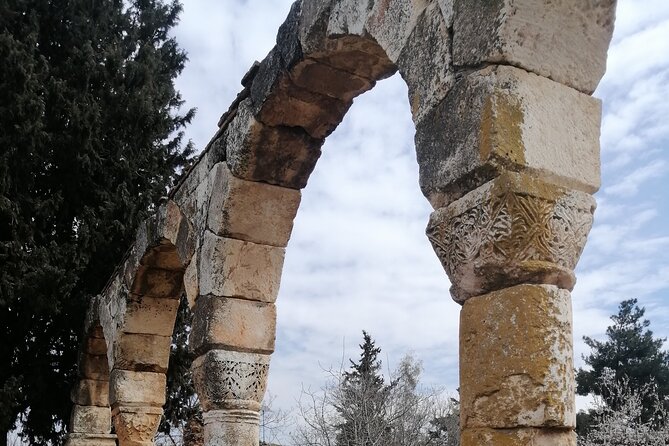
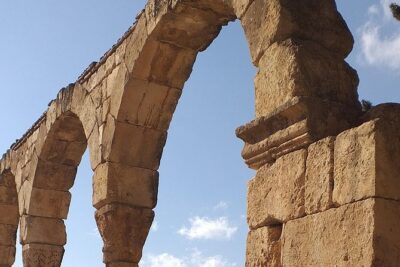
The first site is Anjar, founded by Caliph Walid I in the early 8th century. The ruins show a very regular layout, described as similar to palace cities, with testimony to city planning under the Umayyads.
You get about 1 hour here, and admission is listed as free.
Then you go to Umayyad Ruins of Aanjar, with an additional 30 minutes. This is where you get specifics about walls of the palace complex, mosque, thermal baths, and pillars that reflect Roman architectural influence.
Admission for this stop is marked not included, so be ready for at least one paid ticket day if you choose to go in deeper.
Hajar al-Hibla, the Stone of the Pregnant Woman
Next is Hajar al-Hibla, known as the Stone of the Pregnant Woman. You get about 30 minutes and it’s described as a worked Roman monolith among the largest ever quarried. It is also positioned as part of the larger temple complex logic.
Admission here is listed as free, so this is a nice payoff stop without extra ticket stress.
Baalbek temples, Bacchus and Jupiter up close
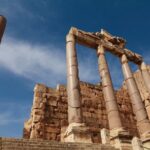
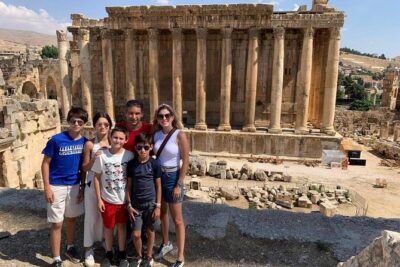
Then you arrive at Baalbek, home to the famous Baalbek temple complex. The tour notes the two headline Roman ruins: the Temple of Bacchus and the Temple of Jupiter. This whole complex is UNESCO-inscribed.
You get multiple timed windows across the complex, including:
- Temple areas around 45 minutes at one point (with admission for that section marked not included)
- A shorter segment focusing again on the complex and key structures
- Temple of Bacchus with about 30 minutes and admission marked free
- Temple of Jupiter with about 30 minutes and admission marked free, plus details like it being one of the largest Roman temples and tall columns
This is where the tour’s structure really matters. You don’t just stare at ruins, you get a guided sense of what you are looking at, how these sanctuaries functioned for pilgrims, and how the Phoenician triad connections shaped Roman-era worship.
Lunch is planned at the end of the day at a traditional restaurant. The tour summary says lunch is included on one day, but the schedule clearly builds in a restaurant break here, so you should not expect to go all day without food.
Price, group size, and what you get for $225
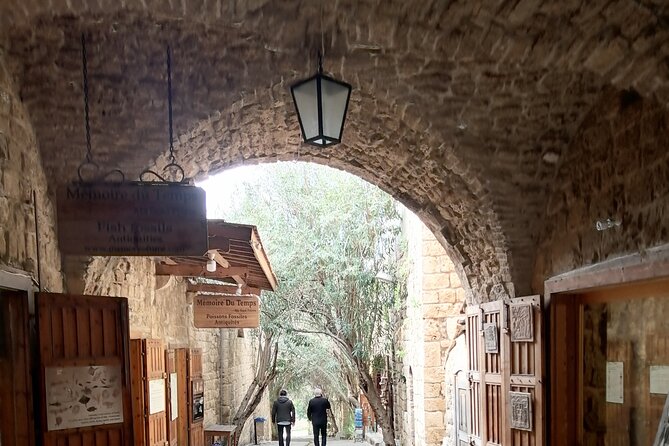
At $225 per person for 3 days, the value comes less from the sights themselves, and more from the plumbing around them: pickup and drop-off, air-conditioned transport, a local English speaker to explain what you are seeing, and a route that strings together far-flung stops without you coordinating the logistics.
It’s also priced to work for solo travelers. The small-group cap at 15 keeps it from feeling like a bus tour, while still giving you enough organization to hit Jeita Grotto, multiple coastal cities, and Baalbek in a short time.
One practical advantage: you are paying once and then letting the tour carry the heavy lifting. In Lebanon, that matters because travel times between regions can eat a whole day if you are trying to do it independently.
Entrance fees: what is included, what is not, and how to budget
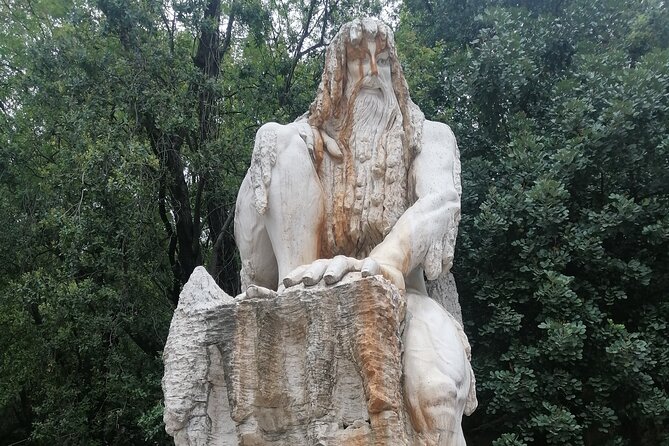
The tour states entrance fees are excluded, and the stop list labels some admissions as not included while others are free. In practice, that means you should expect to pay at least for ticketed attractions like Jeita Grotto, and likely one or more of the major Roman or archaeological sites that are marked not included.
The tour also notes that certain “free admission” labels are associated with specific stops, so not every monument requires a ticket. The key is to carry a payment method and a little cash for the paid items on the day.
Also note that cable cars are partly ticketed in the plan. The cable car sections are flagged as admission not included or free depending on the stop, so treat it as a variable cost.
If you want the simplest experience, plan one paid ticket day for Jeita Grotto plus at least one other paid archaeological ticket day. Then you will not feel surprised halfway through.
Timing and comfort hacks for a packed 3-day plan

This itinerary is efficient, not slow. That’s good news if you like momentum, but it needs a bit of you-side planning.
Here’s how to make it feel easier:
- Start each morning ready for an early push. Pickup is about 8:15 to 8:30am.
- Bring a light layer. Caves and buses both can feel cooler than you expect.
- Use the guided time. When you arrive at big places like Byblos and Baalbek, ask one or two questions early so the rest of the visit makes sense.
- If you care about extra context, don’t wait for it to appear automatically. You may find that some explanations are shorter than you want, especially around Byblos and Baalbek on certain days.
On the plus side, the guide rhythm and short stop windows help keep the day from dragging. And the comfort factor, air-conditioned vehicle plus no public transit juggling, is a big win.
Should you book this 3-day Lebanon combo tour?
Book it if:
- You have only a few days and you want a serious hit list across Jeita Grotto, Byblos, Sidon, Tyre, Anjar, and Baalbek.
- You prefer hotel pickup and drop-off over figuring out transport between regions.
- You like small-group touring and you value clear explanations from an English-speaking local leader, with drivers and guides such as Ali and Harake often mentioned as standout names.
Skip it or choose a different format if:
- You want long stays at one or two sites, not many short windows.
- You need deeper lecture-style history every single time. The tour gets you moving, so you may need to ask for extra background.
One more reality check: the tour is weather dependent, and since Lebanon’s conditions can change, plan to stay flexible if conditions cause a different travel plan.
Overall, this is a smart “get your bearings fast” tour for Lebanon. It is especially appealing if you are traveling solo, want comfort, and want the major UNESCO highlights without stitching together a dozen separate tickets and rides.
FAQ
What time does the tour pick up from my Beirut hotel?
Pickup is listed as 8:30am on Day 1 and Day 3, and 8:15am on Day 2.
How long is the tour over the three days?
The experience runs for 3 days (duration listed as approximately 3 days).
Is the group small?
Yes. The tour is described as a maximum of 15 travelers.
Does the tour include hotel pickup and drop-off?
Yes. It includes hotel pick-up and drop-off in Beirut.
Are entrance fees included?
No. The tour states that entrance fees are excluded. Some stops show admission ticket free, while others are marked not included.
Is lunch included?
The tour summary says lunch is included on one day, and the schedule includes restaurant time on additional days.
Will I ride cable cars?
The plan includes Téléferique Harissa and Téléferique du Liban. If the Harissa cable car is closed, the tour continues by car instead.
Are the sites all focused on history?
Mostly, yes. You’ll see Roman, Phoenician, and Umayyad sites, plus Marian shrines and viewpoint stops.
What is the cancellation window?
You can cancel for a full refund up to 24 hours before the experience starts. If you cancel less than 24 hours before, the amount is not refunded.
More of Lebanon, Reviewed
- Guided Small-Group Tour to Baalbek, Anjar and Ksara with Lunch
★ 5.0 · 511 reviews - Guided Small-Group Tour to Jeita, Harissa, Byblos with Lunch
★ 5.0 · 361 reviews - City Sightseeing Beirut Hop-On Hop-Off Bus Tour
★ 4.5 · 87 reviews - Private Anjar and Baalbek Tour from Beirut with Departure Ticket
★ 5.0 · 79 reviews - Guided Private Full Day Tour to Baalbek, Anjar and Chateau Ksara
★ 5.0 · 60 reviews
Elsewhere in Lebanon
- Guided Small-Group Tour to Baalbek, Anjar and Ksara with Lunch
★ 5.0 · 511 reviews - Guided Small-Group Tour to Jeita, Harissa, Byblos with Lunch
★ 5.0 · 361 reviews - Paragliding Trip Over Lebanon – Jounieh Bay
★ 5.0 · 257 reviews - Jeita Grotto,Harissa&Byblos Full-Day PRIVATE-CAR Trip from Beirut
★ 5.0 · 222 reviews - First Paragliding Club in Lebanon – Since 1992
★ 5.0 · 193 reviews
Other Lebanon trips we have written up
Tours, compared.
 ★ 5.0Guided Small-Group Tour to Baalbek, Anjar and Ksara with LunchFrom $65511 reviews
 ★ 5.0Guided Small-Group Tour to Jeita, Harissa, Byblos with LunchFrom $60361 reviews
 ★ 4.5City Sightseeing Beirut Hop-On Hop-Off Bus TourFrom $2387 reviews
 ★ 5.0Private Anjar and Baalbek Tour from Beirut with Departure TicketFrom $7579 reviews
 ★ 5.0Guided Private Full Day Tour to Baalbek, Anjar and Chateau KsaraFrom $10060 reviews
 ★ 5.0Semi-Private Tour to Jeita Grotto, Harissa & Byblos with LunchFrom $5552 reviews
 ★ 5.0PRIVATE city Tour of authentic Tripoli and vibrant BatrounFrom $11351 reviews
 ★ 5.0Small Group Tour to Jeita Grotto, Harisa & Byblos with Hotel pickupFrom $1049 reviews