
REVIEW · JEITA GROTTO, HARISSA & BYBLOS DAY TRIPS
Full-Day Private Trip to Jeita Grotto, Baalbek and Chateau Ksara
Three icons in one long day. This private route pairs Jeita Grotto boat-and-cave time, UNESCO-level Roman ruins at Baalbek, and a winery stop with wine tasting, while a driver keeps you off the map. It is a full package of nature, ancient power, and Lebanon’s wine culture in one go.
I love the door-to-door pickup and drop-off plus air-conditioned comfort, because the Beqaa Valley day feels like a real commitment, not a quick hop. I also like that Baalbek is handled with a local guide, so the stops make sense beyond postcard photos. In feedback from past guests, guides such as Hassan, Makram, Ahmad, Kaleeb, and Kimal are repeatedly described as on time and clearly communicative.
One possible drawback: entrance fees are not included, and lunch is also not included. If you prefer a fully all-in day with zero extra payments, you will want to budget for tickets and plan your meal stop.
In This Review
- Key highlights you will actually care about
- How the Jeita, Baalbek, Ksara day runs from Beirut
- Jeita Grotto: boat-and-foot cave time with real measurements
- Entrance fee note for Jeita
- Baalbek UNESCO temples: massive ruins, guided context, and a quick sense of power
- What you will spend your time on
- One practical note about tickets
- Temple of Jupiter: the Roman giant you will not forget
- Temple of Bacchus and Venus: different styles in the same sacred zone
- A cultural pause at the Mosque of Sayeda Khawla
- The Stone of the Pregnant Woman: monolithic scale in 15 minutes
- Chateau Ksara wine tasting: French-style Lebanon, with serious production
- Price and value: what the $69.45 covers (and what it does not)
- Best fit for this private day trip
- If you should book this tour or keep looking
- FAQ
- What time does the tour start in Beirut?
- How long is the full-day tour?
- Is hotel pickup and drop-off included?
- Is lunch included?
- Is wine tasting included, and are entrance tickets included?
- Is this a private tour?
- Can I cancel for a full refund?
Key highlights you will actually care about
- Jeita Grotto boat + on-foot cave viewing in one efficient visit
- Baalbek UNESCO experience with a local guide to connect the dots fast
- Temple of Jupiter, Bacchus, and Venus stops that focus on what makes each ruin special
- Chateau Ksara wine tasting with a winemaking story starting in 1857
- Private, air-conditioned transportation with a tour leader, so the day stays organized
- Entrance fees and lunch are not included, so you plan your budget upfront
Other ways to fit Jeita, Harissa and Byblos into one day
- Guided Small-Group Tour to Jeita, Harissa, Byblos with Lunch★ 5.0 · 361 reviews
- Jeita Grotto,Harissa&Byblos Full-Day PRIVATE-CAR Trip from Beirut★ 5.0 · 222 reviews
- Jeita Grotto – Harissa – Byblos Trip★ 5.0 · 169 reviews
- Byblos, Jeita Grotto & Harissa Day Trip -With Lunch (4G on Board)★ 4.5 · 145 reviews
How the Jeita, Baalbek, Ksara day runs from Beirut
This is built as a private 9-hour day starting at 8:30 am, so you are not waiting around for strangers or juggling multiple meeting points. You get hotel pickup and drop-off, plus an air-conditioned vehicle and a tour leader, which matters when the schedule is tight and the roads outside Beirut take time.
Your day is designed around three “anchors”: Jeita Grotto first, Baalbek next, then Chateau Ksara. That order is smart, because Jeita is time-sensitive and set in a cave system, while Baalbek needs slower, more thoughtful walking and looking.
Since it is private, it is easy to keep the pace comfortable for your group. You also get a mobile ticket, which is one less thing to manage.
Jeita Grotto: boat-and-foot cave time with real measurements
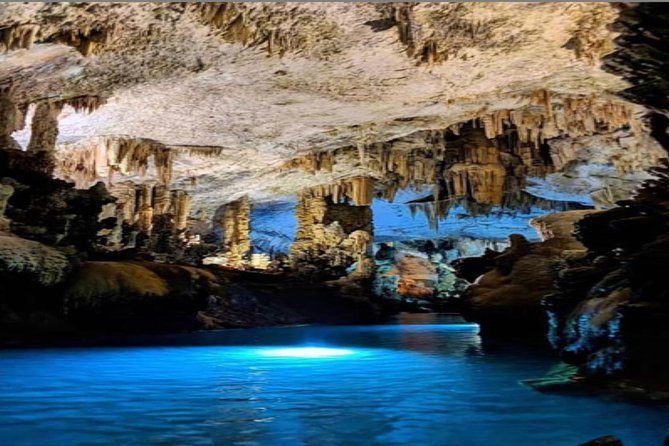
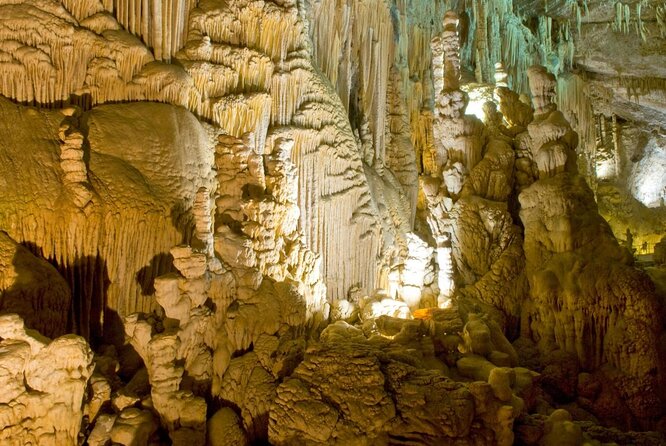
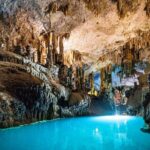
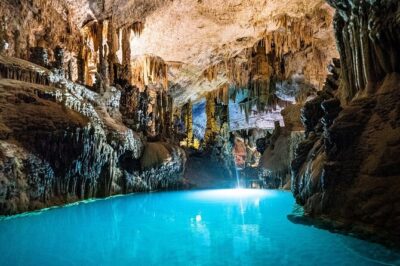
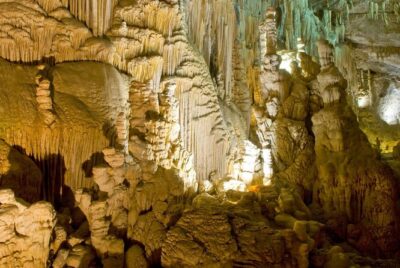
Jeita Grotto is not a small cave. It is a system of two interconnected karstic limestone caves, and it is described as the longest cave complex in the Middle East. One reason I like this stop is scale, because the numbers make it easier to understand what you are seeing.
The caves sit about 300 metres above sea level, and the height difference between levels is 305 metres. The upper cave runs about 2,130 metres long, and it is packed with crystallized formations such as stalactites, stalagmites, columns, “mushrooms,” ponds, curtains, and draperies.
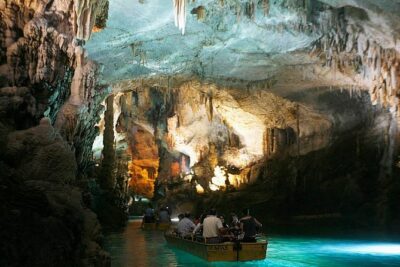
Then you drop to the lower gallery, about 60 metres below the upper cave. The lower cave is about 6,200 metres long and you follow a smooth underwater river and a lake, which is why the boat element matters. It helps you experience the cave without having to walk every stretch.
How it feels on the ground depends on how the timing lines up that day, but you will want to treat this as a “listen with your eyes” stop. Look up at formations in the upper cave, then shift your attention to water and the broader feel of the lower level.
Entrance fee note for Jeita
Jeita Grotto time is listed at about 1 hour 30 minutes, and the admission ticket is not included. That is the biggest extra cost on this early part of the day, so it is worth budgeting for it.
More runs out to Baalbek, Anjar and the Ksara cellars
Baalbek UNESCO temples: massive ruins, guided context, and a quick sense of power
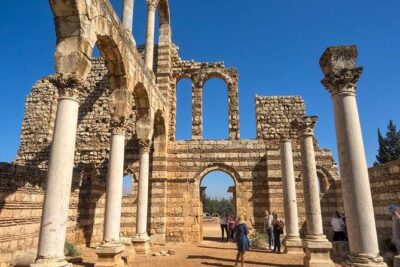
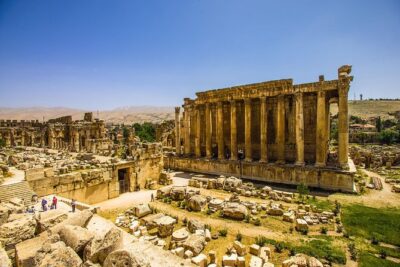
Baalbek is the main cultural heavy hitter in this tour, and it is easy to see why. The temple complex includes two of the grandest Roman temple ruins: the Temple of Bacchus and the Temple of Jupiter, and it was inscribed as a UNESCO World Heritage site in 1984.
This place matters historically because Baalbek started as a Phoenician city, known as Heliopolis in Hellenistic times. During Roman rule, it kept its religious function, and the sanctuary of Jupiter attracted thousands of pilgrims.
What you gain with a local guide is not trivia, it is orientation. When you understand that the worship involved a “triad” associated with Jupiter, Venus, and Bacchus, the different temples stop feeling like random rubble. They start feeling like pieces of one large religious and civic system.
What you will spend your time on
You will move through a structured sequence of stops inside the Baalbek area, with time allocated to key temple sites. The tour includes multiple segments focused on the temples of Baalbek, then specific attention on the Temple of Jupiter and Temple of Bacchus, and also the Temple of Venus in Heliopolis.
The complex is positioned at about 1,150 metres altitude, at the foot of the south-west slope of Anti-Lebanon, bordering the fertile plain of the Bekaa. That geography helps explain why this region became a stage for huge constructions.
One practical note about tickets
The info given for Baalbek is mixed: one segment notes admission is free, while several other temple stops list admission tickets not included. When you plan your budget, assume you will pay something at this part of the day unless you confirm which parts are covered for your exact booking.
Temple of Jupiter: the Roman giant you will not forget
The Temple of Jupiter is described as the largest Roman temple in the Roman world and it sits within the Baalbek complex. It was dedicated to Jupiter Heliopolitanus and served as an oracle.
Even the construction timeline is a clue to its importance. Work likely began around 16 BC, and it was nearly complete by about AD 60. You also learn to notice the platform logic: it sits on a stone raise roughly 7 metres above the huge foundation stones, and some foundation blocks were among the heaviest ever used in construction.
This is one of those ruins where the “wow” is immediate, but the understanding comes from details. If you pay attention to the platform height and the scale of the stone work, you get a better sense of how Roman power was displayed in stone.
The stop is about 30 minutes in the plan, and the admission ticket is listed as not included.
Temple of Bacchus and Venus: different styles in the same sacred zone
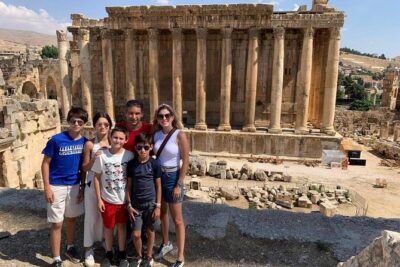
The Temple of Bacchus is one of the best-preserved and grandest ruins at Baalbek. Its ornamentation is dated to the second century CE, even though the exact age is not pinned down in the tour info. It is a UNESCO site since 1984, so you will be walking through a protected, internationally recognized archaeological zone.
Then comes the Temple of Venus, built in the third century. The structure is built on a horseshoe-shaped platform and includes a circular shrine with a square entrance. One detail you can look for is that the outer façade has five niches, meaning there are not straight, uniform walls.
There is also symbolic artwork to notice. The niches held representations of doves and shells, which is taken as evidence the shrine was dedicated to Venus. A quick guided explanation here can be the difference between seeing carvings and understanding what they were meant to signal.
The plan lists short time blocks for these stops, and it also lists admission tickets not included for the Bacchus and Venus temple segments.
A cultural pause at the Mosque of Sayeda Khawla
Baalbek is not only ancient Roman stones. The tour also includes a stop at the Mosque of Sayeda Khawla.
This mosque is erected on a site believed to be where Sayyida Khawla, daughter of Imam al-Hussein and grandson of the Prophet Muhammad, was buried. The local belief included in the tour info says that when a caravan of captives of Karbala passed Baalbek, Khawla passed away and was buried there.
I like including this kind of stop because it reminds you the place is lived in. You are not just time-traveling into ruins, you are seeing how current faith traditions sit alongside archaeological landmarks.
The Stone of the Pregnant Woman: monolithic scale in 15 minutes
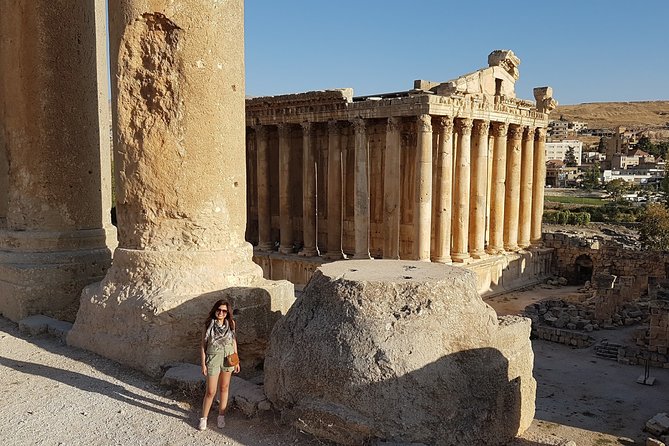
The Stone of the Pregnant Woman is a worked Roman monolith in Baalbek. The tour notes that it is among the largest monoliths ever quarried, and that it was likely paired with another large stone block for the nearby temple complex.
The interesting part is the idea of scale for the sake of scale. These blocks are described as showing “monolithic gigantism” that was unparalleled in antiquity, at least in the framing the tour gives.
This stop is short, about 15 minutes, and it is listed as free for admission.
If you only have time for one “engineering” moment at Baalbek, this is it. You can stand back, look at the block’s size in relation to the surroundings, and feel the logistics Romans must have handled to move something like this.
Chateau Ksara wine tasting: French-style Lebanon, with serious production
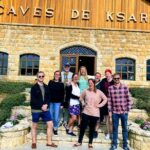
After the history and the caves, the day pivots to wine at Chateau Ksara in the Beqaa Valley. The tour includes a winery time block of about 45 minutes, and the tasting is included while admission is listed as not included.
Ksara traces its roots to 1857, when it was founded by Jesuit priests. The tour info also credits Ksara with developing the first dry wine in Lebanon. That is a specific claim, and it is exactly the kind of local detail that makes wine tastings more than just sipping.
For context, Ksara produces about 3 million bottles annually and exports to more than 40 countries. So you are not just tasting something small and niche, you are tasting from a producer with a long track record and wide reach.
What you will enjoy here is the contrast with the morning. In the cave and at Baalbek, everything is about stone and time. At Ksara, time is turned into flavor, and you get to slow down.
Price and value: what the $69.45 covers (and what it does not)
At $69.45 per person, this is a value play because so much of the day is transportation and professional help. You get comfortable private transportation, hotel pickup and drop-off, a tour leader, and a local guide in Baalbek, plus air-conditioning for the drive.
The other reason it feels fair is that wine tasting is included. Chateau Ksara is the kind of stop where tastings can add up in other formats, so it is nice when it is built into the price.
The two costs you should plan for are clear from the tour info: entrance fees are excluded, and lunch is not included. Also, Jeita Grotto has a separate admission ticket not included, and several Baalbek temple stops list tickets not included.
If you are the type who hates surprise payments, do a quick mental checklist before you go. Put money aside for cave entry, Baalbek entry where required, and a lunch plan for your tastes.
Best fit for this private day trip
This tour fits best if you want three “worlds” in one day without the stress of driving. It is ideal for couples, small groups, and solo travelers who like structure, and it is especially good if you enjoy Roman ruins and you also like a real food and wine moment.
It is also a good choice if you value guidance inside Baalbek. Even with the scale of the temples, you get more out of it when a local guide helps you interpret what you are seeing.
If you prefer a slower pace with a sit-down lunch included, or if you only want one major stop and a light sightseeing day, this might feel like a lot. The schedule is built for efficiency, not lingering.
If you should book this tour or keep looking
I would book this tour if you want a private, organized day that covers Jeita Grotto, Baalbek, and Chateau Ksara, and you are comfortable budgeting for entrance fees and lunch. The mix is strong: cave wonder, monumental Roman architecture, and a tasting rooted in Lebanon’s long winemaking tradition.
I would skip it if you are traveling with a strict budget that cannot handle extra tickets, or if you do not enjoy moving between multiple major sites in one long window. For some people, that kind of packed day is exactly the point. For others, it is tiring.
If you are in the first group, this is a smart way to spend a day in Lebanon. You get door-to-door logistics, guided context in Baalbek, and wine tasting in the Beqaa Valley, all without you having to figure out the drive yourself.
FAQ
What time does the tour start in Beirut?
The tour starts at 8:30 am.
How long is the full-day tour?
The duration is about 9 hours.
Is hotel pickup and drop-off included?
Yes. The tour includes hotel pickup and drop-off plus comfortable private transportation.
Is lunch included?
No. Lunch is not included.
Is wine tasting included, and are entrance tickets included?
Wine tasting is included, but entrance fees are not included.
Is this a private tour?
Yes. It is a private tour/activity, and only your group participates.
Can I cancel for a full refund?
Yes. You can cancel up to 24 hours in advance for a full refund.
Elsewhere in Lebanon
- Guided Small-Group Tour to Baalbek, Anjar and Ksara with Lunch
★ 5.0 · 511 reviews - Guided Small-Group Tour to Jeita, Harissa, Byblos with Lunch
★ 5.0 · 361 reviews - Paragliding Trip Over Lebanon – Jounieh Bay
★ 5.0 · 257 reviews - Jeita Grotto,Harissa&Byblos Full-Day PRIVATE-CAR Trip from Beirut
★ 5.0 · 222 reviews - First Paragliding Club in Lebanon – Since 1992
★ 5.0 · 193 reviews
Baalbek and the Bekaa, Compared
- Guided Small-Group Tour to Baalbek, Anjar and Ksara with Lunch
★ 5.0 · 511 reviews - Anjar, Baalbek & Ksara Day Trip – With Lunch (4G on Board)
★ 4.5 · 181 reviews - Baalbek – Anjar – Ksara Trip From Beirut
★ 4.5 · 80 reviews - Private Anjar and Baalbek Tour from Beirut with Departure Ticket
★ 5.0 · 79 reviews - Guided Private Full Day Tour to Baalbek, Anjar and Chateau Ksara
★ 5.0 · 60 reviews
Jeita, Harissa and Byblos: Three More Ways
- Guided Small-Group Tour to Jeita, Harissa, Byblos with Lunch
★ 5.0 · 361 reviews - Jeita Grotto,Harissa&Byblos Full-Day PRIVATE-CAR Trip from Beirut
★ 5.0 · 222 reviews - Jeita Grotto – Harissa – Byblos Trip
★ 5.0 · 169 reviews - Byblos, Jeita Grotto & Harissa Day Trip -With Lunch (4G on Board)
★ 4.5 · 145 reviews - Semi-Private Tour to Jeita Grotto, Harissa & Byblos with Lunch
★ 5.0 · 52 reviews
Other Lebanon trips we have written up
Jeita Grotto, Harissa & Byblos Day Trips, compared.
 ★ 5.0Guided Small-Group Tour to Jeita, Harissa, Byblos with LunchFrom $60361 reviews
 ★ 5.0Jeita Grotto,Harissa&Byblos Full-Day PRIVATE-CAR Trip from BeirutFrom $75222 reviews
 ★ 5.0Jeita Grotto – Harissa – Byblos TripFrom $37169 reviews
 ★ 4.5Byblos, Jeita Grotto & Harissa Day Trip -With Lunch (4G on Board)From $98145 reviews
 ★ 5.0Semi-Private Tour to Jeita Grotto, Harissa & Byblos with LunchFrom $5552 reviews
 ★ 5.0Small Group Tour to Jeita Grotto, Harisa & Byblos with Hotel pickupFrom $1049 reviews
 ★ 5.0Private Guided Tour to Jeita Grotto through Harissa and ByblosFrom $7548 reviews
 ★ 5.0New Guided Semi-Private Tour to Jeita Grotto, Harissa & ByblosFrom $5547 reviews
Every list this tour turns up in