
REVIEW · JEITA GROTTO, HARISSA & BYBLOS DAY TRIPS
Guided Full-Day Private Tour to Jeita Grotto, Byblos and Baalbek
A day like this fits big Lebanon in one run. You get Jeita Grotto with its long cave galleries, plus Baalbek and its Roman temples, all with guide-led context instead of just wandering. I like that it is truly private, so the day moves at your pace, with door-to-door pickup and drop-off from your Beirut hotel. One more plus: it is built for first-timers, hitting three major sites without asking you to stitch together tickets and transport on your own.
The only real drawback to plan around is cost at the door. Some entrances are not included, including Jeita Grotto and the main temples of Baalbek, and lunch is not part of the package either.
In This Review
- Key highlights
- Why this 10-hour private day works for tight schedules
- Jeita Grotto: upper formations, lower underwater river, and lots of wow per hour
- Byblos and Byblos Castle: Phoenician roots plus a Crusader viewpoint
- Old Souk and the Port walk: quick stops that change the mood
- Baalbek: UNESCO Roman temples and the scale game
- Temples of Baalbek: the part where entrance costs can change your budget
- Stone of the Pregnant Woman: the monolith detail that makes the ruins feel real
- Logistics that matter: pickup at 7:30, private pacing, and ticket planning
- Who this tour suits best
- Should you book this tour?
- FAQ
- What is the price and duration of the private tour?
- Where does the tour start and do you get hotel pickup?
- Is this tour private or shared with other travelers?
- Are admission tickets included for all stops?
- Is lunch included?
- Can I cancel and get a full refund?
Key highlights
- Private, full-day flow: Hotel pickup and drop-off, with an air-conditioned vehicle and a tour leader keeping everything moving.
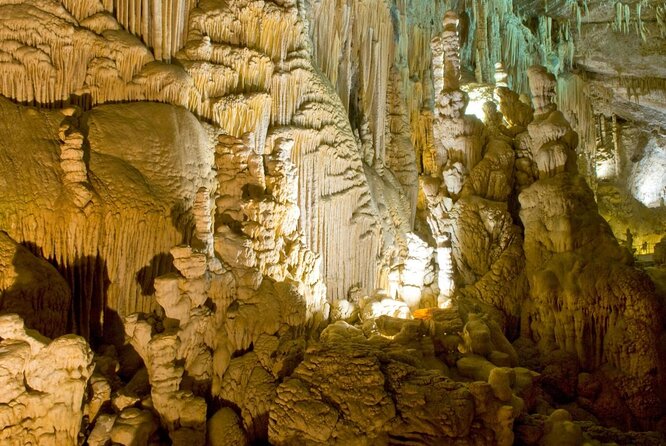
- Jeita in two levels: Upper cave formations up top, then the lower gallery with an underwater river.
- Byblos in layers: Ancient Phoenician setting, plus the Crusader-era Byblos Castle and quick hits at the souk and port.
- Baalbek scale you can feel: UNESCO Roman temples, including the Temple of Bacchus and the Temple of Jupiter.
- Big-stone stop at the end: The Stone of the Pregnant Woman, a worked monolith tied to the temple complex.
Other ways to fit Jeita, Harissa and Byblos into one day
- Guided Small-Group Tour to Jeita, Harissa, Byblos with Lunch★ 5.0 · 361 reviews
- Jeita Grotto,Harissa&Byblos Full-Day PRIVATE-CAR Trip from Beirut★ 5.0 · 222 reviews
- Jeita Grotto – Harissa – Byblos Trip★ 5.0 · 169 reviews
- Byblos, Jeita Grotto & Harissa Day Trip -With Lunch (4G on Board)★ 4.5 · 145 reviews
Why this 10-hour private day works for tight schedules
If your Lebanon time is limited, this is the kind of plan that saves you stress. You start in Beirut early, and you return after a full circuit through three of the country’s headline attractions: Jeita Grotto, Byblos, and Baalbek. The tour also uses a mobile ticket, which helps reduce last-minute scrambling.
Value wise, it is not just about seeing three stops. The included extras matter: you get comfortable private transportation, an air-conditioned vehicle, a tour leader, and professional local guides. That is the difference between snapping photos and actually understanding what you are looking at, like why Byblos matters for the Phoenician alphabet story, or how Baalbek became a major pilgrimage center in Roman times.
Price is set at $100 per person, and private tours can be pricier than hopping on a shared bus. Here, the price makes more sense because door-to-door pickup, private vehicle use, and guide-led explanations are built in. One practical note: tickets are mixed. Some sites are free, while others require separate admission, so your final cost depends on which entries you choose and how you budget.
Jeita Grotto: upper formations, lower underwater river, and lots of wow per hour
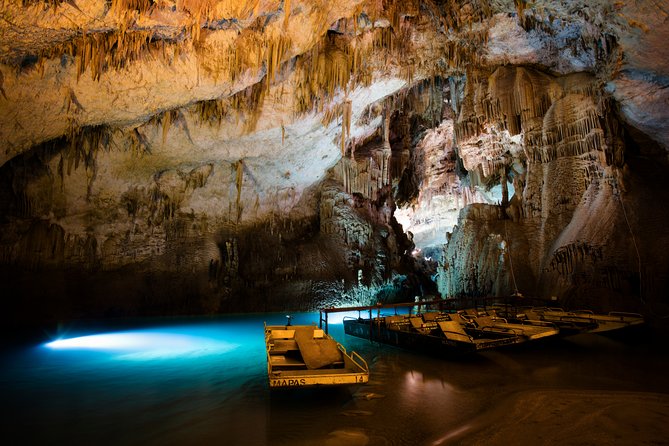
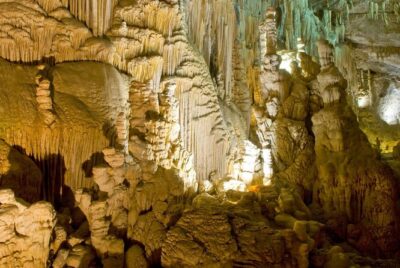
Jeita Grotto is the kind of place that makes you stop talking for a moment. It is a limestone cave system made of two connected caves, formed over millions of years, and it is considered the longest cave complex in the Middle East. The site is about 300 meters above sea level, and the height difference between the upper and lower parts is listed as 305 meters.
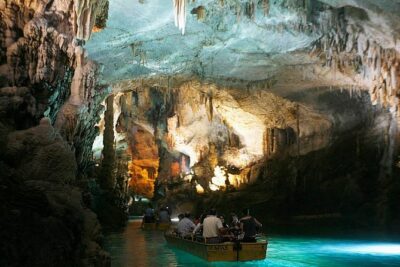
What I like most is the way it is structured. The upper cave runs about 2,130 meters, filled with crystallized formations like stalactites, stalagmites, columns, and even formations described like mushrooms, ponds, curtains, and draperies. The lower gallery is longer, about 6,200 meters, and it has a smooth underwater river and a lake. That mix gives you both the “dry” spectacle and the water-connected feel in the same morning window.
Plan for about one hour on-site, and note the admission ticket is not included. That means you should treat Jeita as the part where you might pay extra even if everything else is budgeted. If you hate last-minute surprises, this is the section to double-check before you go, especially if you are traveling on a tight timeline.
Practical tip: cave walking can mean uneven surfaces and lots of steps. Wear shoes you trust for rock and slick paths, and keep your camera strap short so you are not juggling it while walking.
Byblos and Byblos Castle: Phoenician roots plus a Crusader viewpoint
Byblos is the second anchor of the day, and it is easy to see why it keeps showing up on “best of Lebanon” lists. The city is linked to the Phoenicians and is said to be inhabited since Neolithic times. It is also associated with the diffusion of the Phoenician alphabet, which gives your visit a big-picture feel. This is one of those stops where a guide can turn ruins into a timeline you can actually hold in your head.
You get around one hour for Byblos itself, and that time matters because it lets you slow down inside the archaeological area rather than rushing from sign to sign. If you like understanding how people lived, Byblos delivers more than stone walls. You are surrounded by the setting for a story that stretches across centuries.
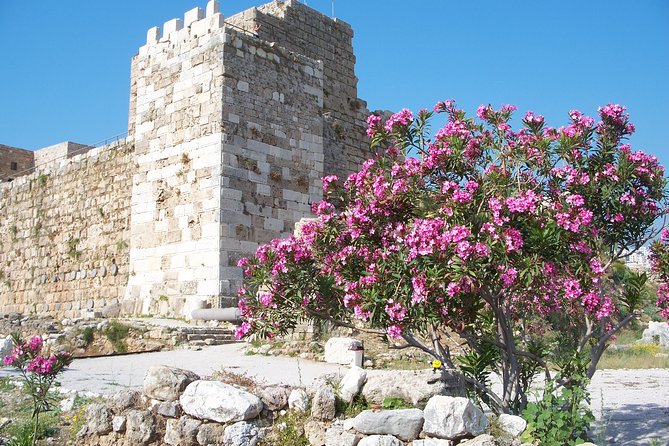
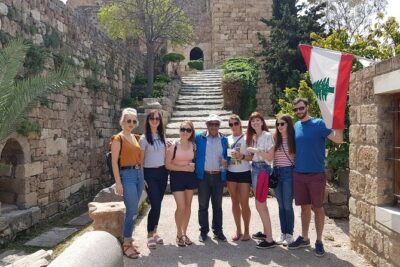
Then you add Byblos Castle, a restored 12th-century Crusader castle. It sits inside the archaeological zone and is surrounded by a dry moat about 10 meters wide. The keep is foursquare, and from the top you get a strong perspective over the ruins, with Bronze Age dwellings visible below the walls toward the sea. It also includes a small museum and information panels that outline the city’s history.
Timing is about 30 minutes for the castle, and the admission ticket is not included. In other words, if you are trying to keep total cost predictable, consider this another entry where you may pay separately.
Practical tip: the best views in places like this usually involve stairs and exposed angles. Bring a hat or something for sun, and keep an eye on footing if the ground feels uneven.
More runs out to Baalbek, Anjar and the Ksara cellars
Old Souk and the Port walk: quick stops that change the mood
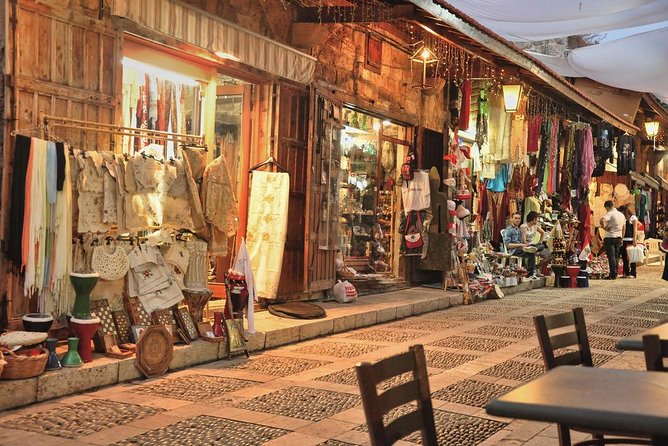
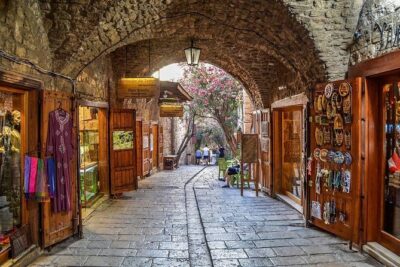
After the heavier history stops, the tour keeps things light with short breaks. In Byblos, you get time at the Old Souk, about 10 minutes. This is an old market where you can browse souvenirs and antiques, or simply wander the cobblestone streets and take in the architecture. It is not meant to be a full shopping hour, so treat it like a chance to pick up a small item, grab a visual break, and keep the day moving.
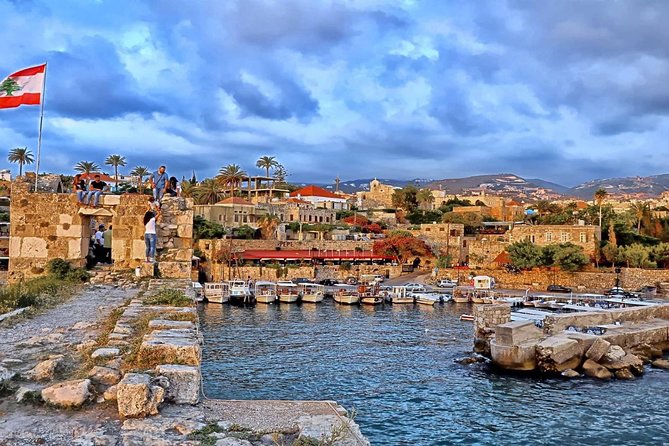
Right after that comes the Byblos Port, also about 10 minutes. Locals believe it is the oldest port in the world. The story goes back to around 3000 BC, when Byblos Port was a major timber shipping center in the eastern Mediterranean. Even with the short time, it adds a practical sense of place, because you can connect the city’s ancient identity to movement, trade, and shipping.
I like these two quick stops because they keep the day from feeling like a museum marathon. You get context, then you get a little street-level vibe.
Baalbek: UNESCO Roman temples and the scale game
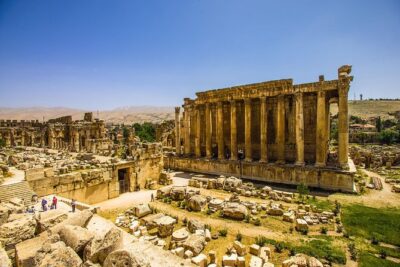
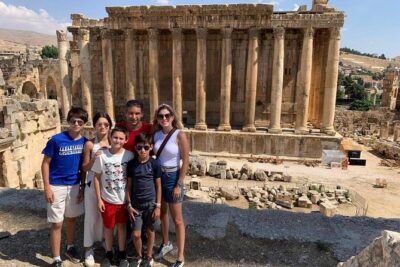
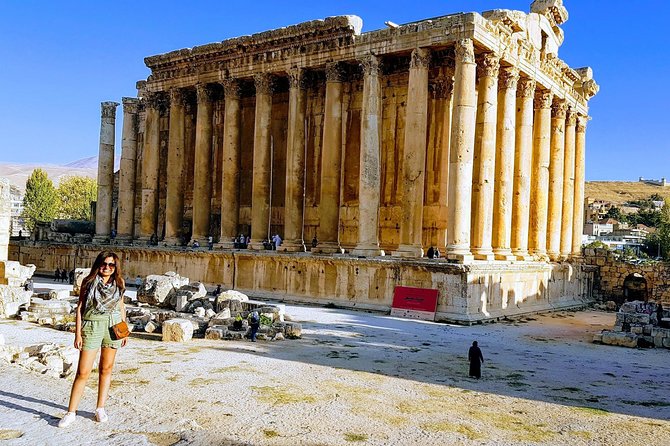
Baalbek is where the day turns cinematic. The visit includes the Baalbek temple complex, a UNESCO World Heritage site. You are specifically looking at two of the largest Roman temple ruins: the Temple of Bacchus and the Temple of Jupiter. The complex is also described as tied to an earlier Phoenician city, where a triad of deities was worshipped. During the Hellenistic period it was known as Heliopolis, and in Roman times the sanctuary of Heliopolitan Jupiter attracted thousands of pilgrims.
You get about one hour and 30 minutes for Baalbek, and the admission ticket is listed as free for this part. That is helpful for budgeting, and it also means you can spend time looking without feeling nickel-and-dimed right away.
A guide’s value shows up here. Roman architecture is impressive, but it hits harder when someone explains what you are seeing and why those structures were built over a long span of time. The complex’s colossal constructions are described as being built over more than two centuries, and that detail helps you understand that this is not one quick build. It is a long project, tied to religious importance and imperial reach.
Practical tip: temple sites often involve open areas with sun exposure. With only guide-led time and fixed scheduling, plan to hydrate and take short shade breaks when you can.
Temples of Baalbek: the part where entrance costs can change your budget
Right after the main Baalbek time, you visit the Temples of Baalbek section itself, again about one hour and 30 minutes. This is where the focus is on the sanctuary experience and the Roman-era peak. The description notes the complex sits at the foot of the south-west slope of Anti-Lebanon, bordering the fertile plain of the Bekaa, at an altitude of 1150 meters. That “where it sits” detail helps you picture why this place drew pilgrims.
This segment is marked with admission ticket not included, which is the key budgeting point in Baalbek. If you want to avoid surprises, treat this as the second likely ticket payment after Jeita.
One reason I think this stop deserves the time is that the tour content connects the Roman names to the earlier cult. The Romanized triad of Heliopolis is described as Jupiter, Venus, and Bacchus, and the cult is essentially Phoenician in origin. With a guide’s explanations, you can see the cultural layering instead of just reading names off plaques.
Stone of the Pregnant Woman: the monolith detail that makes the ruins feel real
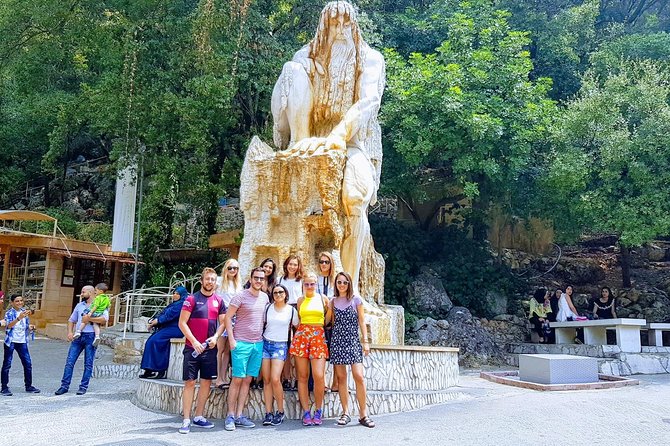
Near the end, you get a shorter but memorable stop at the Stone of the Pregnant Woman. It is described as a worked Roman monolith, and it sits alongside another ancient stone block nearby. Together, they are said to be among the largest monoliths ever quarried.
The description notes these blocks were likely intended for the nearby Roman temple complex and share a style labeled as monolithic gigantism, said to be unparalleled in antiquity. Even if you are not a construction-history person, the sheer size concept hits differently when a guide frames it as a deliberately massive engineering choice rather than a random leftover.
This stop is about 30 minutes, and admission is free.
Practical tip: take a moment to look for how the stone is positioned and what the surrounding area suggests. With only half an hour, you will get more from paying attention than from racing to the next view.
Logistics that matter: pickup at 7:30, private pacing, and ticket planning
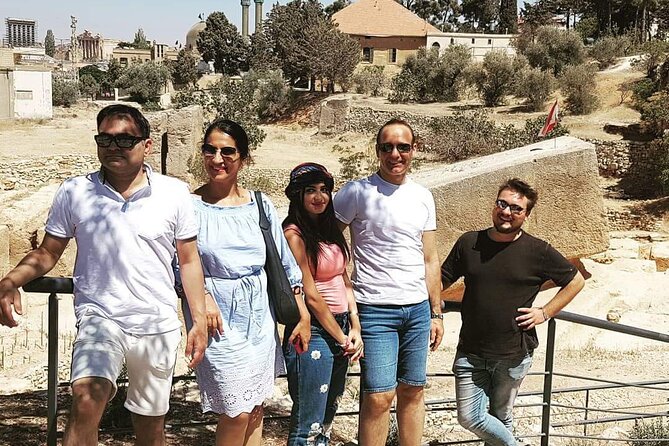
The day starts at 7:30 am, and the duration is about 10 hours. That is long enough to notice comfort and timing issues, which is exactly why door-to-door service matters here. You skip the stress of meeting public transport links and you ride in an air-conditioned vehicle between stops.
Because it is a private tour, your group stays together, and you do not have to wait on strangers. That matters for cave walking at Jeita and for the temple viewing pace at Baalbek, where you want steady time rather than interruptions.
The tour also lists group discounts and a mobile ticket, which can help if you are traveling as a couple or small group. If you are solo, you likely still get the private experience for your party size, but the discount detail is worth asking about when you book.
Two “day planning” notes that can affect your comfort:
- Lunch is not included, so you will want a plan for food, whether that means snacks you bring or a pre-arranged meal stop.
- Some admissions are not included, especially Jeita Grotto and Temples of Baalbek. Build that into your budget early.
Who this tour suits best
This is a strong fit for:
- First-time visitors who want three top Lebanon stops without multiple booking headaches.
- People who like history but also want a structured day with a guide doing the connecting.
- Travelers who value private pickup and drop-off in Beirut, especially if you are short on time.
It might be less ideal if you are the type who wants to spend half a day soaking in one site. This is an efficient circuit. You will see a lot, but you are not trying to live there.
Should you book this tour?
Book it if you want an organized, high-impact day that hits Jeita Grotto, Byblos, and Baalbek with professional guiding. At $100 per person, it feels most worthwhile when you factor in private transportation, hotel pickup and drop-off, and guided explanations that help you understand what you are seeing, not just where it is.
If you are budget-sensitive, still consider it, but plan for extra admission at the stops marked as not included, plus lunch since it is not part of the deal. I also think it is a smart choice if you want a guide who keeps things fun and readable. One highlight from a five-star experience was a guide named Hassan, praised for making the day feel like a proper journey, not a checklist.
If you want, tell me your travel dates and how many people are in your group, and I can help you think through which parts to budget extra for.
FAQ
What is the price and duration of the private tour?
The tour is priced at $100 per person and lasts about 10 hours.
Where does the tour start and do you get hotel pickup?
The tour starts at 7:30 am, with pickup and drop-off from your Beirut hotel.
Is this tour private or shared with other travelers?
This is a private tour/activity, so only your group participates.
Are admission tickets included for all stops?
Not all tickets are included. Jeita Grotto is not included, Byblos Castle is not included, and the Temples of Baalbek admission is not included. The other listed stops show admission as free.
Is lunch included?
No, lunch is not included.
Can I cancel and get a full refund?
Yes. Free cancellation is available, and you can cancel up to 24 hours in advance for a full refund.
Elsewhere in Lebanon
- Guided Small-Group Tour to Baalbek, Anjar and Ksara with Lunch
★ 5.0 · 511 reviews - Guided Small-Group Tour to Jeita, Harissa, Byblos with Lunch
★ 5.0 · 361 reviews - Paragliding Trip Over Lebanon – Jounieh Bay
★ 5.0 · 257 reviews - Jeita Grotto,Harissa&Byblos Full-Day PRIVATE-CAR Trip from Beirut
★ 5.0 · 222 reviews - First Paragliding Club in Lebanon – Since 1992
★ 5.0 · 193 reviews
Baalbek and the Bekaa, Compared
- Guided Small-Group Tour to Baalbek, Anjar and Ksara with Lunch
★ 5.0 · 511 reviews - Anjar, Baalbek & Ksara Day Trip – With Lunch (4G on Board)
★ 4.5 · 181 reviews - Baalbek – Anjar – Ksara Trip From Beirut
★ 4.5 · 80 reviews - Private Anjar and Baalbek Tour from Beirut with Departure Ticket
★ 5.0 · 79 reviews - Guided Private Full Day Tour to Baalbek, Anjar and Chateau Ksara
★ 5.0 · 60 reviews
Jeita, Harissa and Byblos: Three More Ways
- Guided Small-Group Tour to Jeita, Harissa, Byblos with Lunch
★ 5.0 · 361 reviews - Jeita Grotto,Harissa&Byblos Full-Day PRIVATE-CAR Trip from Beirut
★ 5.0 · 222 reviews - Jeita Grotto – Harissa – Byblos Trip
★ 5.0 · 169 reviews - Byblos, Jeita Grotto & Harissa Day Trip -With Lunch (4G on Board)
★ 4.5 · 145 reviews - Semi-Private Tour to Jeita Grotto, Harissa & Byblos with Lunch
★ 5.0 · 52 reviews
Other Lebanon trips we have written up


Jeita Grotto, Harissa & Byblos Day Trips, compared.
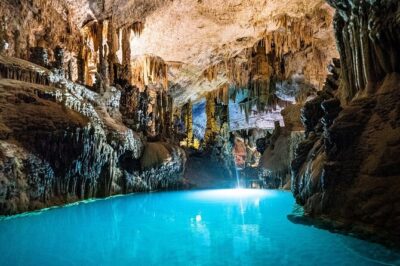 ★ 5.0Guided Small-Group Tour to Jeita, Harissa, Byblos with LunchFrom $60361 reviews
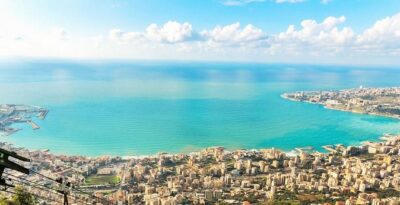 ★ 5.0Jeita Grotto,Harissa&Byblos Full-Day PRIVATE-CAR Trip from BeirutFrom $75222 reviews
 ★ 5.0Jeita Grotto – Harissa – Byblos TripFrom $37169 reviews
 ★ 4.5Byblos, Jeita Grotto & Harissa Day Trip -With Lunch (4G on Board)From $98145 reviews
 ★ 5.0Semi-Private Tour to Jeita Grotto, Harissa & Byblos with LunchFrom $5552 reviews
 ★ 5.0Small Group Tour to Jeita Grotto, Harisa & Byblos with Hotel pickupFrom $1049 reviews
 ★ 5.0Private Guided Tour to Jeita Grotto through Harissa and ByblosFrom $7548 reviews
 ★ 5.0New Guided Semi-Private Tour to Jeita Grotto, Harissa & ByblosFrom $5547 reviews
Every list this tour turns up in