
REVIEW · BAALBEK, ANJAR & KSARA DAY TRIPS
Small Group Tours to Baalbek, Anjar & Chateau Ksara with lunch and Tickets
Three sites, one smart day out. I like how this route links Baalbek and the Umayyad ruins of Anjar with a real wine stop in the Bekaa Valley, and I also like the small-group setup that leaves room for questions. The trade-off is simple: it is about a nine-hour day with a fair amount of walking and standing at ancient sites.
The timing works well if you are staying in Beirut and want big sites without the stress of planning, since you get hotel pickup and drop-off in a climate-controlled private minivan. You’ll also have a local guide and tour leader with you all day, plus a lunch at a Lebanese restaurant that keeps you fueled for temples, columns, and a vineyard visit.
In This Review
- Key things you’ll notice right away
- A smart small-group combo from Beirut (and why it matters)
- Baalbek temples: Roman scale at 1,150 meters
- Sayeda Khawla and the Stone of the Pregnant Woman
- Aanjar’s Umayyad ruins: a palace city at crossroads
- Château Ksara in the Bekaa: wine, history, and a cave visit
- Lunch that keeps your day on track
- The comfort and guidance factor: what you pay for
- Who this tour is best for (and who might not love it)
- Should you book this Baalbek, Anjar and Ksara combo?
- FAQ
- What time does the tour start?
- How long is the tour?
- Is hotel pickup and drop-off included?
- Is lunch included?
- Are tickets included for each stop?
- How big is the group?
- What if the weather is poor?
Key things you’ll notice right away
- Baalbek first: the Roman sanctuary with the Triad of Heliopolis, tied to Jupiter, Venus, and Bacchus, plus a nearby stop at the Mosque of Sayeda Khawla.
- A quick iconic break: the Stone of the Pregnant Woman, a Roman monolith, is a short 15-minute stop and listed as free entry.
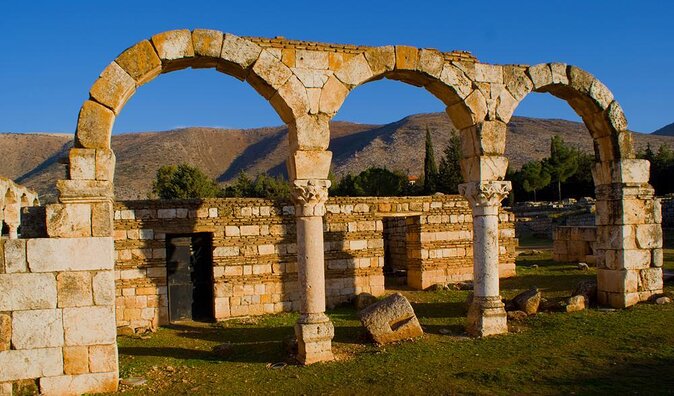
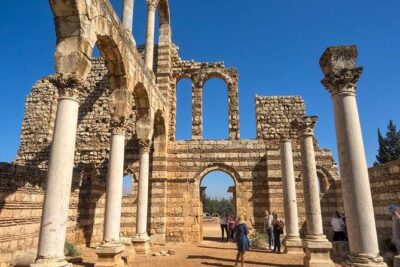
- Umayyad Aanjar ruins: you see palace walls, harems, a mosque, thermal baths, and pillars with Roman-style elements.
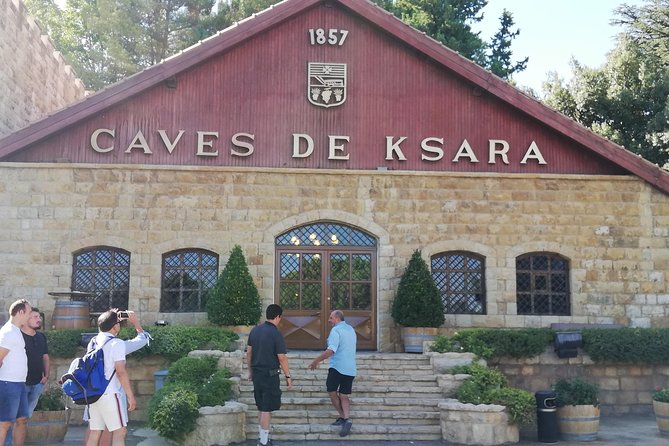
- Wine at Château Ksara: founded in 1857 by Jesuit priests, known for developing the first dry wine in Lebanon, with multiple samples and a peek inside the on-site cave.
- Lunch included: you’re not left hunting for food between sites, and the meal is part of the pacing of the day.
More runs out to Baalbek, Anjar and the Ksara cellars
- Guided Small-Group Tour to Baalbek, Anjar and Ksara with Lunch★ 5.0 · 511 reviews
- Anjar, Baalbek & Ksara Day Trip – With Lunch (4G on Board)★ 4.5 · 181 reviews
- Baalbek – Anjar – Ksara Trip From Beirut★ 4.5 · 80 reviews
- Private Anjar and Baalbek Tour from Beirut with Departure Ticket★ 5.0 · 79 reviews
A smart small-group combo from Beirut (and why it matters)
This is built for people who want a focused day, not a patchwork of independent taxis and uncertain timing. Pickup starts at 8:00 am, and the tour runs for about nine hours, which is long enough to get depth at each location without turning it into an all-day marathon with no breaks.
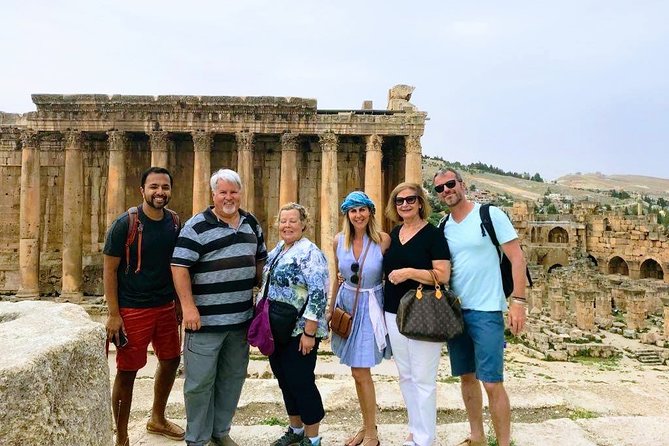
The group size is kept small, with a maximum of 15 travelers, which is a big deal at archaeological sites. Instead of hearing a guide from far away and getting rushed through photos, you can actually ask questions and adjust your pace to what you find interesting. The transport is a private minivan that is described as air-conditioned and climate-controlled, and you also get hotel transfers, which removes the most stressful part of visiting the Bekaa Valley.
One small practical note: the itinerary includes multiple sites, so wear comfortable shoes. Even when a stop is “only” around an hour, you are still moving around uneven stone, stairs, and shaded corners. If you are the type who likes to read every sign and look for details in architecture, you’ll feel the time, but you also won’t feel shoved along.
Baalbek temples: Roman scale at 1,150 meters
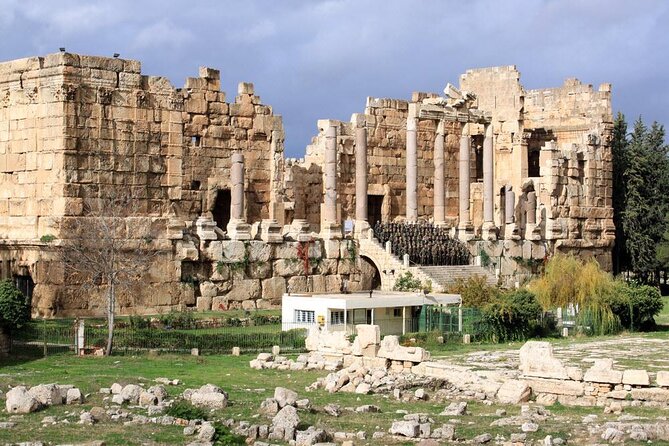
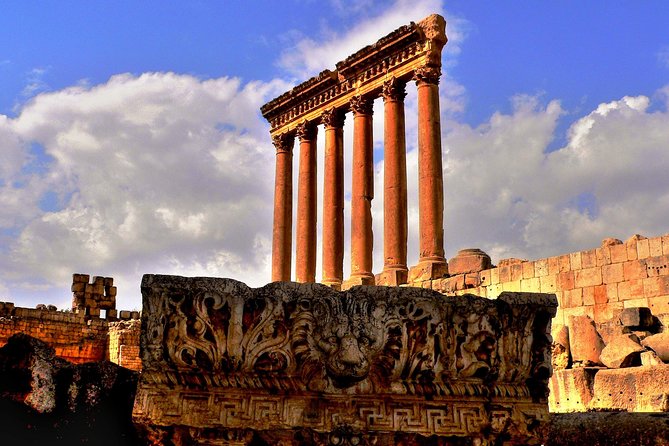
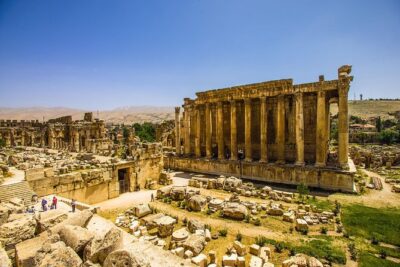
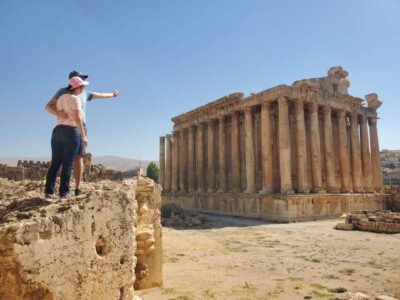
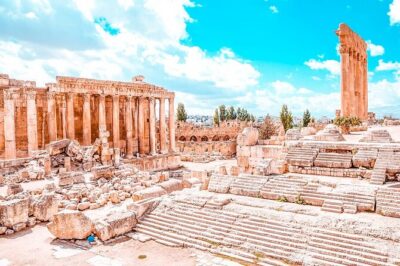
The day opens at Baalbek, at an altitude around 1,150 m, right at the foot of the south-west slope of Anti-Lebanon, overlooking the fertile plain of the Bekaa. Baalbek reached its peak during Roman times, and the temples were built over more than two centuries, which is exactly why the complex feels so monumental.
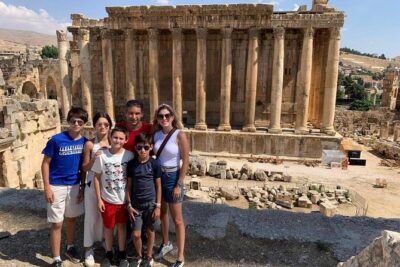
You’re looking at one of the best-known Roman sanctuaries in the region, and the guide framing here is useful: the cult is described as Romanized, tied to a Phoenician tradition, with worship centered on the Triad of Heliopolis, Jupiter, Venus, and Bacchus. If you’ve ever wondered how religions and empires leave layered traces, this is where the shapes and names make sense. The architecture is often explained as a model of Imperial Roman building, and seeing it in person helps you connect terminology like sanctuary, imperial style, and monumental construction to something you can actually walk through.
The stop is listed at 1 hour 30 minutes with admission included. That length is important. It gives you time to view the main temple areas and also pause for context without the constant feeling that everyone is waiting for you. In the experience of this tour, the guide approach can make a big difference, and one guide noted in past tours is Natasha, an archaeologist. That kind of background tends to turn a site from photos into a story you can follow.
Possible consideration: Baalbek is a big open site. Depending on the season, sun can be intense, so bring sun protection. The upside is that you get famous Roman ruins that many visitors rank among the most intact they’ve seen.
Sayeda Khawla and the Stone of the Pregnant Woman
Right in Baalbek, the itinerary adds a cultural and religious layer with the Mosque of Sayeda Khawla. The mosque is described as being erected on the site believed to be the burial of Sayyida Khawla, daughter of Imam al-Hussein, the grandson of the Prophet Muhammad. Local tradition explains that she passed away and was buried there when the caravan of captives of Karbala passed through Baalbek.
It’s brief, but it is meaningful, and it helps you understand that Lebanon’s heritage is not only Roman stones. It’s people, memory, and place, all tied to what communities believe and keep passing down.
Then you move to the Stone of the Pregnant Woman, a worked Roman monolith. The key detail here is size: it is paired with another large ancient block nearby, and together they represent the kind of monolithic gigantism that was rare even in antiquity. The stop is only about 15 minutes, and entry is listed as free.
This part of the day is a nice contrast. Baalbek’s main temples are big, structural, and visually loud. The Stone of the Pregnant Woman is smaller in time and maybe smaller in emotional intensity for some people, but it’s memorable because you can’t miss the scale of the quarrying and planning behind it. If you like archaeology details, this stop gives your brain something concrete to grab.
Entry sorted in advance
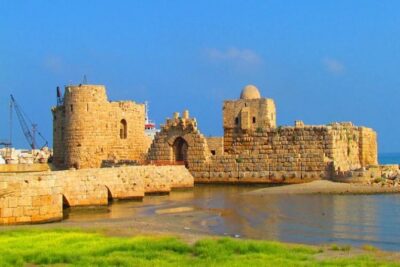
Aanjar’s Umayyad ruins: a palace city at crossroads
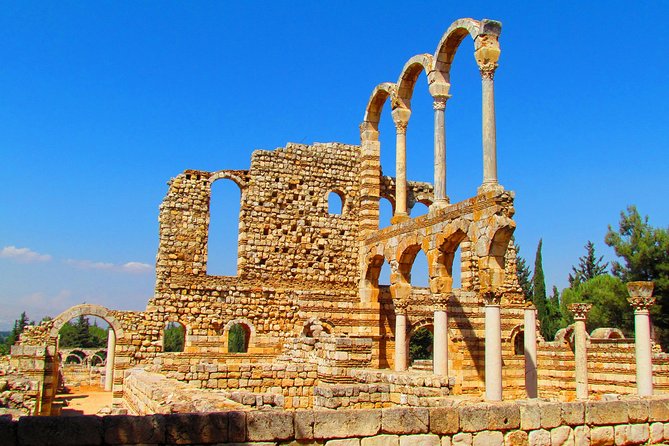
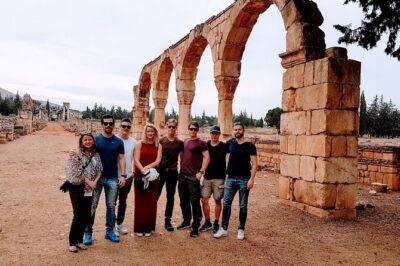
After Baalbek, the tour heads to the Umayyad ruins of Aanjar. This stop is listed at 45 minutes with admission included, and it’s worth it because Aanjar is different from Baalbek. You’re switching from Roman imperial sanctuary to an inland Umayyad complex that functioned as a commercial center, described as sitting at the crossroads of major routes.
The site is framed as an inland city that connected Beirut to Damascus, and also linked the Bekaa crossing with routes leading toward Homs and Tiberiade. That matters because you can start to interpret what you’re seeing, not just admire it. Walls, palace areas, and religious structures were built for a city that mattered in trade and governance.
Aanjar also has an archaeological story. The itinerary notes that the city site was discovered by archaeologists at the end of the 1940s. That helps explain why the ruins feel both ancient and newly uncovered, like you’re watching history re-enter the public imagination.
What you can expect to see includes:
- the walls of the Umayyad palace
- harems
- a mosque
- the great palace of the Caliph
- thermal baths
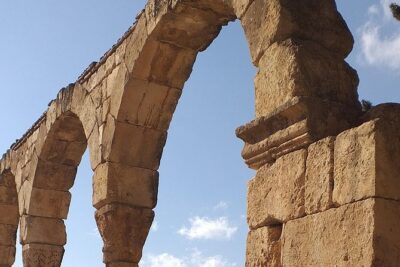
- pillars, with some Roman architectural style elements
That last point is where the tour gets especially interesting for architecture lovers. You can watch how empires borrow and reuse design language. One of the easiest mistakes to make at ruins is treating each site as separate. Aanjar makes the connections harder to ignore.
Possible consideration: ruins can feel like “more walls and pillars” if you’re not sure what to look for. The guide helps by tying locations together, and that’s where a strong on-site explainer really pays off.
Château Ksara in the Bekaa: wine, history, and a cave visit
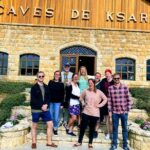
The final major stop is Château Ksara in the Bekaa Valley, with about one hour on site. This is where you shift from stones and empires into a living craft, and the itinerary includes wine tasting plus behind-the-scenes explanation of how Lebanese wine is made. You also get to peek inside the on-site cave, which is the kind of detail that turns a standard tasting into something you’ll actually remember.
Château Ksara is listed as founded in 1857 by Jesuit priests. It developed the first dry wine in Lebanon, and the winery produces approximately 3 million bottles annually, with those bottles available in many countries. That production scale matters because it explains why this is not a tiny “one family makes everything” operation. It’s historically rooted, but it also operates like a serious wine producer today.
Important practical note: the stop lists that admission ticket for Château Ksara is not included. The tour does include wine tasting as part of the experience description, but the entrance piece can require extra payment depending on how your confirmation is handled. Before you go, check your booking details or ask your tour leader what is included in the tasting versus what the ticket covers.
Why this stop feels good at the end of the day: you finish the day with something that slows down. You’ll have time to sit, taste, and process what you’ve seen earlier, especially if Baalbek and Aanjar left you with a lot to think about.
Lunch that keeps your day on track
A big part of why this itinerary works is that lunch at a local Lebanese restaurant is included. When you’re spending a day hopping between major sites, the lunch decision can be stressful. Here, the tour schedules it, so you’re not hunting for a place at the exact moment you feel hungry and distracted.
From past experiences tied to this tour, the lunch gets praised as superb and sumptuous. That is exactly what you want on a site-heavy day, because good food is not just comfort, it helps you keep your energy for walking and reading.
If you have dietary needs, you’ll want to plan ahead and communicate them when booking. The data doesn’t specify special meal handling, so treat that as a “ask the provider” situation rather than assuming.
The comfort and guidance factor: what you pay for
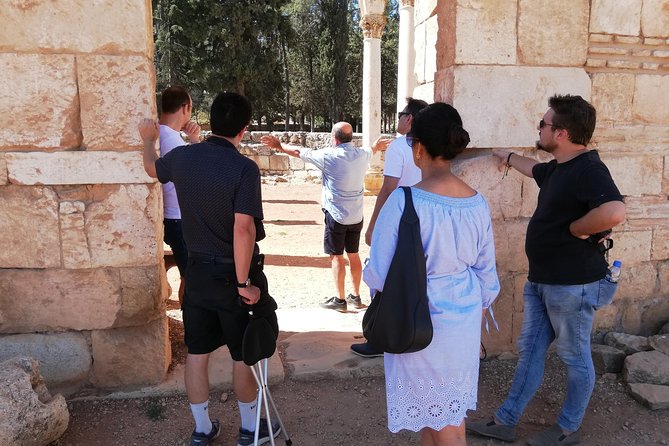
This tour includes hotel pickup and drop-off, a local guide, a tour leader, and an air-conditioned vehicle. You also get a mobile ticket, which is useful if you prefer not to juggle paper.
The $75 price point becomes more reasonable when you compare it to what you’d spend if you tried to do this route on your own:
- local guide time across multiple archaeological stops
- transport into the Bekaa Valley and back
- lunch included
- tickets handled for Baalbek temples and Aanjar, plus the Stone of the Pregnant Woman stop being free
Château Ksara is the one exception in the itinerary where the admission ticket is listed as not included, so you should expect a possible extra cost there. Still, paying for a guide and a day of logistics tends to save you time, and time is often the real currency on short trips.
If you care about interpretation, look for the kind of guiding mentioned in past outings. Natasha, described as an archaeologist, is an example of the expertise you may encounter. And there are also references to Khalil as a site guide and Ziad as the driver, both praised for care and for making sure the day ran smoothly, including how lunch timing landed.
The bottom line: this feels like you’re buying structure, not just transport.
Who this tour is best for (and who might not love it)
You’ll likely love this tour if:
- you have limited time in Beirut and want an efficient history-and-culture day
- you like Roman and early Islamic heritage in the same outing
- you want wine tasting without dealing with logistics in the Bekaa
- you prefer small groups, capped at 15 travelers, so you can ask questions
You might want to reconsider if:
- you dislike long days with continuous driving and walking
- you want only one or two sites with deep free time at each
- you are not interested in wine and would prefer an all-archaeology schedule
It also helps to be flexible with weather. The experience is described as requiring good weather, and if it is canceled due to poor conditions you’ll be offered a different date or a full refund.
Should you book this Baalbek, Anjar and Ksara combo?
My take: if your goal is classic Lebanon highlights in one day, this is an easy choice. You get major Roman ruins at Baalbek, a cultural stop at Sayeda Khawla, the Roman monolith of the Stone of the Pregnant Woman, Umayyad Aanjar with palace and baths, and then a proper wine stop at Château Ksara with tasting and a cave peek. That is a lot of variety packed into about nine hours, and the small-group structure helps keep it from feeling like a rushed conveyor belt.
At $75 per person, it is good value for a day that includes hotel transfers, a local guide, lunch, and site admissions for two of the three main destinations. Just plan for the possibility of extra payment at Château Ksara since that admission ticket is listed as not included.
One more booking tip: this tour is often reserved around 26 days in advance on average. If you want the easiest scheduling, don’t wait until the last week, especially for travel periods when Beirut hotels are busy.
FAQ
What time does the tour start?
Pickup and start time is 8:00 am.
How long is the tour?
The duration is about 9 hours.
Is hotel pickup and drop-off included?
Yes. Hotel pickup and drop-off are included.
Is lunch included?
Yes. Lunch at a local Lebanese restaurant is included.
Are tickets included for each stop?
Admission is included for the Temples of Baalbek and Umayyad Ruins of Aanjar. The Stone of the Pregnant Woman is listed as free. Château Ksara admission is not included.
How big is the group?
The tour has a maximum of 15 travelers.
What if the weather is poor?
The experience requires good weather. If it is canceled due to poor weather, you’ll be offered a different date or a full refund.
More of Lebanon, Reviewed
- Guided Small-Group Tour to Baalbek, Anjar and Ksara with Lunch
★ 5.0 · 511 reviews - Guided Small-Group Tour to Jeita, Harissa, Byblos with Lunch
★ 5.0 · 361 reviews - City Sightseeing Beirut Hop-On Hop-Off Bus Tour
★ 4.5 · 87 reviews - Private Anjar and Baalbek Tour from Beirut with Departure Ticket
★ 5.0 · 79 reviews - Guided Private Full Day Tour to Baalbek, Anjar and Chateau Ksara
★ 5.0 · 60 reviews
Elsewhere in Lebanon
- Guided Small-Group Tour to Baalbek, Anjar and Ksara with Lunch
★ 5.0 · 511 reviews - Guided Small-Group Tour to Jeita, Harissa, Byblos with Lunch
★ 5.0 · 361 reviews - Paragliding Trip Over Lebanon – Jounieh Bay
★ 5.0 · 257 reviews - Jeita Grotto,Harissa&Byblos Full-Day PRIVATE-CAR Trip from Beirut
★ 5.0 · 222 reviews - First Paragliding Club in Lebanon – Since 1992
★ 5.0 · 193 reviews
Baalbek and the Bekaa, Compared
- Guided Small-Group Tour to Baalbek, Anjar and Ksara with Lunch
★ 5.0 · 511 reviews - Anjar, Baalbek & Ksara Day Trip – With Lunch (4G on Board)
★ 4.5 · 181 reviews - Baalbek – Anjar – Ksara Trip From Beirut
★ 4.5 · 80 reviews - Private Anjar and Baalbek Tour from Beirut with Departure Ticket
★ 5.0 · 79 reviews - Guided Private Full Day Tour to Baalbek, Anjar and Chateau Ksara
★ 5.0 · 60 reviews
Other Lebanon trips we have written up
Baalbek, Anjar & Ksara Day Trips, compared.
 ★ 5.0Guided Small-Group Tour to Baalbek, Anjar and Ksara with LunchFrom $65511 reviews
 ★ 4.5Anjar, Baalbek & Ksara Day Trip – With Lunch (4G on Board)From $95181 reviews
 ★ 4.5Baalbek – Anjar – Ksara Trip From BeirutFrom $3480 reviews
 ★ 5.0Private Anjar and Baalbek Tour from Beirut with Departure TicketFrom $7579 reviews
 ★ 5.0Guided Private Full Day Tour to Baalbek, Anjar and Chateau KsaraFrom $10060 reviews
 ★ 5.0Lebanon tour Baalbek ruins & Ksara w/pick-up, lunch,guide+entriesFrom $13035 reviews
 ★ 4.9Baalbek Temples & Ksara Caves w/pick-up,guide, entries+lunchFrom $14034 reviews
 ★ 5.0Private Tour: Anjar, Baalbek and Ksara Day Trip from BeirutFrom $18720 reviews
Every list this tour turns up in