
REVIEW · CHOUF, BEITEDDINE & DEIR EL QAMAR
Small Group Tours to Beirut, Beiteddine & Deir el Qamar with lunch and all fees
Beirut in one full day feels like a good idea. You get a small group day trip that mixes famous sea views, big-city architecture, and then moves into the Chouf countryside for Beiteddine Palace and Deir el Qamar.
I love that the day is structured enough to cover a lot, but still capped at 15 people, so you get time for questions and photo stops. I also like that lunch and entrance fees are handled for you, including the palace visit, so you are not doing mental math all day. The main drawback is that many city stops are quick, so if you want long wanders and slow museum-style pacing, this may feel a bit fast.
In This Review
- Key highlights you should care about
- From pickup to palace gates: how this day really works
- Raouche morning and the Al Manara Corniche sea views
- Zaitunay Bay and the seaside walk that connects the city
- A stop at Beirut’s war-era “Hotel Battle” reminder
- Downtown Beirut architecture: Blue Mosque, Saint George Cathedral, and squares
- Beirut Souks and the Roman Baths: modern shopping and ancient walls
- Beiteddine Palace: your long stop and the ticketed highlight
- Deir el Qamar: the Moon Monastery village and its faith landmarks
- Price and value: is $99 a good deal for this route?
- Who should book this Lebanon day trip, and who might skip it
- FAQ
- What time does the tour start?
- How long is the tour?
- How many people are in the group?
- Is hotel pickup and drop-off included?
- What is included in the price?
- Is Beiteddine Palace admission included?
- Do I need to pay separate entrance fees at the stops?
- Is lunch included?
- Can I get a full refund if I cancel?
- Is this tour suitable for most travelers?
- Should you book this Beirut, Beiteddine, and Deir el Qamar tour?
Key highlights you should care about
- Up to 15 people, which helps the guide keep things moving without losing the personal feel
- 8-hour day starting at 8:00 am, ideal for morning light at Raouche
- All entrance fees and tickets included, with Beiteddine Palace as the big paid feature
- A mix of Beirut styles, from seaside promenade and souks to church and mosque architecture
- A real countryside contrast, with Deir el Qamar’s faith sites and old village atmosphere
Deeper into the Chouf: Beiteddine, Deir el Qamar and the cedar reserve
- Beirut, Beiteddine & DeirElQamar Day Trip-With Lunch(4G on Board)★ 4.5 · 12 reviews
- Cedars Shouf & Beiteddine w/pick-up, guide, entries+lunch★ 4.7 · 12 reviews
- Small Group Tours to Beirut, Beiteddine & Deir el Qamar with lunch and all fees★ 5.0 · 8 reviews
- Guided Small-Group Tour to Beirut, Beiteddin & Deir elQamar★ 5.0 · 7 reviews
From pickup to palace gates: how this day really works
This is the kind of tour you book when you want one efficient Lebanon day without organizing rides, tickets, and timing yourself. The day starts at 8:00 am, and you get hotel pickup and drop-off plus transport by air-conditioned minivan. For a place like Beirut, where neighborhoods can be close but traffic can be tricky, having a driver and a plan helps you keep your energy for sightseeing.
The pacing is mostly “see it, pause for photos, hear the context, move on.” That works well for a first visit to Beirut and for travelers who enjoy guided storytelling. It also helps you fit in both the city and the Chouf region in the same day, including Deir el Qamar and Beiteddine Palace.
Price-wise, $99 per person is easiest to justify if you value three things that are included: your guide, your air-conditioned transport, and your lunch. The entrance fees are also covered, and while many of the city stops are free to enter, the palace visit is the ticketed highlight that anchors the cost.
Who it suits best? First-timers to Lebanon, people who like a guided overview, and anyone who does not want to rent a car for a day that mixes Beirut and hillside villages.
Raouche morning and the Al Manara Corniche sea views
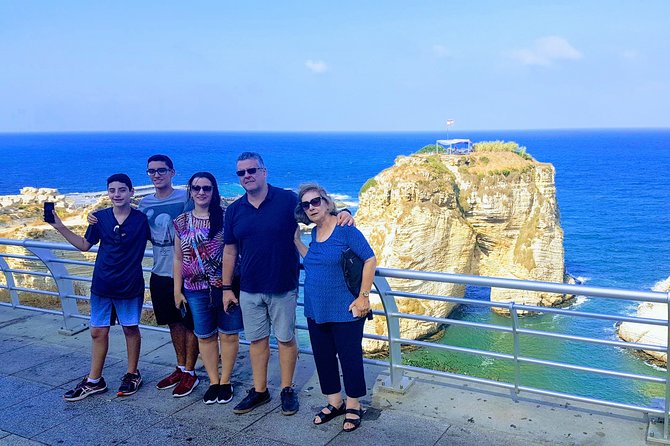
You start at Raouche with Pigeon Rocks. These two rock formations sit at Beirut’s western-most tip, and they have that cinematic look you usually only see in travel photos. Morning timing matters here, because the light is softer and the colors of the sea and stone show more detail. Bring your camera, but also take a few minutes just to stand there and look. The rocks look different as the sun angle changes.
Right after that, you will walk the seaside area along Al Manara Corniche, stretching from the Ramlet al Bayda area toward the Saint George marina. This is one of the most recognized promenade stretches in Beirut, lined with palm trees and built for sea views. It is a good place to get your bearings. You can spot the famous rock formations and also see the broader geography, including the Mount Lebanon summits on the eastern side.
A quick note on expectations: this is not a long beach day. Think “views plus a few photos” rather than “hours of lounging.” If you want slow time by the water, you will probably save that for another trip.
Zaitunay Bay and the seaside walk that connects the city
Next up is Zaitunay Bay, described on its official website as Beirut’s finest leisure destination. In practical terms, it is a waterfront promenade with shops and restaurants, designed for strolling and hanging around with coffee or a meal. It is a nice break from the rock-and-history feeling, and it gives you a modern Beirut moment before the day turns deeper into downtown sites.
You also get a chance to see Beirut in layers. On one side, you have the polished promenade vibe. On the other, the route later includes a powerful war-related landmark, so the contrast lands harder when you are fresh.
If you get carsick easily, you might feel better sitting toward the front of the van on the longer transfers. The day includes several short legs and city driving, and you will be spending a lot of it in transit.
Trips where the mezze stop is part of the deal
A stop at Beirut’s war-era “Hotel Battle” reminder
One of the most striking parts of this tour is the stop at the abandoned Holiday Inn Hotel. It was built between 1971 and 1974 during Lebanon’s booming era, and it was functioning until the civil war began in 1975.
The site became part of what is known as the Battle of the Hotels, where more than 25,000 combatants fought for control of luxury hotels. What you see today is an untouched, empty reminder of what war does to everyday life, and why places that seem permanent can end up frozen mid-disaster.
This stop can hit harder for some people than others. I like that the tour includes it, because it prevents Beirut from feeling like only a postcard city. Still, if you prefer lighter sightseeing or you find war reminders emotionally tough, plan your mindset for this moment.
Downtown Beirut architecture: Blue Mosque, Saint George Cathedral, and squares
After the waterfront, the day shifts into downtown. The first major religious landmark on the list is the Mohammad Al-Amin Mosque, also called the Blue Mosque. It is Lebanon’s biggest mosque, opened in 2008, with four minarets that rise 65 meters high. The mosque’s color palette is distinct: amber walls and domes tiled in light blue.
Even without going deep into religious details, you can appreciate the scale and the design rhythm. The multiple domes, and the height created by the arches, give it a grand, almost theatrical feel. It is also the kind of place where a guide’s context helps you understand why people connect emotionally to a building that is also a statement of identity.
Next is the Greek Orthodox Cathedral of Saint George. This sits in the city center and is described as the oldest church in Beirut, tied to the Greek Orthodox Metropolitan bishop of the Greek Orthodox Archdiocese. The site itself goes back to the mid sixth century AD, and it is associated with Beirut’s famous Law School.
From a visitor perspective, it is a great counterpoint to the mosque. You are seeing different faith architecture and different forms of community leadership, all in walking distance from other major downtown landmarks.
Then you move to the open squares that shape how people move through the city. Martyr’s Square sits in the heart of downtown Beirut and used to be known as Al Burj or Place des Cannons. The name Martyr’s Square comes from the 6 May 1916 executions by the Ottomans of Lebanese nationalists, ordered by Jamal Pasha during World War I. Even a quick visit helps you understand why public spaces hold memory, not just traffic.
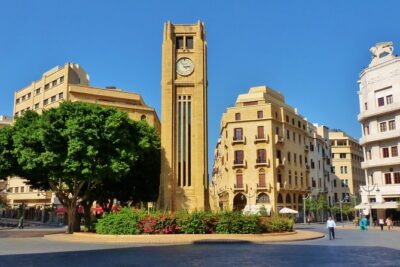
Finally, you reach Place de l’Etoile (Nejme Square), the central downtown square. It is home to the Lebanese Parliament and nearby institutions, plus cathedrals and a museum. You will also notice the 1930 four-faced Rolex clock, a recognizable Beirut icon. For first-time visitors, this stop is a fast way to grasp Beirut’s downtown design language, including how modern civic life sits beside older religious structures.
Beirut Souks and the Roman Baths: modern shopping and ancient walls
Next you will head to Beirut Souks, a commercial district with over 200 shops and around 25 restaurants and cafes, plus an entertainment center and a cinema complex. This is where the tour shifts gears back to everyday Beirut. Even if you do not shop much, it is worth walking through because it shows how the city mixes leisure and commerce in the same area.
If you like having choices, this is a smart timing slot. You get a break from sightseeing intensity, and you can grab a snack or browse at your own speed while your guide keeps the group oriented.
Then comes one of the most interesting “how did this survive?” moments: the Roman Baths. Known as the Roman Berytus baths, they are described as the largest outdoor sight in downtown Beirut. They were discovered in 1968-1969 and renovated in the mid 1990s.
The backstory is fascinating. There were four major bath complexes, and the first dates to the early first century under Augustus. Then a major earthquake in 551 AD destroyed them. Today, one of the bath areas is used for artistic performances and concerts, so the ancient site is not only preserved, it is also active.
This stop is a good reminder that cities do not restart from scratch. They build, break, rebuild, and keep reusing the space in new ways.
Beiteddine Palace: your long stop and the ticketed highlight
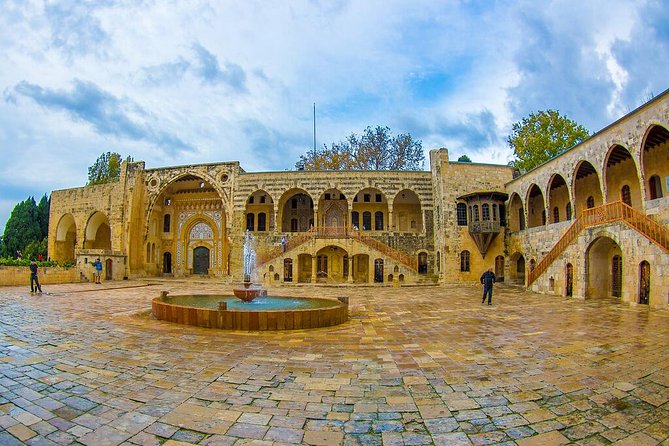
The day’s big interior time is Beiteddine Palace. Plan on about 1 hour 30 minutes here, and treat it as your main “slow down” moment.
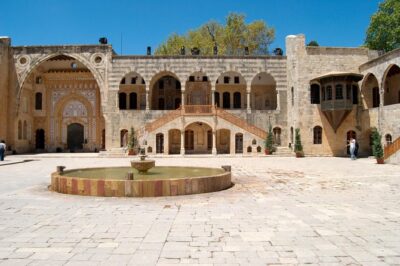
Beiteddine Palace was built between 1788 and 1818 by Emir Bashir Chehab II, who later became ruler of the Mount Lebanon Emirate. After 1840, it was used by the Ottomans as a government building, and during the French Mandate it served as a local administrative office. In 1943, it was declared the president’s official summer residence.
For today’s visitor, the key is what you can access. Parts of the palace are open to the public while the rest remains a president’s summer residence. During the Lebanese Civil War, the palace was heavily damaged, but it still stands as a visible link to the region’s political and cultural layers. The palace also hosts the Beiteddine Festival and has a palace museum.
Why this stop is worth the time: this is where the tour shifts from “you see a place” to “you understand a place.” With a guide, you are not just looking at rooms and courtyards. You are seeing how power and daily life were organized in a palace complex, and how later eras reused it for governance and ceremony.
If you like photos, aim to spend a few minutes checking different viewpoints. Palaces photograph best when you move your position, not when you hold still.
Deir el Qamar: the Moon Monastery village and its faith landmarks
After the downtown push, you travel south-east to Deir el Qamar, in the Chouf District, about five kilometers outside Beiteddine Palace. The name Deir al-Qamar means “Monastery of the Moon,” and the village feels like a step away from the pace of the capital.
Deir el Qamar is known for being the first village in Lebanon to have a municipality in 1864. It was home to people from multiple religious backgrounds, with a mosque, synagogue, and Christian churches. The village has also been described as the birthplace of well-known personalities including artists, writers, and politicians.
The village’s story includes damage during the 1860 civil war between Druze and Christians, when the town was set ablaze. After that, Napoleon III sent a French contingent to rebuild it. Even with a short stop, you start to understand why the town feels carefully layered, socially and architecturally.
You will also visit key faith sites here. First is Fakhreddine’s Mosque, notable for its octagonal minaret. It was built in 1493 and restored in the sixteenth century by Fakhreddine I, and it is described as the oldest mosque in Mount Lebanon. This is a great stop for architecture-focused travelers because the minaret shape and age give it immediate visual identity.
Then comes the Saydet El Talle Church, also called Our Lady of the Hill. It dates to the 15th century. The church is linked to Monk Nicolas Smisaati, who built it on the ruins of an older Phoenician temple dedicated to Astarte, which was later destroyed by an earthquake in 859. There is also a legend connected to the site, involving a Druze Emir in Baakline who saw light coming from the hill and ordered digging to find an Islamic symbol, then building a mosque.
That legend detail is the kind of thing you do not get from guidebooks. You get it here because the tour is built to connect places to stories, not just dates.
Price and value: is $99 a good deal for this route?
At $99 per person for an approximately 8-hour day, this tour makes sense if you want convenience plus guided context. The biggest value levers included in the price are:
- Hotel pickup and drop-off, plus an air-conditioned minivan
- A tour leader, so you are not left to interpret everything on your own
- Lunch, which matters because you are out all day
- Admission and tickets to the sites, including the Beiteddine Palace visit
Even though many of the city stops are listed as free admission, you are still paying for the guide, transport, and the time you gain by not figuring out connections. If you were to do this independently, you would likely spend more on transport, and you would still need to time and secure entry for the palace.
The “good value” part for me is the mix. You are not only seeing Beirut highlights. You are also getting a full countryside shift to Deir el Qamar and spending the longer chunk of time at Beiteddine Palace.
The only time I would hesitate is if you want long unstructured time at each site. This day is designed for coverage, not slow travel.
Who should book this Lebanon day trip, and who might skip it
You should strongly consider booking if:
- You are short on time in Lebanon and want a one-day Beirut plus Chouf combo
- You like architecture and urban geography, and you appreciate context for what you see
- You want a guided day with a capped 15-person group, instead of a large bus crowd
- You prefer having lunch and tickets handled
You might think twice if:
- You want a lot of quiet time, long stays, and no time pressure
- You feel uneasy around war-history reminders, since the abandoned Holiday Inn stop is a notable part of the route
Also, if you book and get a guide like Natasha, you can expect very detailed explanations and a strong ability to connect the dots across stops. That is the kind of guiding style that makes the quick stops feel less rushed.
FAQ
What time does the tour start?
The tour start time is 8:00 am.
How long is the tour?
The duration is listed as 8 hours (approx.).
How many people are in the group?
The tour has a maximum of 15 travelers.
Is hotel pickup and drop-off included?
Yes. Hotel pickup and drop-off are included.
What is included in the price?
Lunch, a tour leader, hotel pickup and drop-off, transport by air-conditioned minivan, and admission and tickets to the sites are included.
Is Beiteddine Palace admission included?
Yes. The Beiteddine Palace stop includes an admission ticket.
Do I need to pay separate entrance fees at the stops?
Entrance fees and tickets to the sites are included in the tour.
Is lunch included?
Yes, lunch is included.
Can I get a full refund if I cancel?
Yes. Cancellation is free, and you can cancel up to 24 hours in advance for a full refund.
Is this tour suitable for most travelers?
The information says most travelers can participate.
Should you book this Beirut, Beiteddine, and Deir el Qamar tour?
Yes, if your goal is a guided day that connects the main Beirut sights with a meaningful countryside change, and you want pickup, transport, lunch, and tickets handled in one package. The pace is brisk in the city, but the payoff is that you cover a lot, including the palace. If you want slow, unstructured time at fewer sites, you might prefer a different format.
More of Lebanon, Reviewed
- Guided Small-Group Tour to Baalbek, Anjar and Ksara with Lunch
★ 5.0 · 511 reviews - Guided Small-Group Tour to Jeita, Harissa, Byblos with Lunch
★ 5.0 · 361 reviews - City Sightseeing Beirut Hop-On Hop-Off Bus Tour
★ 4.5 · 87 reviews - Private Anjar and Baalbek Tour from Beirut with Departure Ticket
★ 5.0 · 79 reviews - Guided Private Full Day Tour to Baalbek, Anjar and Chateau Ksara
★ 5.0 · 60 reviews
Elsewhere in Lebanon
- Guided Small-Group Tour to Baalbek, Anjar and Ksara with Lunch
★ 5.0 · 511 reviews - Guided Small-Group Tour to Jeita, Harissa, Byblos with Lunch
★ 5.0 · 361 reviews - Paragliding Trip Over Lebanon – Jounieh Bay
★ 5.0 · 257 reviews - Jeita Grotto,Harissa&Byblos Full-Day PRIVATE-CAR Trip from Beirut
★ 5.0 · 222 reviews - First Paragliding Club in Lebanon – Since 1992
★ 5.0 · 193 reviews
Still in the Chouf? Keep Going
- Cedars Shouf & Beiteddine w/pick-up, guide, entries+lunch
★ 4.7 · 12 reviews - Beirut, Beiteddine & DeirElQamar Day Trip-With Lunch(4G on Board)
★ 4.5 · 12 reviews - Guided small group to Cedars Reserve & Beiteddine w/lunch+entries
★ 5.0 · 12 reviews - Guided Small-Group Tour to Beirut, Beiteddin & Deir elQamar
★ 5.0 · 7 reviews - Deir Al-Qamar, Beiteddine Palace and Barouk Cedars Tour
★ 4.5 · 6 reviews
Other Lebanon trips we have written up
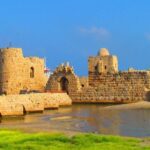
Chouf, Beiteddine & Deir el Qamar, compared.
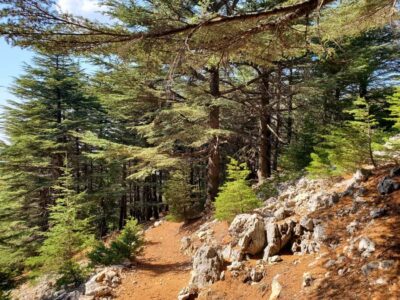 ★ 4.7Cedars Shouf & Beiteddine w/pick-up, guide, entries+lunchFrom $14012 reviews
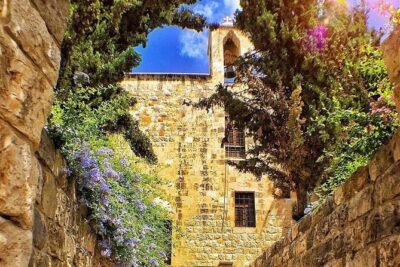 ★ 4.5Beirut, Beiteddine & DeirElQamar Day Trip-With Lunch(4G on Board)From $9512 reviews
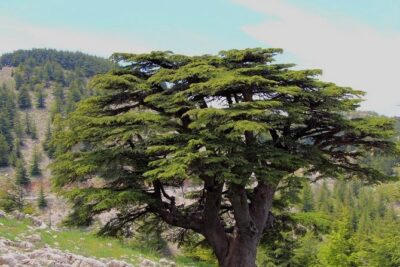 ★ 5.0Guided small group to Cedars Reserve & Beiteddine w/lunch+entriesFrom $12012 reviews
 ★ 5.0Guided Small-Group Tour to Beirut, Beiteddin & Deir elQamarFrom $997 reviews
 ★ 4.5Deir Al-Qamar, Beiteddine Palace and Barouk Cedars TourFrom $1206 reviews
 ★ 5.0PRIVATE Hiking Day Trip in the Shouf Fabulous Cedars ForestFrom $1135 reviews
 ★ 5.0DeirElkamar, Beitdeen, Moussa Palace, EinwZien Grotto,Full-Day Trip PRIVATE-CARFrom $755 reviews
 ★ 5.0PRIVATE tour to Beirut history museum, Beiteddine & Deir elQamarFrom $1134 reviews
Every list this tour turns up in