
REVIEW · BAALBEK, ANJAR & KSARA DAY TRIPS
Baalbek, Anjar and Ksara Guided Full-Day Tour from Beirut
Roman ruins, wine tastings, and more in one day.
This full-day trip from Beirut is built for people who want big history without the hassle, heading into the Bekaa Valley to see the mega Roman temples at Baalbek. I love that the day runs with a tour leader and driver, so you spend time looking, not figuring out roads and timing.
Second, I really like the pacing. You get time at each main stop, and the guide works in a way that can feel flexible, even letting you enjoy sites at your own speed when the moment is right. A standout here is the pairing of ruins plus a real working winery experience at Ksara Winery.
One thing to consider: admission tickets are not included for the sites. So you’ll want to plan a little extra budget for entry and any tasting fees that might be part of the winery visit.
In This Review
- Key things to know before you go
- Why Baalbek, Ksara, and Anjar work so well together
- Getting to the Bekaa Valley from Beirut: the practical win
- Stop 1: Baalbek temples, where Roman scale is hard to comprehend
- Stop 2: Chateau Ksara, old-school winemaking and a real tasting
- Stop 3: Anjar Citadel, Umayyad arches and palace ruins
- How the guide and driver change your whole day
- Timing, pacing, and what a full 9 hours really means
- Value and price: what $90 per person really covers
- Who this tour suits best
- Small tips to get the best experience
- Should you book this Baalbek, Anjar and Ksara tour?
Key things to know before you go
- Private, modern pickup from Beirut means less stress than joining random buses.
- Baalbek Roman temples includes the Jupiter Temple area, with some of the world’s largest surviving Roman columns.
- Ksara Winery visit is tied to a 19th-century operation started by Jesuit priests, plus a dry wine tasting.
- Anjar UNESCO-listed Umayyad ruins gives you a sharp contrast to the Roman site day before it.
- Tickets for each stop are separate, so factor that into the real cost.
More runs out to Baalbek, Anjar and the Ksara cellars
- Guided Small-Group Tour to Baalbek, Anjar and Ksara with Lunch★ 5.0 · 511 reviews
- Anjar, Baalbek & Ksara Day Trip – With Lunch (4G on Board)★ 4.5 · 181 reviews
- Baalbek – Anjar – Ksara Trip From Beirut★ 4.5 · 80 reviews
- Private Anjar and Baalbek Tour from Beirut with Departure Ticket★ 5.0 · 79 reviews
Why Baalbek, Ksara, and Anjar work so well together
If your first instinct is to treat Lebanon like a list of sights, this tour is a nice antidote. The day strings together three very different places in one logical route east of Beirut. You start in the Roman world at Baalbek, shift gears into wine country at Ksara, then finish with Islamic-era ruins at Anjar. That mix keeps the day from feeling repetitive, and it also helps you compare eras while you are still alert and not too tired.
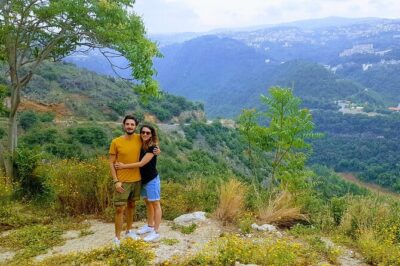
Another reason this combo works: the drive itself takes you through the Bekaa Valley, a farm-and-village corridor between the Lebanon mountain range and the Anti-Lebanon mountains. Even when you are not getting out, the road travel adds context. You can understand why so many civilizations liked this region. People were feeding cities here long before modern highways existed.
And yes, the day is long enough that you’ll want comfort and a smooth itinerary. That’s where the private vehicle and guide help most. You’re not bouncing between meeting points, and you’re not playing catch-up if you stop for photos.
Getting to the Bekaa Valley from Beirut: the practical win
The tour includes pickup from your hotel in Beirut in a private modern vehicle. For a day like this, that matters more than it sounds. Baalbek is not a quick hop. Once you leave Beirut traffic behind, you will appreciate having a driver focused on the roads while your guide handles the route and storytelling.
From the route style, it also makes sense that you’ll be riding through mountain roads. A steady driver can turn a potentially stressful day into something calm. In the experience feedback for this tour, the driving quality comes up as a genuine strength, which tells me the company understands that comfort is part of value.
What you should plan:
- Wear something comfortable for a 9-hour day and bring layers. Depending on the season, the valley can feel different from Beirut.
- Pack water and a snack if you like to control your energy. The itinerary has set visit windows, but breaks aren’t described in detail.
- If you care about photos, be ready for strong daylight. Roman stone looks best when the sun is working.
Stop 1: Baalbek temples, where Roman scale is hard to comprehend
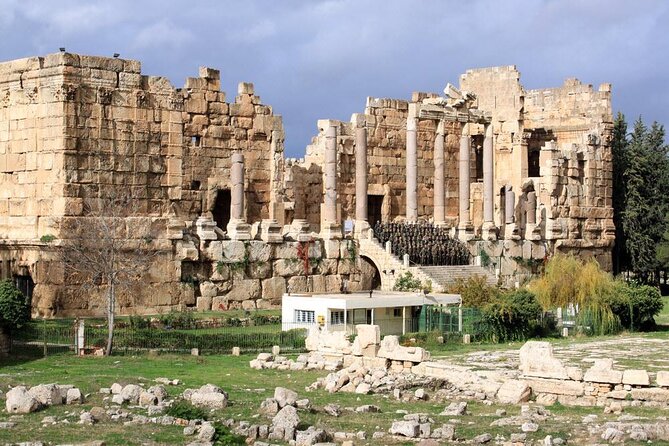
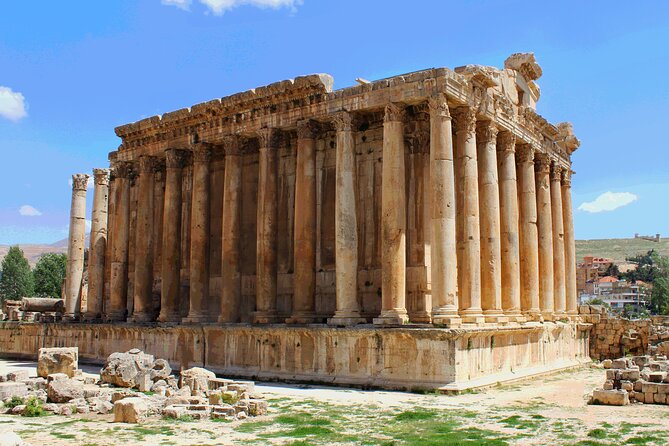
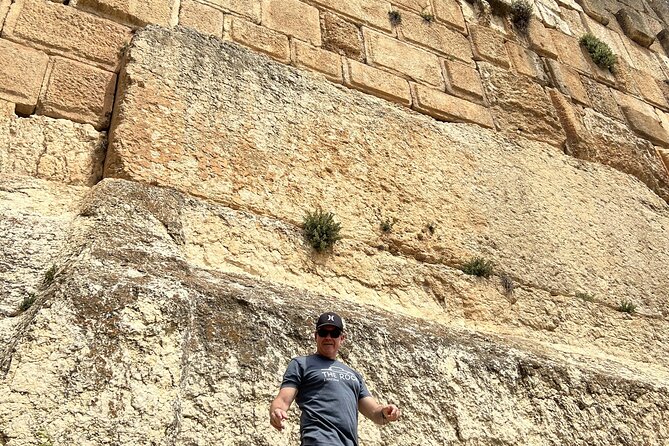
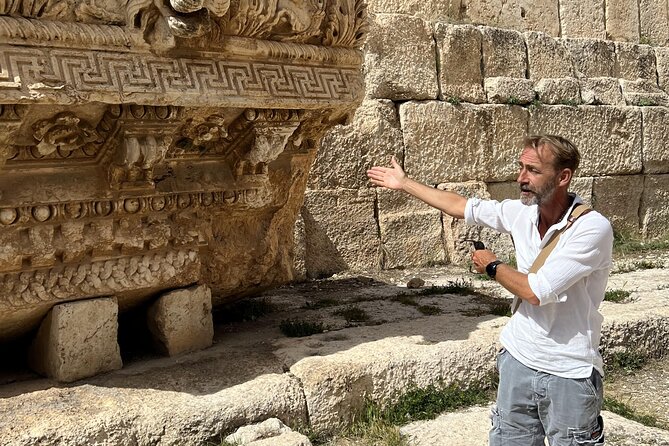
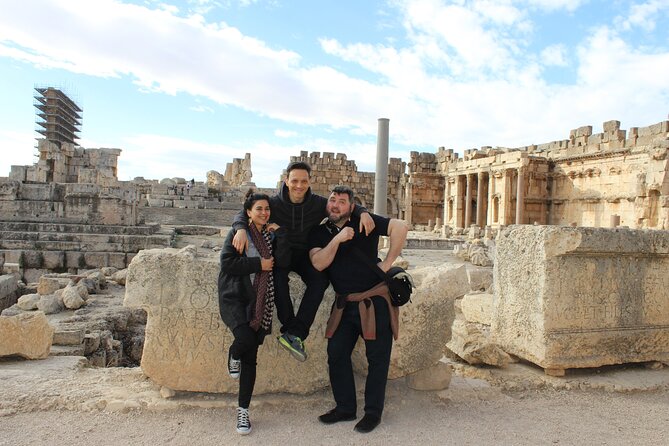
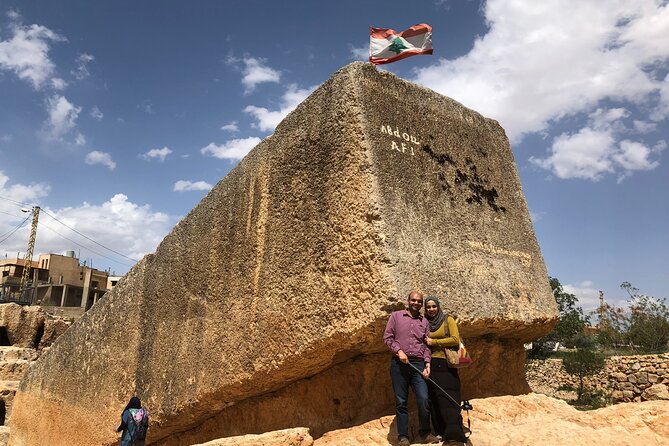
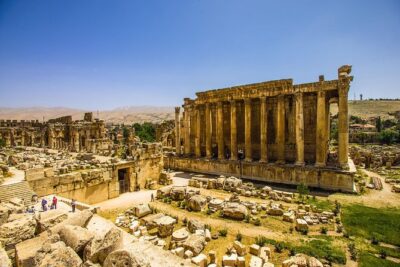
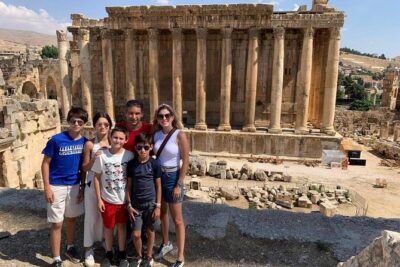
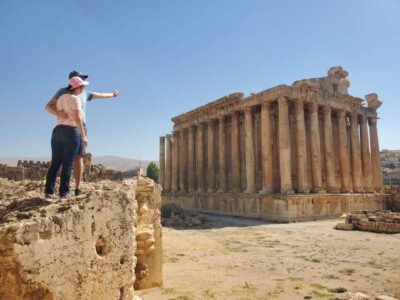
This is the headline. The Temples of Baalbek, also known as Baalbek-Heliopolis, are Roman architecture dedicated to Jupiter, Bacchus, and Venus. This complex is often described as the largest and best-preserved Roman temple architecture left in the region, and the reason is simple once you’re there: the scale is enormous.
You’ll spend about 2 hours at Baalbek. That time window is a good balance. It’s long enough to take in the main monumental areas, but not so long that you feel trapped in one place while the rest of the day starts slipping.
Here are the details that make Baalbek feel different from typical ruins:
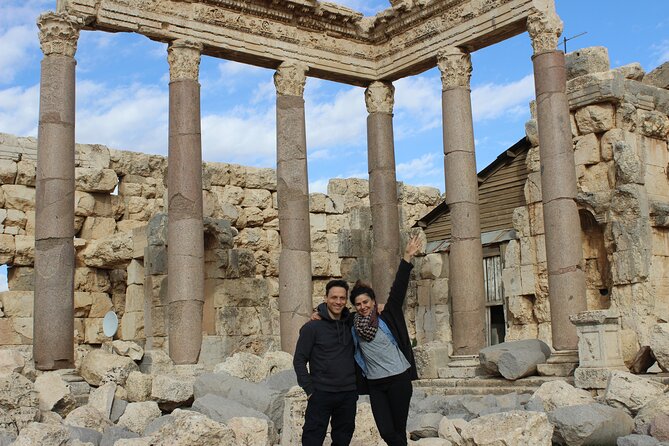
- The Jupiter Temple is massive not just in footprint, but in the size of its architectural elements.
- The remaining columns that attract attention most are often described as among the world’s largest.
- You’ll hear the contrast that helps you visualize it: only a handful of columns remain from a larger original set, and those surviving ones were about 20 meters tall and 2.5 meters in diameter.
Also, you’ll want to notice material. The complex uses granite and limestone, and that mix affects how the stone looks in sunlight. When the guide explains what you are seeing, the space stops being just dramatic and starts becoming understandable.
The only real drawback here is also the most common one for major sites: admission is not included. So if you want zero surprises, budget for tickets. If you’re traveling with a group, it’s still usually straightforward, but you do need that extra step before you start exploring.
Guided departures across Lebanon we have looked at
Stop 2: Chateau Ksara, old-school winemaking and a real tasting
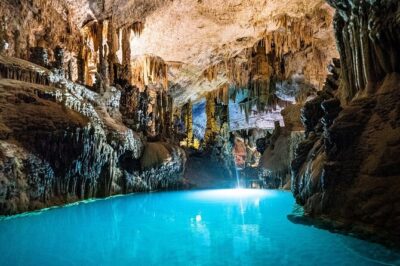
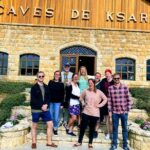
After Roman stone, you get Roman roads to grape vines. At Chateau Ksara, the visit is about a working winery with history behind it. This winery dates to the 19th century, and it was established by Jesuit priests. It’s also described as the oldest of its kind in Lebanon, which is the sort of line that can sound like trivia until you realize it means the operation has been adapting for a long time.
You’ll have about 45 minutes here, and the structure is clear:
- You’ll visit vineyards and cellars.
- You’ll get a wine sampling focused on dry wines.
Even if you are not a serious wine person, this is still a great stop because it gives you something tactile. Cellars and barrels and the way wine is handled make the tasting feel connected to the place, not like you just paid to stand in a shop.
What I like most about this winery timing is that it does not try to turn the whole day into wine education. You get enough context to make the tasting meaningful, then you move on before you feel weighed down. If you have a balanced day, you actually taste more.
As with the ruins, admission tickets are not included. Plan extra for entry. Also, if you want to be careful with alcohol, remember you are still driving later. The tasting is usually not a meal, but it still affects how you feel.
Stop 3: Anjar Citadel, Umayyad arches and palace ruins
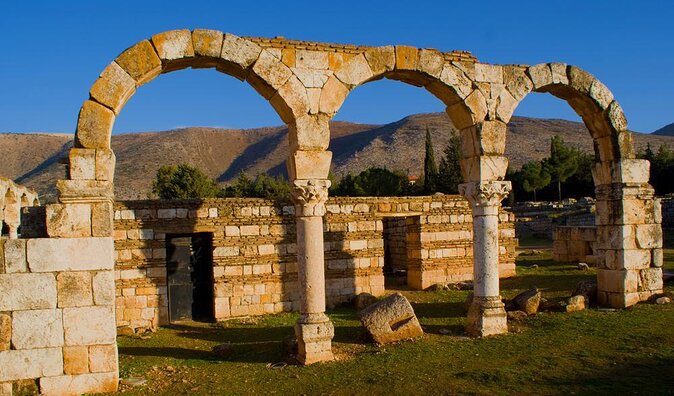
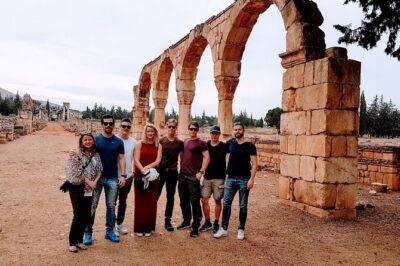
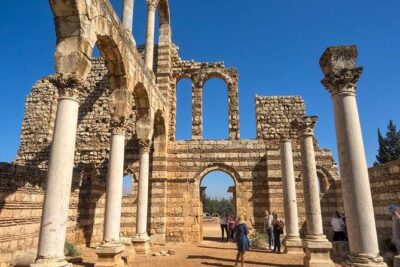
Anjar is the day’s “time jump.” Instead of focusing on Roman temples, you head to Anjar Citadel, a town in the Beqaa Valley where you can see UNESCO-listed ruins connected to the Umayyad Caliphate in the 8th century.
You’ll spend about 1 hour here. That’s enough time to walk key sections and get oriented without turning it into a slow slog.
What you should look for:
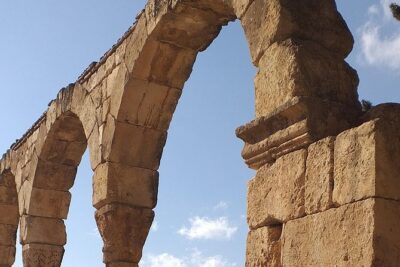
- The impressive arches that give the ruins their character.
- The sense of a palace area, where layout and structure hint at power and design.
The contrast from Baalbek is the point. When you see Roman columns and then move to Islamic-era arches and palace remains, your brain naturally compares engineering choices and cultural priorities. It’s one of those experiences where a good guide makes a big difference, because you’re not just reading a sign, you’re learning how to interpret a shape.
And again, admission tickets are not included. So this is a day where the booking price covers your guide, vehicle, and structured time, but you still need to account for site entry.
How the guide and driver change your whole day
This is a tour where the guide isn’t just a driver with facts. In the strongest feedback for the experience, Rouba is highlighted as a standout. The repeated themes are simple but powerful: she’s professional, warm, and good at explaining what you are looking at. She also comes up as an excellent driver, which matters because the day includes mountain roads.
Another quality that makes a difference is that you are not locked into a rigid script. The tone is that you can set your own itinerary and go at your own pace. If you like stopping for photos longer, or you want more time to ask questions, a guide who stays flexible can make the day feel personal instead of rushed.
You should also expect that the guide will suggest good ways to spend time at each stop, not just read dates off a board. That’s the real advantage of a guided day, especially in a place like the Bekaa where the sites look dramatic even before anyone tells you why.
Timing, pacing, and what a full 9 hours really means
The tour runs for about 9 hours. That sounds straightforward until you picture the day: there’s driving time, walking time, photo time, and time to actually take in what you see.
Here’s how the visit durations add up:
- Baalbek temples: about 2 hours
- Ksara Winery: about 45 minutes
- Anjar Citadel: about 1 hour
- The rest of the time is for driving, setup, and your in-between moments.
So yes, it’s a full day, not a quick excursion. If you want a slow, contemplative itinerary with long meals, you might feel this is busy. If you want a packed but well-sequenced day where you hit the key highlights, it’s a strong fit.
The mobile ticket option is also helpful. It reduces the “where do I find the paper ticket” stress. Just be ready with your phone at the start.
Value and price: what $90 per person really covers
At $90 per person, the headline price is reasonable for a private full-day outing that includes pickup from Beirut, a modern vehicle, and a guide who leads the day across multiple sites.
Where the value equation shifts is admission. Since site tickets are not included, you should treat the $90 as covering the guided experience and transport, not the entrances themselves. That’s typical for many tours, but it matters for budgeting.
In practice, this is still good value if:
- You want a private day instead of public transport.
- You like having someone explain what you’re seeing.
- You prefer doing three major areas in one shot rather than planning them one by one.
It’s less ideal if:
- You already have a strong plan for driving yourself and buying tickets on your own.
- You only care about one stop, like Baalbek, and would skip the rest.
If you’re the kind of traveler who likes efficiency without feeling rushed, the structure here makes sense.
Who this tour suits best
This tour is a great match if you:
- Want Roman + wine + Umayyad ruins in one day.
- Prefer a private vehicle with a guide handling logistics.
- Appreciate detailed explanations at the sites, especially where scale can be confusing.
- Like the idea of moving through the Bekaa Valley with someone who can set expectations and keep the day flowing.
It’s also a good pick for couples and small groups who want a more tailored feel. The private format means it’s only your group doing the tour, not a shared scramble with strangers.
Small tips to get the best experience
These are practical, not fancy:
- Bring a charged phone or camera, because you will want photos at Baalbek and Anjar.
- Wear shoes with solid grip. Even if the paths are manageable, stone and uneven ground are common in ruins areas.
- If you plan to taste wine, plan your energy for later. It’s a long day after all.
- If you have questions about Roman columns or Umayyad architecture, ask early. A guide can steer you toward what to notice so you don’t just see big stuff, you understand it.
Should you book this Baalbek, Anjar and Ksara tour?
If you want one strong day that covers three key parts of Lebanon’s historical and cultural range, I’d say yes. The tour’s biggest strength is how it mixes world-famous Roman temples with an easy, structured winery stop and a UNESCO-listed Islamic-era ruins site, all with private pickup from Beirut.
Book it if you value:
- A guide-led day that helps you interpret what you see
- Comfortable transport on a long route
- A pacing style that can respect your speed at the sites
Skip it or consider alternatives if:
- You hate long drives or prefer a half-day format
- You only care about one site, since the admission tickets for multiple stops can add up
If you are trying to make the most of your time in Lebanon without turning your day into logistics homework, this is a smart, well-rounded choice.
More of Lebanon, Reviewed
- Guided Small-Group Tour to Baalbek, Anjar and Ksara with Lunch
★ 5.0 · 511 reviews - Guided Small-Group Tour to Jeita, Harissa, Byblos with Lunch
★ 5.0 · 361 reviews - City Sightseeing Beirut Hop-On Hop-Off Bus Tour
★ 4.5 · 87 reviews - Private Anjar and Baalbek Tour from Beirut with Departure Ticket
★ 5.0 · 79 reviews - Guided Private Full Day Tour to Baalbek, Anjar and Chateau Ksara
★ 5.0 · 60 reviews
Elsewhere in Lebanon
- Guided Small-Group Tour to Baalbek, Anjar and Ksara with Lunch
★ 5.0 · 511 reviews - Guided Small-Group Tour to Jeita, Harissa, Byblos with Lunch
★ 5.0 · 361 reviews - Paragliding Trip Over Lebanon – Jounieh Bay
★ 5.0 · 257 reviews - Jeita Grotto,Harissa&Byblos Full-Day PRIVATE-CAR Trip from Beirut
★ 5.0 · 222 reviews - First Paragliding Club in Lebanon – Since 1992
★ 5.0 · 193 reviews
Baalbek and the Bekaa, Compared
- Guided Small-Group Tour to Baalbek, Anjar and Ksara with Lunch
★ 5.0 · 511 reviews - Anjar, Baalbek & Ksara Day Trip – With Lunch (4G on Board)
★ 4.5 · 181 reviews - Baalbek – Anjar – Ksara Trip From Beirut
★ 4.5 · 80 reviews - Private Anjar and Baalbek Tour from Beirut with Departure Ticket
★ 5.0 · 79 reviews - Guided Private Full Day Tour to Baalbek, Anjar and Chateau Ksara
★ 5.0 · 60 reviews
Other Lebanon trips we have written up
Baalbek, Anjar & Ksara Day Trips, compared.
 ★ 5.0Guided Small-Group Tour to Baalbek, Anjar and Ksara with LunchFrom $65511 reviews
 ★ 4.5Anjar, Baalbek & Ksara Day Trip – With Lunch (4G on Board)From $95181 reviews
 ★ 4.5Baalbek – Anjar – Ksara Trip From BeirutFrom $3480 reviews
 ★ 5.0Private Anjar and Baalbek Tour from Beirut with Departure TicketFrom $7579 reviews
 ★ 5.0Guided Private Full Day Tour to Baalbek, Anjar and Chateau KsaraFrom $10060 reviews
 ★ 5.0Lebanon tour Baalbek ruins & Ksara w/pick-up, lunch,guide+entriesFrom $13035 reviews
 ★ 4.9Baalbek Temples & Ksara Caves w/pick-up,guide, entries+lunchFrom $14034 reviews
 ★ 5.0Small Group Tours to Baalbek, Anjar & Chateau Ksara with lunch and TicketsFrom $7529 reviews
Every list this tour turns up in