
REVIEW · BEIRUT CITY TOURS & WALKS
Beirut Full Day Walking Tour
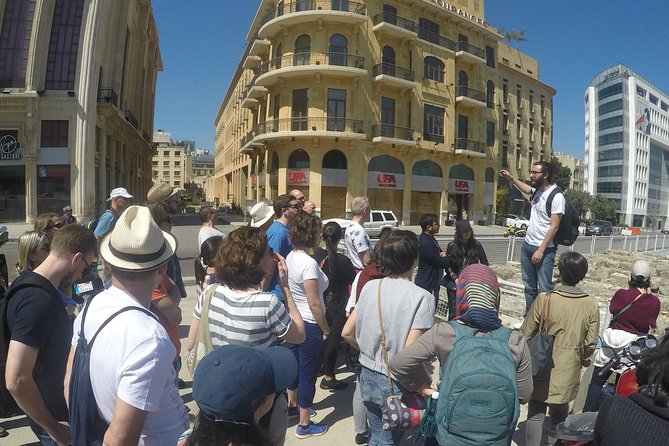
Beirut makes sense on foot. This full-day walking tour uses a tight east-to-west route, linking landmarks from Roman-era remnants to today’s political flashpoints. You get a guide to help you read what you’re seeing, even when Beirut’s street system feels like it was designed during a power cut.
I especially love how the tour connects the city’s big public symbols, Martyr’s Square and Samir Kassir Square, to the human story behind them. I also like the practical pacing, with built-in stops for major sites and a real lunch, plus beer to keep the energy up.
One caution: it is a long 6-hour walk on uneven streets, and there is no street-food option for gluten-intolerant travelers. If you need a strict gluten-free meal, you’ll want to plan carefully.
In This Review
- Key highlights to look for
- From Martyr’s Square to the Green Line, the route that teaches Beirut fast
- Price and what feels like a good deal at about $41
- Why the guide’s civil war map makes the landmarks click
- Stop-by-stop: monuments, churches, and Ottoman echoes
- Souks, Zaha Hadid, and Zaytouna Bay: seeing modern Beirut without the detours
- SOLIDERE, Saifi Village, and the power of architecture in a contested city
- Getting fuel: lahmadjun, vegetarian option, and the beer pause
- The old Holiday Inn, The Egg bunker, and how conflict left physical scars
- Sauntering back through Beirut’s quieter streets: Antique District, Gemmayzeh, Gouraud
- Mohammad Al-Amin Mosque and the Rafic Hariri connection
- Nicolas Sursock Museum and why it’s worth a brief pause
- Practical tips so you enjoy the whole 6 hours
- Should you book this Beirut Full Day Walking Tour?
- FAQ
- How long is the Beirut Full Day Walking Tour?
- Where do you start, and what time does the tour begin?
- What group size should I expect?
- What is included in the price?
- Is there a gluten-free option?
- What happens if the tour is canceled because of poor weather?
Key highlights to look for
- Small group of up to 15, so questions do not get lost in the crowd
- Civil war storytelling tied to visible locations, like the Green Line and old bunkers
- A lunch break you can actually enjoy, with lahmadjun plus coffee and beer included
- A wide spread of Beirut, from Roman Baths to the modern Souks and Zaytouna Bay
- More than the postcard stops, with Zokak el-Blat, Bachoura-area streets, and walking routes back through Gemmayzeh
Other walks around Beirut we have reviewed
- PRIVATE Beirut Historical Walking Half Day Tour★ 5.0 · 27 reviews
- Historical Beirut Tour (AM) Half Day – (4G on Board)★ 4.0 · 16 reviews
- Beirut Full Day Walking Tour★ 5.0 · 14 reviews
- Pigeon Rocks Boat Ride Beirut (Raouche Rocks)★ 5.0 · 10 reviews
From Martyr’s Square to the Green Line, the route that teaches Beirut fast
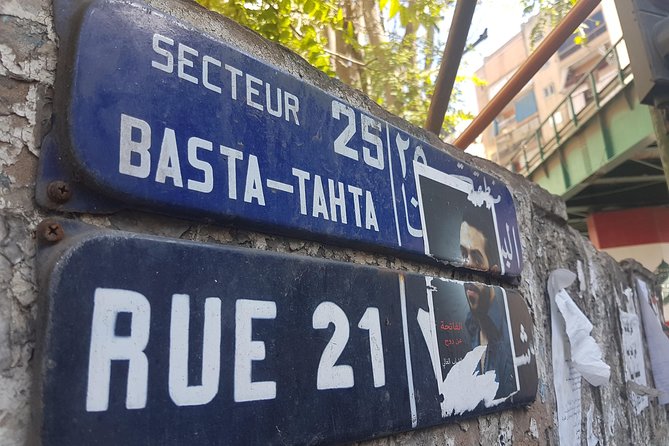
Beirut can feel chaotic if you try to explore alone. Streets curve, signage is inconsistent, and neighborhoods can change character fast. This tour solves that problem with one smart trick: it’s organized as a story you can follow on the ground, moving east to west with a guide who points out what matters.
You start in Martyr’s Square, a place that works like a city stage. Here, you’ll see the statue area and remnants connected to Le Petit Serail, along with the Ciné Opéra context. The point is not just to admire stonework. It’s to understand how Beirut uses landmarks to signal power, loss, and renewal.
Then you keep going, building momentum: Samir Kassir Square is next, and the talk turns to how the city remembers the civil war era and the assassinations that followed after 2005. By the time you reach Place de l’Etoile, the tour widens into city planning and governance, linking Ottoman and French influence to the Lebanese political system.
This is a great setup if you want one day that actually changes how you see the city. Instead of bouncing between photos, you start noticing lines of influence, occupation, and architecture that would be hard to spot on your own.
Price and what feels like a good deal at about $41
At $41.03 per person for around 6 hours, this tour is not just “cheap walking.” You’re paying for a guide and for included food and drinks, plus the basic site access costs listed as covered.
The value looks strongest in three areas:
- Guide time: You get focused interpretation at multiple major stops, not a quick handoff at each attraction.
- Included lunch: Lahmadjun from Ishkhanian Bakery is part of the deal, and there’s a vegetarian option.
- Coffee and beer: That matters more than it sounds. It keeps the midday stretch from turning into a grumpy sprint.
Also, the group size stays capped at 15. When you’re paying for history on foot, it helps if the guide can keep track of everyone’s questions. The reviews you read about this tour consistently highlight the guide as a key reason people recommend it, and the structure here supports that kind of interaction.
Why the guide’s civil war map makes the landmarks click
Beirut’s modern identity is tied to the civil war in ways you can’t guess just from reading headlines. What changes everything is when someone ties the story to actual spots you can stand on.
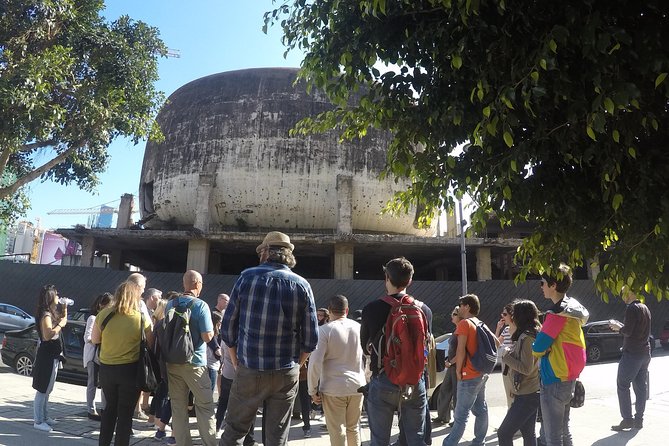
This tour repeatedly does that. You’ll hear about the Green Line, the separation line during the civil war between Christians and Muslims, and you’ll walk toward it while passing the BDD area to reach that border space. You’ll also stop at The Egg, the former Metropol Cinema that was transformed into a bunker during the fighting. You do not go inside, but you get the framework for how the conflict changed the city’s functions over time.
There’s also a Holiday Inn stop that’s especially memorable for anyone who likes political history tied to buildings. You’ll see the old Holiday Inn structure and hear about the Qantari front and the battle of hotels in 1975. It’s one of those places where a modern visitor might otherwise just see a site and move on.
This kind of storytelling is not there to overwhelm you. It’s there so you can understand why two buildings next to each other can symbolize totally different moments in Beirut’s timeline.
Done on foot, at street level
Stop-by-stop: monuments, churches, and Ottoman echoes
The tour starts with public squares and keeps steering you into meaningful layers of the city.
Martyr’s Square, Le Petit Serail, and Ciné Opéra
You begin with a broad introduction to the city’s identity and memory. Seeing the statue area alongside what’s tied to Le Petit Serail gives you a reference point for why Beirut’s central spaces carry so much emotion. The Ciné Opéra mention adds another layer: culture, public life, and the way cities brand themselves.
Samir Kassir Square: memory after 2005
Samir Kassir is part of modern Beirut’s political story. The guide brings it together by explaining the civil war context and the post-2005 assassinations, which helps you understand why certain names and places keep coming back in conversation here.
Place de l’Etoile: Ottoman and French planning meets modern politics
This stop is built for people who like structure. You’ll learn about the Lebanese political system and how Ottoman and French urban planning shaped what you see. You’ll also notice details like Al Abed Clock tower and the parliament area.
Greek Orthodox Cathedral of Saint George
A short stop, but useful. It gives you religious context so later church and mosque stops don’t feel random. When you see different denominations later, you’ll have a base for comparing styles and roles in the city.
Garden of Forgiveness Archaeological Area, then viewpoints toward major religious sites
At the Garden of Forgiveness site, you’ll see the archaeological area and also get views that connect you to Mohammad Al-Amin Mosque and the Maronite Saint Georges Cathedral. This stop works well because it turns architecture into geography. You start understanding where the city’s big landmarks sit relative to each other.
Roman Baths and the Ottoman military hospital
Roman Baths are the kind of stop that can be brief if you do not have context. Here, you’ll see the bath area and then hear about Le Grand Serail and the Ottoman military hospital. That layering matters. It’s not just Roman ruins, it’s evidence that successive eras reused, adapted, and redefined physical space.
Souks, Zaha Hadid, and Zaytouna Bay: seeing modern Beirut without the detours
After you move through the more “heavy” political and historical moments, the tour shifts into city texture and design.
Beirut Souks, including L’Orient and the Zaha Hadid building
This is one of the tour’s most visually satisfying stretches. The guide’s approach here helps you read the souks as more than shopping. It’s about how Beirut reimagines central spaces. Even if you do not plan to buy anything, you’ll get a feel for why these buildings represent a kind of modern ambition.
Zaytouna Bay and the Yacht Club of Beirut
This stop brings you to the water, which is a nice emotional break from the dense street scenes. It also gives you a different side of Beirut’s story, one tied to prestige, leisure, and how the waterfront fits into the broader city plan.
SOLIDERE, Saifi Village, and the power of architecture in a contested city
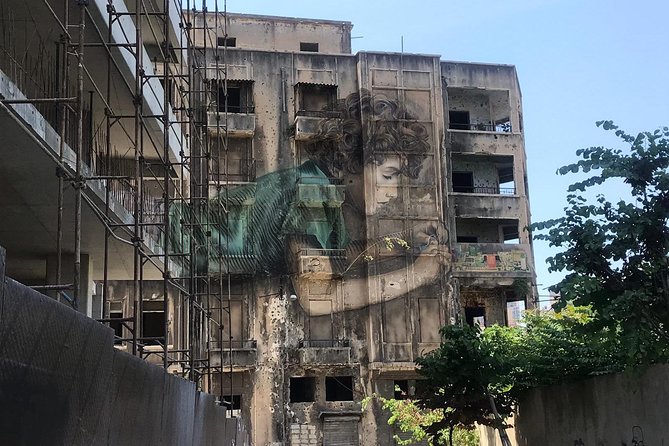
A big part of this tour is learning that Beirut’s buildings are not just buildings. They can represent real estate fights, redevelopment plans, and political narratives.
Two stops make this idea concrete:
- Saint George’s Maronite Cathedral, where the guide talks about the Saint Georges/SOLIDERE real estate battle
- Saifi Village, where you pass by SOLIDERE developments and discuss architectural styles
This is the part of the day that helps you understand why some neighborhoods look new while others look frozen in time. If you care about how cities change, this tour gives you enough context to see the “why” behind the “what.”
Getting fuel: lahmadjun, vegetarian option, and the beer pause
The tour builds in a food moment in Zokak el-Blat. You enter the Zokak El Blat district and you’ll also have time to grab lahmadjun, with a vegetarian option available.
Lunch is included, and it comes from Ishkhanian Bakery or falafel sandwiches, plus coffee and beer. That combo is genuinely useful in Beirut, where a walking day can turn into a scramble if you do not have a plan. Here, you get one.
One practical note: the tour data says there is no street food option for gluten-intolerant travelers. If you eat gluten-free, don’t assume lahmadjun or falafel sandwiches will be safe. It’s smart to message the provider ahead of time to clarify what can be accommodated.
The old Holiday Inn, The Egg bunker, and how conflict left physical scars
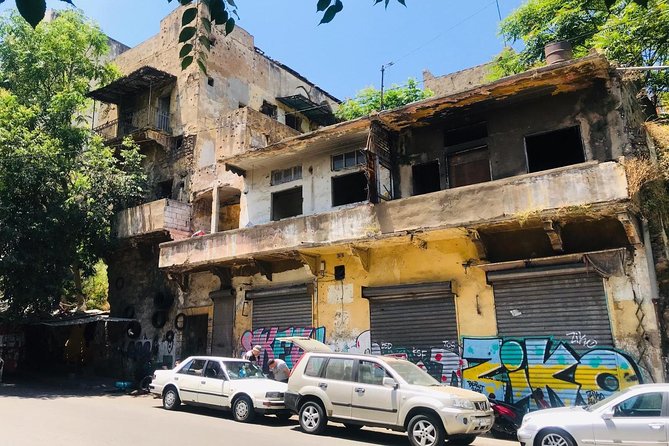
Three stops in the afternoon create a clear “conflict to consequence” thread.
The old Holiday Inn building
You’ll learn about the Qantari front and the battle of the hotels in 1975. This is one of the best ways to connect a war story to a skyline element you can actually point at.
The Egg (Metropole Cinema)
You’ll stop at the former Metropol Cinema, which was transformed into a bunker during the civil war. You won’t go in, but you’ll get explanations about the phases of the civil war and how the city adapted its spaces for survival. It’s a reminder that Beirut’s built environment holds layers you can still recognize.
Green Line approach and BDD area
Passing by the BDD area to reach the Green Line is an important final step in the conflict story. The Green Line isn’t a “tourist spot” in the usual sense. It’s a boundary you can feel. Seeing it with explanation turns the concept of separation into something physical.
Sauntering back through Beirut’s quieter streets: Antique District, Gemmayzeh, Gouraud
The late part of the walk slows the pace in a good way. You’ll pass by the Beirut Antique District, moving near areas where antique shops will be closed. Even when shops are shut, the streets still tell a story, especially when your guide explains Khadak El Ghamik street context.
Then you head toward Gemmayzeh Street, walking along Gouraud Street back toward Martyr’s Square. This closing stretch matters because it shows you how the day’s political and architectural themes land in everyday Beirut street life.
If you like finishing a tour with a human scale instead of a long march back through empty corridors, this ending route works.
Mohammad Al-Amin Mosque and the Rafic Hariri connection
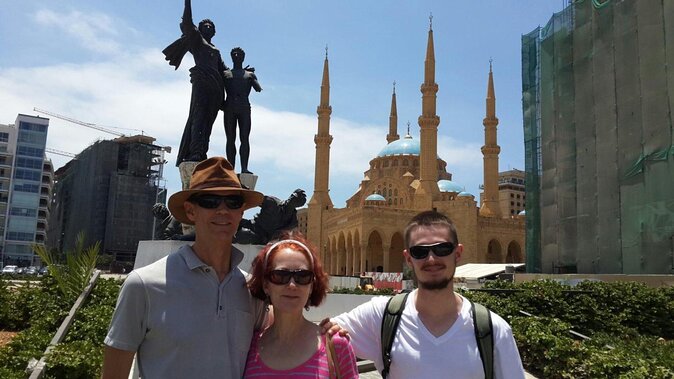
The tour doesn’t treat the biggest mosque as a quick photo stop. At Mohammad Al-Amin Mosque, you’ll visit the largest mosque of Beirut and the guide will talk about the assassination of former prime minister Rafic Hariri.
This is another example of how the guide uses place as a way to talk politics without turning the day into a lecture. The mosque stop gives you a sense of what Beirut invests in public religious space, and it also ties national tragedy to a visible landmark you can understand immediately.
Nicolas Sursock Museum and why it’s worth a brief pause
Not every tour has time for a museum moment, but this one includes a short stop at Nicolas Sursock Museum. You’ll hear about the Sursock family and the old statue of the Martyrs.
Even if you don’t have time for deeper museum exploration, this stop is valuable. It adds family and cultural history to the day’s bigger political storyline. It also gives you a final anchor before the walk back through Gemmayzeh.
Practical tips so you enjoy the whole 6 hours
A walking tour like this lives or dies on comfort and expectations.
Wear shoes made for uneven sidewalks
You’re on streets for most of the day, and the data flags a strong physical fitness level. Bring shoes with grip and plan for frequent stops, turns, and street-level crowding.
Use the meeting point wisely
You start at Martyr’s Square (VGW4+HV3 area) at 9:30 am, and you finish back at the same meeting point. That round-trip structure keeps you from getting stranded.
Bring a water plan
Water is not listed as included. With a midday lunch plus coffee, you’re fine most days, but I still suggest bringing water if you run warm.
Expect a day shaped by weather
The experience requires good weather. If conditions are poor, you’ll be offered a different date or a full refund. So if you’re trying to fit Beirut into a tight itinerary, keep one day flexible.
Should you book this Beirut Full Day Walking Tour?
Yes, I think it’s a smart booking for the right mindset.
Book it if you want a single day that explains Beirut instead of just showing you buildings. This tour is built for people who like history tied to real locations, and who want to understand why symbols, churches, mosques, and even redevelopment projects matter. The guide and the group size are clearly central to why people rate this highly.
Skip it or reconsider if gluten-free eating is a non-negotiable need. The tour notes there is no street food option for gluten-intolerant travelers, and you cannot assume substitutions will be available without confirming.
If you’re ready for a serious walking day and you want Beirut from east to west with context at every stop, this is the kind of tour that helps you return home with a clearer mental map.
FAQ
How long is the Beirut Full Day Walking Tour?
It runs for about 6 hours.
Where do you start, and what time does the tour begin?
The tour starts at Martyr’s Square (VGW4+HV3, Beirut, Lebanon) at 9:30 am, and it ends back at the meeting point.
What group size should I expect?
This tour has a maximum of 15 travelers.
What is included in the price?
The price includes guiding, lunch (one lahmadjun from Ishkhanian Bakery or falafel sandwiches), coffee, beer, and all fees and taxes.
Is there a gluten-free option?
The tour data says there is no street food option for gluten-intolerant travelers.
What happens if the tour is canceled because of poor weather?
The experience requires good weather. If it’s canceled due to poor weather, you’ll be offered a different date or a full refund.
More of Lebanon, Reviewed
- Guided Small-Group Tour to Baalbek, Anjar and Ksara with Lunch
★ 5.0 · 511 reviews - Guided Small-Group Tour to Jeita, Harissa, Byblos with Lunch
★ 5.0 · 361 reviews - City Sightseeing Beirut Hop-On Hop-Off Bus Tour
★ 4.5 · 87 reviews - Private Anjar and Baalbek Tour from Beirut with Departure Ticket
★ 5.0 · 79 reviews - Guided Private Full Day Tour to Baalbek, Anjar and Chateau Ksara
★ 5.0 · 60 reviews
Elsewhere in Lebanon
- Guided Small-Group Tour to Baalbek, Anjar and Ksara with Lunch
★ 5.0 · 511 reviews - Guided Small-Group Tour to Jeita, Harissa, Byblos with Lunch
★ 5.0 · 361 reviews - Paragliding Trip Over Lebanon – Jounieh Bay
★ 5.0 · 257 reviews - Jeita Grotto,Harissa&Byblos Full-Day PRIVATE-CAR Trip from Beirut
★ 5.0 · 222 reviews - First Paragliding Club in Lebanon – Since 1992
★ 5.0 · 193 reviews
Beirut on Foot
- City Sightseeing Beirut Hop-On Hop-Off Bus Tour
★ 4.5 · 87 reviews - PRIVATE Beirut Historical Walking Half Day Tour
★ 5.0 · 27 reviews - Historical Beirut Tour (AM) Half Day – (4G on Board)
★ 4.0 · 16 reviews - Pigeon Rocks Boat Ride Beirut (Raouche Rocks)
★ 5.0 · 10 reviews - Private Beirut City Tour with Boat Ride at Raouche Rock
★ 4.5 · 10 reviews
Other Lebanon trips we have written up
Beirut City Tours & Walks, compared.
 ★ 4.5City Sightseeing Beirut Hop-On Hop-Off Bus TourFrom $2387 reviews
 ★ 5.0PRIVATE Beirut Historical Walking Half Day TourFrom $9327 reviews
 ★ 4.0Historical Beirut Tour (AM) Half Day – (4G on Board)From $5016 reviews
 ★ 5.0Pigeon Rocks Boat Ride Beirut (Raouche Rocks)From $3210 reviews
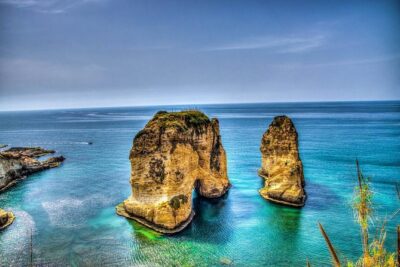 ★ 4.5Private Beirut City Tour with Boat Ride at Raouche RockFrom $10810 reviews
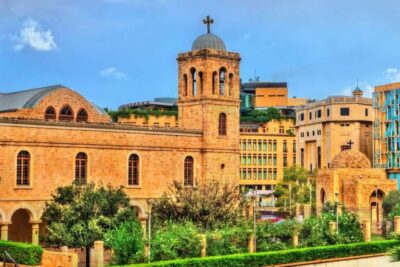 ★ 4.9Private Walking Tour With A Guide (Private tour)From $539 reviews
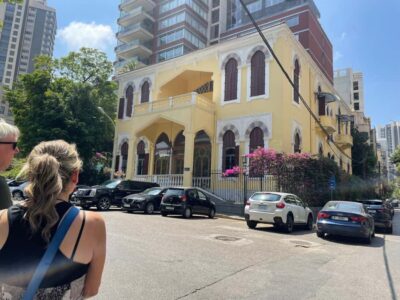 ★ 5.0BEYOND BEIRUTFrom $1107 reviews
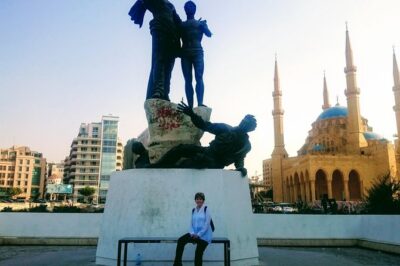 ★ 5.0Guided Half-Day Private Beirut Historical TourFrom $756 reviews
Every list this tour turns up in