
REVIEW · BEIRUT CITY TOURS & WALKS
Exploring Beirut’s Past: A Private Guided Historical Tour
Beirut’s past hits hard, fast. This private guided 5-hour tour strings together archaeology, seaside icons, and downtown landmarks, with a guide who helps you connect centuries in a single morning. You’ll get easy hotel pickup plus an air-conditioned ride, so you can focus on the stories instead of the logistics.
I love the way the day anchors on the National Museum of Beirut, where artifacts from across Lebanon help you understand why this small country matters so much to the region. I also love the pacing that mixes set-piece stops with quick view moments, from Raouche and the Corniche to the big memorial sites downtown.
One thing to consider: the National Museum admission ticket is not included, so you’ll need to budget for that extra cost, and several stops are brief (often around 10 minutes each).
In This Review
- Key highlights to look for
- A Beirut morning you can actually manage
- Getting from stop to stop with hotel pickup and A/C comfort
- National Museum of Beirut: the best 2 hours to start anywhere
- Raouche’s Pigeon Rocks and the Corniche: quick sea drama, zero effort
- Zaytouna Bay: a modern waterfront stop that keeps things light
- The abandoned Holiday Inn: war memory you can visit
- Mohammad Al-Amin Mosque, the Blue Mosque: modern scale with classic design
- Al-Omari Mosque: one site, several identities
- Saint George’s Cathedral and Martyrs Square: Beirut’s religious core and World War I memory
- Nejme Square and Beirut Souks: clock, parliament, and everyday city life
- Roman Berytus Baths: ruins with a living function
- Price, value, and what you are really paying for
- Who this tour suits best
- A quick decision guide: should you book?
- FAQ
- How much does the Beirut historical tour cost?
- How long is the tour?
- Is this tour private?
- Do you get hotel pickup and drop-off?
- What stops are included during the tour?
- Is admission included for the National Museum of Beirut?
- Is admission free for the other sites?
- Are meals included?
- What are the tour’s operating hours?
- What is the cancellation policy?
Key highlights to look for
- National Museum of Beirut as your foundation, with a 2-hour block for artifacts and context
- Raouche and the Corniche for fast, memorable coastal viewpoints and the Pigeon Rock silhouette
- War landmark storytelling at the abandoned Holiday Inn, tied to the Battle of the Hotels era
- Downtown mosque architecture across different periods, including the 2008 Mohammad Al-Amin Mosque and the older Al-Omari site
- Roman Berytus Baths as a rare “archaeology you can still feel,” plus performances and concerts in one section
Other walks around Beirut we have reviewed
- PRIVATE Beirut Historical Walking Half Day Tour★ 5.0 · 27 reviews
- Historical Beirut Tour (AM) Half Day – (4G on Board)★ 4.0 · 16 reviews
- Beirut Full Day Walking Tour★ 5.0 · 14 reviews
- Pigeon Rocks Boat Ride Beirut (Raouche Rocks)★ 5.0 · 10 reviews
A Beirut morning you can actually manage
If you want to see a lot of Beirut without spending your whole day hopping between neighborhoods, this tour is built for that. It runs about 5 hours, and it’s private, meaning only your group goes. That matters in places where you want a steady rhythm, not the stop-and-go chaos of a big group.
The tour also starts in the morning window, Tuesday to Sunday from 8:30 AM to 1:00 PM (with some date changes in the schedule). Going earlier helps you catch clear light for the sea views and keeps you away from the hottest part of the day.
And you get what I think is the real value add: a tour leader plus professional guidance. You’re not just walking past landmarks, you’re getting the “why this place exists” and “what changed over time” behind each stop.
Getting from stop to stop with hotel pickup and A/C comfort
Beirut can be a busy place, and downtown can be unpredictable. So I like that this experience includes hotel pickup and drop-off plus comfortable private transportation in an air-conditioned vehicle.
That means you can spend your energy on what you came for: the Roman ruins, the Ottoman-era layers, the religious architecture, and the city squares. You’re not stuck figuring out routes, parking, or where the good entrances are. With a private guide in the car, the drive becomes part of the story too.
National Museum of Beirut: the best 2 hours to start anywhere
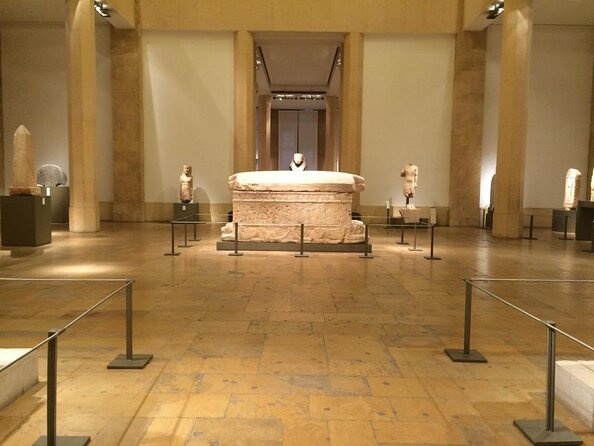
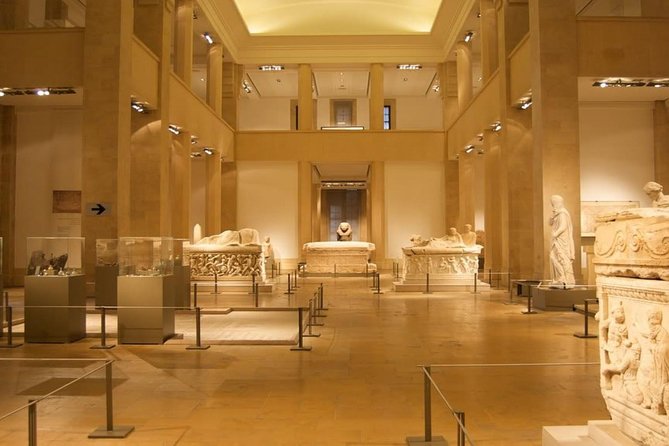
The day’s first major stop is the National Museum of Beirut, and that choice makes sense. It’s the main archaeology museum in Lebanon, and it holds major artifacts gathered from excavations across the country. In other words, it gives you a map in your head before you start scanning buildings for clues.
Plan on the full 2 hours here. This isn’t just a quick glance museum. You’ll see objects that show how Lebanon sat at a crossroads, shaped by different civilizations. If you’ve ever looked at ruins and felt like you needed context first, this museum is that context.
Two practical notes:
- Admission is not included, so bring cash or a card and be ready to add the museum ticket cost.
- If you’re short on time in Beirut, this museum stop still feels like the right “anchor,” because many later stops become easier to interpret once you understand the bigger timeline.
Guided departures across Lebanon we have looked at
Raouche’s Pigeon Rocks and the Corniche: quick sea drama, zero effort
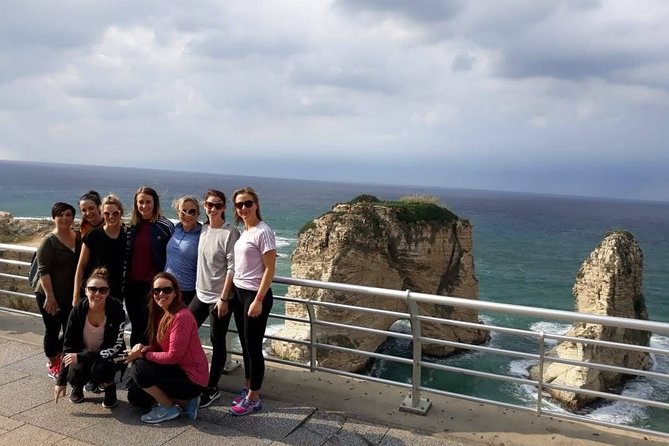
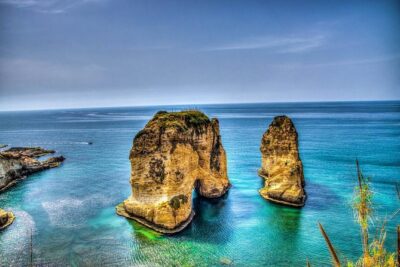
After the museum, you shift gears to the coast with Pigeon Rocks in Raouche. This is a classic Beirut photo spot: two huge rock formations at the western edge of the city, framed by the sea. The stop is short, about 10 minutes, but it’s enough to take in the shape and connect it to the city’s identity.
Then comes the Corniche Beirut. This promenade, especially the Al Manara stretch from Ramlet al Bayda to Saint George marina, is the city’s well-known seaside walk. You’ll see palm-lined views, the Mediterranean, and on the clearer side, the Mount Lebanon summits in the distance.
What I like about these coastal stops is how they break the day up. After museums and historic buildings, you get an open-air reset. And because admission is listed as free for both, you’re not burning money for the view.
Zaytouna Bay: a modern waterfront stop that keeps things light
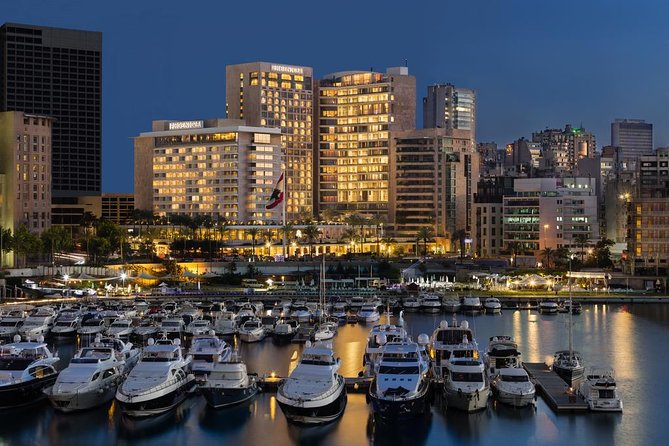
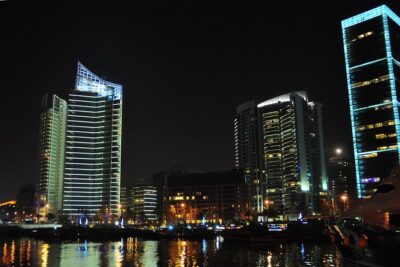
Next is Zaytouna Bay, described on its official site as Beirut’s finest leisure destination. In practice, it’s a waterfront promenade with shops and restaurants.
The stop is only about 10 minutes, so don’t treat it like a long lunch plan. Instead, think of it as a pause point. You get a feel for where the city is now, not just what it used to be.
If you like mixing old and new, this brief change of scenery helps your brain file the rest of the day more clearly. You’ll still be in a historical city, but you’ll see it with a current-day lens for a moment.
The abandoned Holiday Inn: war memory you can visit
Then the tour turns heavier with the abandoned Holiday Inn Hotel, a war landmark. The hotel was built between 1971 and 1974, during Beirut’s economic boom. It stayed functioning until the Lebanese civil war began in 1975.
The story gets intense: the Holiday Inn became part of an area known as the Battle of the Hotels, with more than 25,000 combatants fighting for control over luxury hotels, including the Holiday Inn and the famous Phoenicia hotel. Even though the fighting has long ended, this building remains untouched and abandoned.
I find stops like this valuable because they don’t let you treat history like a museum display. You’re seeing the physical residue of conflict, still standing decades later. That can be uncomfortable. Still, it’s also one of the most direct ways to understand why people in the city remember the past the way they do.
If you tend to avoid grim settings, come ready for quiet respect. This is not a photo stop you’ll love. It’s a stop you’ll remember.
Mohammad Al-Amin Mosque, the Blue Mosque: modern scale with classic design
Downtown time includes one of Beirut’s most striking mosques: Mohammad Al-Amin Mosque, also called the Blue Mosque. It’s the biggest mosque in Lebanon, opened in 2008, and it sits near Martyrs Square.
Look for the big details the guide will point out:
- Four minarets, each about 65 meters high
- multiple domes, with light blue tiles on the domes
- tall, multi-story arches
The stop is listed at 10 minutes, which means you’ll see the mosque’s overall effect rather than do a long interior experience. Still, it’s enough time to clock the size and the design language.
One practical tip: mosques are places with rules, including dress. Even when the stop is short, keep clothing that covers shoulders and knees. It saves time at the entrance.
Al-Omari Mosque: one site, several identities
Next is Al-Omari Grand Mosque, tied to the earliest waves of Islamic rule in the region. The mosque was built in 635 AD in the age of Omar Bin El Khattab. Later, during the Crusader period, it was converted to Church of Saint John in the 12th century. Then the Mamluks retransformed it into the city’s Grand Mosque in 1291.
It also suffered during the Lebanese Civil War, with refurbishment completed in 2004. That means this stop isn’t only about the past. It’s also about survival and restoration.
Again, your time here is around 10 minutes, so the guide’s explanations matter. The architecture might look unified from a distance, but the story is layered, and the stop helps you see that.
Saint George’s Cathedral and Martyrs Square: Beirut’s religious core and World War I memory
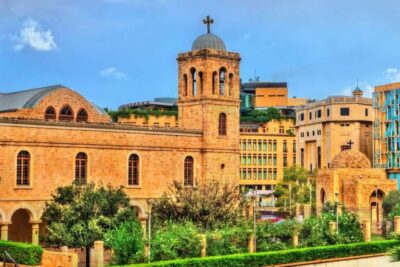
The tour moves from mosques to the Greek Orthodox Cathedral of Saint George. It’s the seat of the Greek Orthodox Metropolitan bishop, and it’s described as the oldest church in Beirut, linked to the mid-sixth century AD.
You’ll also hear why this place connects to Beirut’s intellectual past, including its association with the city’s famous Law School. That connection is easy to miss if you treat a cathedral like a standalone sight. With guidance, it becomes a clue about how Beirut functioned as a regional center.
Then comes Martyr’s Square, historically known as Al Burj or Place des Cannons. The name “Martyrs” ties to the 6 May 1916 executions ordered by the Ottomans of Lebanese nationalists, ordered by Jamal Pasha, during World War I.
This stop is short, but it anchors the downtown story. You’ll understand why modern Beirut’s central spaces aren’t just pretty. They carry sharp political memory.
Nejme Square and Beirut Souks: clock, parliament, and everyday city life
After the memorial and religious core, you reach the civic and commercial heart with Place de l’Etoile, also called Nejme Square.
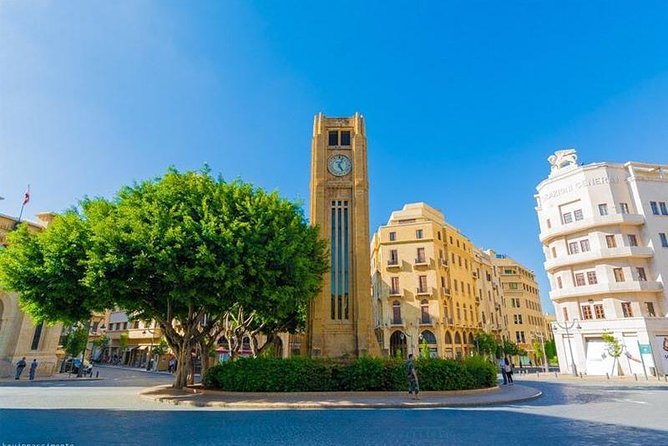
This is the central square in Downtown Beirut, and it houses the Lebanese Parliament, complementary buildings, two cathedrals, a museum, and cafes and restaurants. A standout detail is the 1930 four-faced Rolex clock, which has become one of Beirut’s most recognizable icons.
The tour then includes Beirut Souks, a large commercial district in the city center with over 200 shops and 25 restaurants and cafes, plus an entertainment center and cinema complex. It’s listed as the largest and most diverse shopping and leisure area in Beirut.
You’ll only have about 10 minutes here, so I suggest using the time to orient yourself. Walk a bit, pick a couple of storefronts, and get a feel for whether you’d come back later for shopping or a coffee. If you want to slow down, this is the one stop where you can easily extend your own time after the tour ends.
Roman Berytus Baths: ruins with a living function
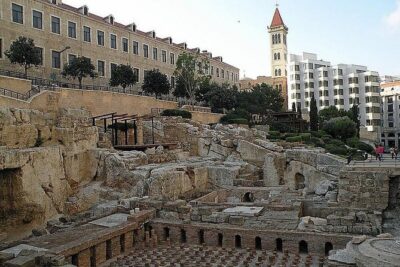
The final major historical anchor is the Roman Baths in downtown Beirut, also called the Roman Berytus baths. This is described as the largest outdoor sight in the downtown area.
Here’s what makes it special:
- discovered in 1968 to 1969
- major renovation in the mid 1990s
- the ancient Berytus had four major bath complexes, with the first created in the early first century under Augustus
- the 551 AD earthquake destroyed the baths
Today, the site still shows ancient bathing traditions. One of the baths is used for artistic performance and concert space, which gives the ruins a living role rather than leaving them frozen behind barriers.
If you only got ten minutes, you’ll still get the big idea: this isn’t “Roman history somewhere else.” It’s Roman history right here, in the middle of modern streets.
Price, value, and what you are really paying for
The price is $75.00 per person, and the experience lasts about 5 hours. At this cost, I look for two things: transport and interpretation.
You get both. Included are hotel pickup and drop-off, comfortable private transportation, air-conditioned vehicle, and a tour leader with a professional guide. That combination is what makes the tour feel efficient. You’re paying to reduce friction, especially in downtown where routes and timing can be tricky.
Also, admission is partially handled by your budget. National Museum admission is not included, but the other stops listed are free (Pigeon Rocks, Corniche, Zaytouna Bay, mosques, cathedral, Martyrs Square, Nejme Square, Beirut Souks, Roman Baths). That means the day cost is more predictable than many tours where every stop charges.
If meals aren’t included (they aren’t), plan to eat either before you start or after you finish. In a five-hour format, that keeps the experience from turning into a rushed restaurant hunt.
Who this tour suits best
This tour is a good match if you:
- want a guided orientation through downtown Beirut without needing to plan each stop yourself
- like a mix of archaeology, architecture, and city squares
- prefer a private format where your guide can pace the day for your interests
It’s also a strong choice for first-timers who feel overwhelmed by Beirut’s layers. The structure takes you from museum context to coastal landmarks to downtown religious and civic spaces, then to the Roman baths.
If you want deep time at just one or two sites, you might find some stops feel short. Several are listed around 10 minutes, which means you’ll skim the surface unless your guide slows down because of your specific interests.
A quick decision guide: should you book?
Yes, you should book this if you want a high-impact Beirut overview in one protected morning window, with private pickup and a guide who can explain what you’re looking at. It’s especially worth it if you care about understanding how different eras overlap, because the museum start makes everything after it click faster.
Skip it, or at least adjust expectations, if you’re the type who wants long hours at one site. This tour is designed for seeing many anchors, not for staying all day in one place.
If you do book, bring modest clothing for the mosque/cathedral stops, and budget a separate ticket for the National Museum of Beirut. Then lean into the mix, because that blend is the point of this day.
FAQ
How much does the Beirut historical tour cost?
The price is $75.00 per person.
How long is the tour?
The tour lasts about 5 hours.
Is this tour private?
Yes, it is a private tour/activity, so only your group will participate.
Do you get hotel pickup and drop-off?
Yes. Hotel pickup and drop-off are included.
What stops are included during the tour?
The tour includes the National Museum of Beirut, Pigeon Rocks in Raouche, Corniche Beirut, Zaytouna Bay, the abandoned Holiday Inn hotel war landmark, Mohammad Al-Amin Mosque, Al-Omari Mosque, the Greek Orthodox Cathedral of Saint George, Martyr’s Square, Place de l’Etoile, Beirut Souks, and the Roman Baths.
Is admission included for the National Museum of Beirut?
No. The admission ticket for the National Museum of Beirut is not included.
Is admission free for the other sites?
The listed admissions for stops like Pigeon Rocks, Corniche Beirut, Zaytouna Bay, the mosques, Martyr’s Square, Place de l’Etoile, Beirut Souks, and the Roman Baths are shown as free.
Are meals included?
No, meals are not included.
What are the tour’s operating hours?
Tuesday to Sunday the tour runs from 8:30 AM to 1:00 PM, with some date-specific changes shown in the schedule.
What is the cancellation policy?
You can cancel for free up to 24 hours in advance for a full refund. If you cancel less than 24 hours before the start time, the amount paid is not refunded.
More of Lebanon, Reviewed
- Guided Small-Group Tour to Baalbek, Anjar and Ksara with Lunch
★ 5.0 · 511 reviews - Guided Small-Group Tour to Jeita, Harissa, Byblos with Lunch
★ 5.0 · 361 reviews - City Sightseeing Beirut Hop-On Hop-Off Bus Tour
★ 4.5 · 87 reviews - Private Anjar and Baalbek Tour from Beirut with Departure Ticket
★ 5.0 · 79 reviews - Guided Private Full Day Tour to Baalbek, Anjar and Chateau Ksara
★ 5.0 · 60 reviews
Elsewhere in Lebanon
- Guided Small-Group Tour to Baalbek, Anjar and Ksara with Lunch
★ 5.0 · 511 reviews - Guided Small-Group Tour to Jeita, Harissa, Byblos with Lunch
★ 5.0 · 361 reviews - Paragliding Trip Over Lebanon – Jounieh Bay
★ 5.0 · 257 reviews - Jeita Grotto,Harissa&Byblos Full-Day PRIVATE-CAR Trip from Beirut
★ 5.0 · 222 reviews - First Paragliding Club in Lebanon – Since 1992
★ 5.0 · 193 reviews
Beirut on Foot
- City Sightseeing Beirut Hop-On Hop-Off Bus Tour
★ 4.5 · 87 reviews - PRIVATE Beirut Historical Walking Half Day Tour
★ 5.0 · 27 reviews - Historical Beirut Tour (AM) Half Day – (4G on Board)
★ 4.0 · 16 reviews - Beirut Full Day Walking Tour
★ 5.0 · 14 reviews - Pigeon Rocks Boat Ride Beirut (Raouche Rocks)
★ 5.0 · 10 reviews
Other Lebanon trips we have written up


Beirut City Tours & Walks, compared.
 ★ 4.5City Sightseeing Beirut Hop-On Hop-Off Bus TourFrom $2387 reviews
 ★ 5.0PRIVATE Beirut Historical Walking Half Day TourFrom $9327 reviews
 ★ 4.0Historical Beirut Tour (AM) Half Day – (4G on Board)From $5016 reviews
 ★ 5.0Beirut Full Day Walking TourFrom $4114 reviews
 ★ 5.0Pigeon Rocks Boat Ride Beirut (Raouche Rocks)From $3210 reviews
 ★ 4.5Private Beirut City Tour with Boat Ride at Raouche RockFrom $10810 reviews
 ★ 4.9Private Walking Tour With A Guide (Private tour)From $539 reviews
 ★ 5.0BEYOND BEIRUTFrom $1107 reviews
Every list this tour turns up in