
REVIEW · SIDON, TYRE & MAGHDOUCHE DAY TRIPS
Lebanon Unveiled: Exclusive Private Tours to Sidon & Tyre
If your idea of a good day is history without the headache, this private route fits. You get door-to-door pickup and drop-off, plus a comfortable air-conditioned car, so you can focus on the places: Sidon, Tyre, and the Maghdouché pilgrimage site. It is also built for people who want the freedom of going their own way, just without gambling on Lebanese roads.
I especially like the practical rhythm of the day. Sidon mixes big-name landmarks with smaller, hands-on stops like the Soap Museum, and Tyre brings you face-to-face with major Roman remains.
One thing to consider: some of the best-known sites along the way have admission not included, and lunch is not part of the price, so you will want to plan for meals.
In This Review
- What You’ll Remember Most
- Door-to-Door Logistics That Actually Protect Your Day
- Sidon First: Purple Dye Roots and a Sea Castle on a Causeway
- Crusaders Sea Castle: What’s Left and What It Represents
- The Soap Museum Stop That Turns History Into Something You Can See
- Khan al-Franj: A Courtyard Reset from the Street Noise
- Sidon Souks: Real Shops, Narrow Alleys, and a Daytime Wander
- Maghdouché’s Our Lady of Mantara Shrine: A Spiritual Stop With Specific Details
- Tyre: Roman-World Scale by the Sea
- Al-Bass Archaeological Site: The Roman Hippodrome You Can Actually Read
- Old Souk Heritage Square: Food Break and the Everyday Side of Tyre
- Price and What You Get for $75
- Who This Tour Is Best For (and Who Might Want a Different Plan)
- Should You Book Lebanon Unveiled Private Tours to Sidon & Tyre?
- FAQ
- How long is the tour?
- What does the tour include?
- Are admission tickets included for every stop?
- Is lunch included?
- What time does the tour start?
- What ticket format do I receive?
- What is the cancellation rule?
What You’ll Remember Most
- Private transfers that handle the driving, so you are not negotiating timing or traffic on your own
- Sidon’s Soap Museum demo, where you can watch traditional olive oil soap being made
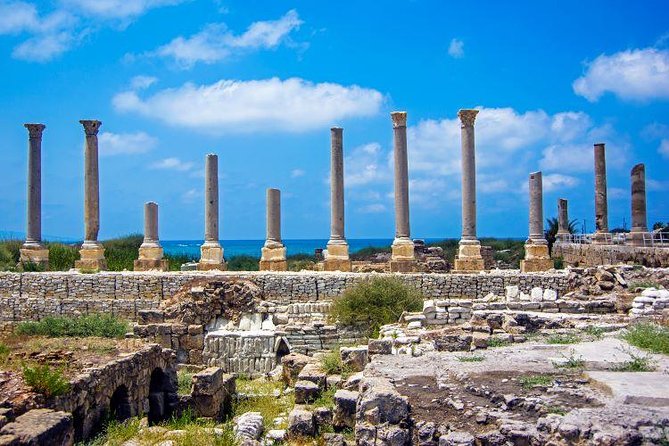
- Al-Bass Archaeological Site in Tyre, including the Roman triumphal arch, necropolis, and well-preserved sarcophagi
- Khan al-Franj’s courtyard setting, a 17th-century stop that feels calmer than the street-level souks
- Maghdouché’s Our Lady of Mantara shrine, a tower-and-cave pilgrimage stop tied to a specific discovery date
- Local guidance in Tyre, with guides like Hassan showing up as true archaeology nerds in the best way
Heading south? Compare these Sidon and Tyre days
- Small-Group Adventure Tour to Sidon Tyre & Maghdouche-Day Trip★ 5.0 · 45 reviews
- Sidon, Tyre & Maghdouche Day Trip – With Lunch (4G on Board)★ 4.5 · 44 reviews
- Sidon – Tyre – Maghdouche Trip, From Beirut★ 5.0 · 25 reviews
- Small Group Tour to Sidon, Tyre & Maghdouche with lunch★ 5.0 · 11 reviews
Door-to-Door Logistics That Actually Protect Your Day
This is a private tour/activity, meaning it is just your group. You start around 9:00 am with hotel pickup in Beirut, then you head south toward Sidon first.
For me, the value is not just convenience. When you are covering multiple historic towns in one day, transport becomes the main variable that can ruin your plans. Here, that variable is controlled: you get comfortable private transportation and you are not stuck trying to coordinate rides while also chasing opening hours.
The day is long enough to feel worthwhile, about 9 hours, but not so long that you will be completely wiped by the end. Still, be ready for a packed schedule where each stop gives you a meaningful taste rather than a deep, multi-day study.
Sidon First: Purple Dye Roots and a Sea Castle on a Causeway
Sidon is one of those places that keeps resurfacing through different eras. The city traces back to the 3rd millennium BC, grew into prosperity by the 2nd millennium BC, and became famous for things like purple dyes and glassware, with Jesus noted as having visited. During the Crusades, it changed hands repeatedly, then saw cycles of destruction and rebuilding.
This tour starts you in Sidon with a relaxed pace, around one hour at the first stop. That is enough time to get your bearings, take in the feel of the town, and then transition smoothly to the bigger landmark that comes next.
Crusaders Sea Castle: What’s Left and What It Represents
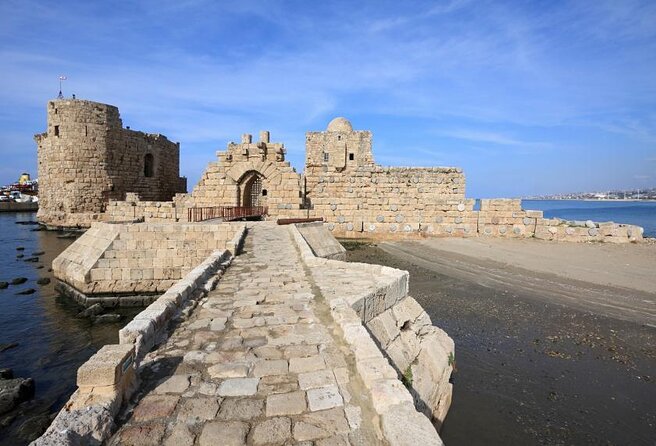
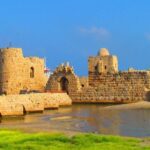
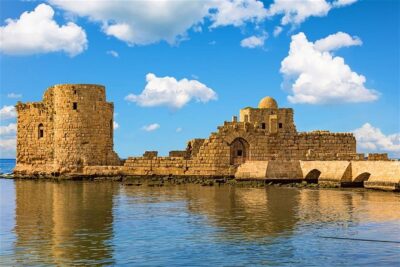
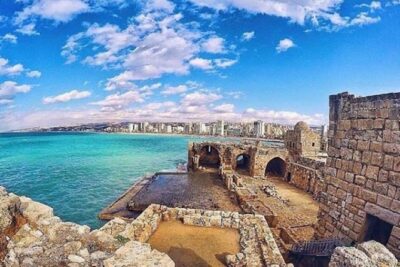
Next is the Sidon Sea Castle, a fortress built by the Crusaders in the 13th century on a small island. It was connected to the mainland by a causeway, which is a detail that makes the whole place feel strategically placed, like it was built to control movement across the harbor.
Here is the realistic part: the Mamluks largely destroyed it in 1291, and it was later restored by Fakhr el-Dine Maan II in the early 17th century. What you see today is not a full fantasy reconstruction. Some parts are restrained, and old prints show it as more decorated than what remains now.
Time is about 30 minutes, and admission is not included. If you like “read the ruins like a story” sites, you will probably enjoy spending that half hour looking for traces of what the fortress used to be.
Prefer your own guide? These private Lebanon trips reviewed well
The Soap Museum Stop That Turns History Into Something You Can See
If you want a break from purely architectural sightseeing, you will like the Soap Museum. This is a museum focused on Levantine soaps, tracing how soap-making developed locally and how it connected to daily life.
The workshop originally came from Sidon’s Hammoud family in the 17th century, and the museum shows how traditional olive oil soaps are made. This matters because it turns history into a sensory experience. You are not only looking at objects, you are watching a process that shaped ordinary routines, especially through bath and washing traditions tied to the hammam.
The museum stop runs about 30 minutes, and admission is also not included. That said, I like the way it balances the day. After castles and ancient ports, this is a different kind of heritage, practical and human-sized.
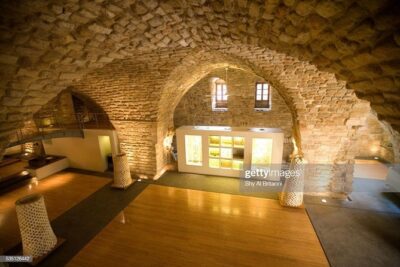
You also get a bit of material culture context. There is a historical section with artifacts found during onsite excavation, including clay pipe heads from roughly the 17th to 19th centuries, plus pottery fragments. The building itself is described as an older soap factory built in the 17th century, with parts thought to date to the 13th century, which makes the museum location feel like part of the story.
Khan al-Franj: A Courtyard Reset from the Street Noise
Then you shift to Khan al-Franj, one of Sidon’s main attractions. This khan was built in the early 17th century by Emir Fakhreddine II, originally intended as a kind of hotel for ambassadors and a commercial exchange hub between Lebanon and France.
The coolest thing here is the in-between life. In time, it became a center connected to literature, religion, history, industry, and diplomacy, so it is more than a travel stopping point. It is a reminder that commerce and culture often shared the same walls.
The stop is about 15 minutes and admission is free. You are looking at a typical khan layout: a large rectangular courtyard, a central fountain, and covered galleries around it. Even if your time here is short, the courtyard structure gives you a visual pause before you go back into the maze of the souk.
Sidon Souks: Real Shops, Narrow Alleys, and a Daytime Wander
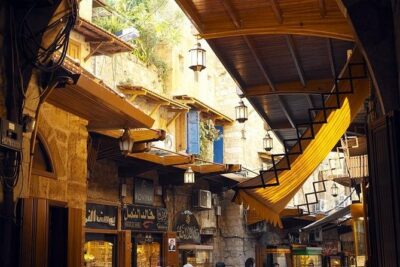
After the courtyard, Sidon’s souks feel like a different universe. The souk is described as a maze of narrow alleyways with small kiosks, shops, cafes, and lots of street activity.
In practice, this is the kind of place where you can wander for 30 minutes without needing a checklist. You will see a mix of crafts and trades, including butchers, grocers, shoe-makers, tailors, and jewelers. If you are the type who likes to watch daily life rather than only hit major monuments, this stop is one of the reasons the day works.
Admission is free here, so the only real cost is your time and curiosity. It is also a good moment to pick up something small if you want a souvenir that feels tied to the place, not the gift-shop version of it.
Maghdouché’s Our Lady of Mantara Shrine: A Spiritual Stop With Specific Details
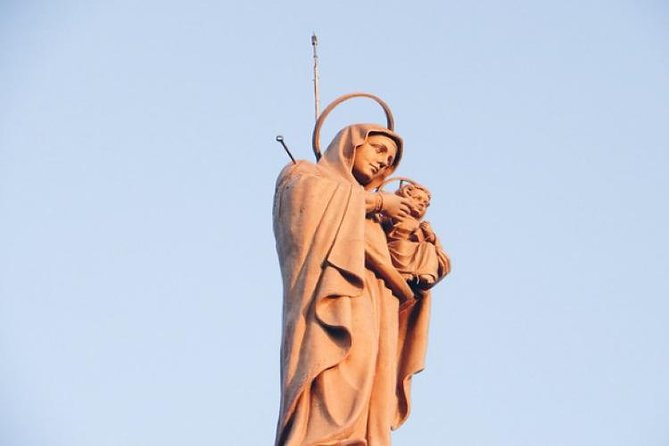
After Sidon, the route continues to Maghdouché for the Basilica of Our Lady of Mantara. This is a Melkite Greek Catholic shrine, and it is described as being discovered on 8 September 1721 by a young shepherd.
The shrine is not just a statue in a corner. It includes a tower crowned with the Virgin and Child statue, a cathedral, a cemetery, and a sacred cave believed to be the place where the Virgin Mary rested while she waited for Jesus.
Time is about 15 minutes, and admission is free. For me, this is the emotional counterweight to the Roman and Crusader sites later in the day. You get a different kind of focus, more about place and devotion than architecture and archaeology.
If your travel style includes faith sites respectfully, you will probably appreciate the specificity of this shrine, especially the discovery date and the described elements on site.
Tyre: Roman-World Scale by the Sea
Tyre is the headliner for many people, and it earns that reputation. It is a UNESCO World Heritage Site and a major ancient Phoenician port, with ties going back to myth and early history, including Elissar, the Phoenician princess tied to the founding story of Carthage. Like Sidon, Tyre is also linked to the famous purple dye, historically made from murex sea snails.
What I like about the Tyre portion is the sheer layering of time. The foundations are noted as around 2750 BC, then you see rulers moving through long stretches of history, including Egyptians, King Hiram, and later Assyrians, Neo-Babylonians, Greeks, Seleucids, Romans, Byzantines, Arabs, Crusaders, Mamluks, and Ottomans. That range is not just a flex for tour text. You feel it because the archaeological focus is massive.
The Tyre stop is about one hour, admission is free there, and it also comes with a nice practical bonus: Tyre is described as having a seaside setting and clean beaches. Even if you only have time to look, the location helps break up the mental intensity of ancient ruins.
Al-Bass Archaeological Site: The Roman Hippodrome You Can Actually Read
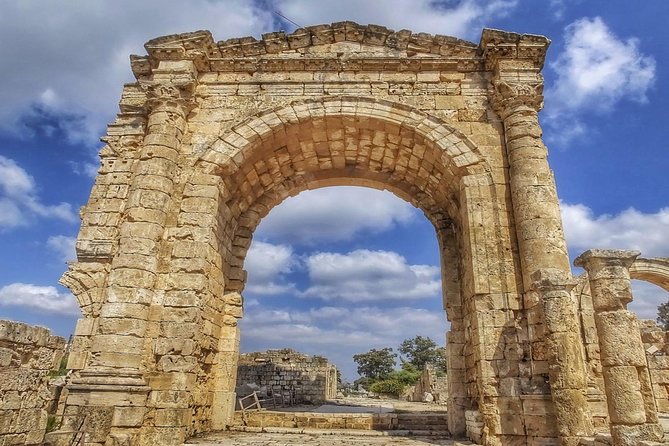
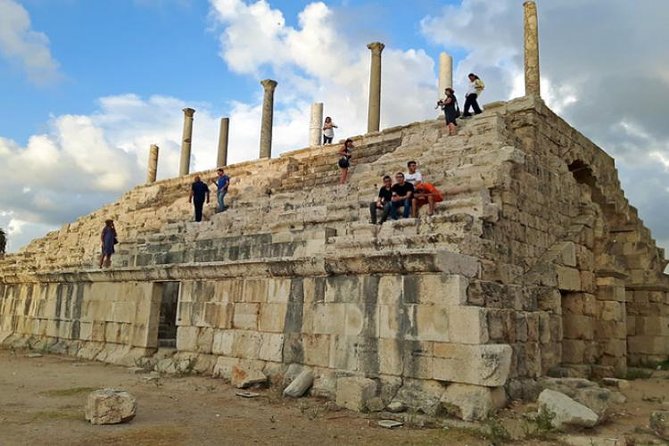
After the general Tyre time, the day shifts into archaeology mode at Al-Bass Archaeological Site. This is described as the largest and best-preserved example of a Roman hippodrome. If you are used to “one wall and a plaque” ruins, this is a different scale.
What makes Al-Bass worth your time is the mix of elements described in the site layout:
- A principal entrance area in antique times with a wide monumental causeway
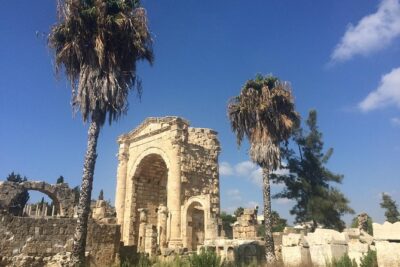
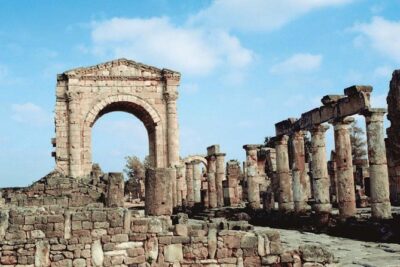
- A Roman triumphal arch from the 2nd century AD
- A necropolis with several hundred well-preserved sarcophagi
- An aqueduct, plus the 2nd-century hippodrome
- An intact Roman road
Admission is not included, and the visit is about one hour. This is where having a local guide in Tyre helps, because it takes a site from scattered visuals to an actual sense of how it worked in Roman times.
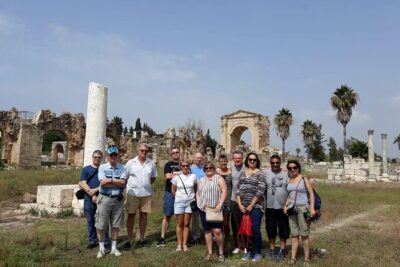
In one account, the guide Hassan is described as an archaeologist and full of enthusiasm, happy to share knowledge on both ancient and more recent history. That kind of guide energy changes how you move through a site like this, because you stop looking like you are sightseeing and start looking like you are reconstructing the past.
Old Souk Heritage Square: Food Break and the Everyday Side of Tyre
Once you have your Roman fix, you roll into a more street-level Tyre moment at the Old Souk’s Heritage square. The area is described with small shops selling items like gold, copper, vegetables, fish, meat, clothing, and antiques.
This is also where the day becomes taste-based. The descriptions call out sandwiches, foul, and hummus as popular stop options. The time here is short, about 15 minutes, and it is free in admission terms.
Since lunch is not included, this stop is where you might want to shift your plans toward a quick meal. Even if you do not eat, it helps to see the market rhythm so your day does not feel like a string of monuments with no breaks.
Price and What You Get for $75
At $75 per person, the headline value is not just that you are paying for access to sights. You are paying for controlled transport, door-to-door pickup and drop-off, and guided interpretation with a tour leader plus a local guide in Tyre.
That is a big deal in Lebanon, where the driving component can be exhausting if you try to DIY it. Here, you trade some flexibility for reliability. You give up the option to change your route on the fly, but you gain a smoother day with less navigation stress.
The only real cost surprises to watch for are the admission items called out as not included: Crusaders Sea Castle, the Soap Museum, and Al-Bass Archaeological Site. If you add those admissions on top of your budget, you will still likely feel the pricing is fair because the day is covering multiple major locations, not just one town.
Also remember: lunch is not included. You will want to budget time and money for food, and consider that you might end up using the souk square area for a quick bite.
Who This Tour Is Best For (and Who Might Want a Different Plan)
I think this fits best if you want a full day that mixes ancient, Crusader-era, and pilgrimage heritage without renting a car or managing routes. It is also a good match if you care about comfort, because you are in an air-conditioned vehicle with pickup and drop-off handled.
It is less ideal if you love long, slow museum-style visits where you could spend hours inside one site. This itinerary is paced to see a lot, so some stops are brief, like 15 minutes for Khan al-Franj and Maghdouché.
If you are a history lover who also likes practical stops, the balance is strong. Sidon gives you a mix of purple-dye heritage, a Crusaders fortress setting, a real food and crafts souk vibe, and the standout Soap Museum process.
Should You Book Lebanon Unveiled Private Tours to Sidon & Tyre?
I would book this if you want a stress-minimized day with private transport, clear structure, and real variety. You get iconic destinations, but you also get practical human-scale experiences like watching olive oil soap being made.
Before you decide, make peace with two realities. The day runs about 9 hours, and a few of the most significant stops require paying admissions that are not included. If you can handle that and you are comfortable with lunch being your own responsibility, this is a solid value way to see Sidon, Tyre, and Maghdouché in one go.
FAQ
How long is the tour?
It lasts about 9 hours.
What does the tour include?
It includes hotel pickup and drop-off, a tour leader, a local guide in Tyre, comfortable private transportation, and an air-conditioned vehicle.
Are admission tickets included for every stop?
No. Admission is not included for Crusaders Sea Castle, the Soap Museum, and the Al-Bass Archaeological Site. Other listed stops have admission ticket free.
Is lunch included?
No, lunch is not included.
What time does the tour start?
The start time is 9:00 am.
What ticket format do I receive?
You get a mobile ticket.
What is the cancellation rule?
You can cancel up to 24 hours in advance for a full refund.
More of Lebanon, Reviewed
- Guided Small-Group Tour to Baalbek, Anjar and Ksara with Lunch
★ 5.0 · 511 reviews - Guided Small-Group Tour to Jeita, Harissa, Byblos with Lunch
★ 5.0 · 361 reviews - City Sightseeing Beirut Hop-On Hop-Off Bus Tour
★ 4.5 · 87 reviews - Private Anjar and Baalbek Tour from Beirut with Departure Ticket
★ 5.0 · 79 reviews - Guided Private Full Day Tour to Baalbek, Anjar and Chateau Ksara
★ 5.0 · 60 reviews
Elsewhere in Lebanon
- Guided Small-Group Tour to Baalbek, Anjar and Ksara with Lunch
★ 5.0 · 511 reviews - Guided Small-Group Tour to Jeita, Harissa, Byblos with Lunch
★ 5.0 · 361 reviews - Paragliding Trip Over Lebanon – Jounieh Bay
★ 5.0 · 257 reviews - Jeita Grotto,Harissa&Byblos Full-Day PRIVATE-CAR Trip from Beirut
★ 5.0 · 222 reviews - First Paragliding Club in Lebanon – Since 1992
★ 5.0 · 193 reviews
South to Sidon and Tyre
- Small-Group Adventure Tour to Sidon Tyre & Maghdouche-Day Trip
★ 5.0 · 45 reviews - Sidon, Tyre & Maghdouche Day Trip – With Lunch (4G on Board)
★ 4.5 · 44 reviews - Guided Small-Group Tour to Sidon, Tyre & Maghdouche with Lunch
★ 5.0 · 41 reviews - Sidon – Tyre – Maghdouche Trip, From Beirut
★ 5.0 · 25 reviews - Small Group Tour to Sidon, Tyre & Maghdouche with lunch
★ 5.0 · 11 reviews
Other Lebanon trips we have written up
Sidon, Tyre & Maghdouche Day Trips, compared.
 ★ 5.0Small-Group Adventure Tour to Sidon Tyre & Maghdouche-Day TripFrom $6545 reviews
 ★ 4.5Sidon, Tyre & Maghdouche Day Trip – With Lunch (4G on Board)From $9544 reviews
 ★ 5.0Guided Small-Group Tour to Sidon, Tyre & Maghdouche with LunchFrom $6541 reviews
 ★ 5.0Sidon – Tyre – Maghdouche Trip, From BeirutFrom $4525 reviews
 ★ 5.0Small Group Tour to Sidon, Tyre & Maghdouche with lunchFrom $9911 reviews
 ★ 5.0Lebanon tour Sidon & Tyre ruins with pick-up, guide,lunch+entriesFrom $1559 reviews
 ★ 5.0Temple of Eshmun – Mleeta Landmark – Beaufort CastleFrom $749 reviews
 ★ 4.5Private Guided Tour to Sidon, Tyre and Maghdouche from BeirutFrom $1009 reviews
Every list this tour turns up in