
REVIEW · LEBANESE COOKING CLASSES & FOOD TOURS
Private Lebanese Cooking Class in Beirut with Amal + Transfers
Cooking Lebanese food at home is the move. This private class in Amal’s family house takes place in Aramoun, a suburb outside Beirut, and it turns an ordinary meal into a hands-on workshop plus lunch. I especially like the private format, so you are not squeezed into a crowd, and you cook alongside skilled local hosts using garden-fresh ingredients. One thing to consider: you are headed outside central Beirut, so pickup timing matters.
You’ll spend about an hour cooking an appetizer, salad, and dessert, then sit down as a family group to eat what you made, often with drinks included. The home setup works even on bad-weather days, with a fireplace inside and a terrace with views of the capital.
In This Review
- Key reasons this class feels worth your time
- A 3-hour Lebanese cooking lunch in Amal’s Aramoun home
- Getting there with hotel transfers, and why the drive is part of the point
- The welcome: drinks, a family home feel, and what you learn first
- Your hands-on cooking hour: appetizer, salad, dessert, and pacing that makes sense
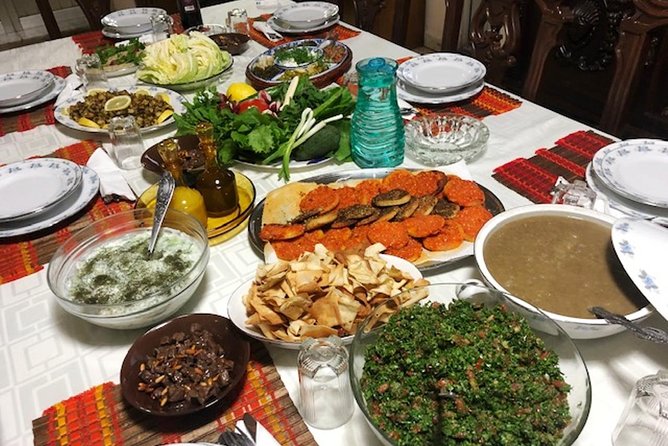
- What you might cook: chickpeas with lemon, tabouli, kibbi, mtabal, and maakaroun
- Appetizer and savory courses you may make
- Dessert
- Lunch at the family table: turning cooking into a real meal experience
- Dietary needs, allergies, and what to say when you book
- Price and value: is $142 really fair for a private class?
- Who this cooking class is perfect for, and who should skip it
- A few things to know before you go
- Should you book this Lebanese cooking class in Aramoun?
- FAQ
- How long is the cooking class and meal?
- Is this tour private?
- Where does the class take place?
- Do you offer pickup and drop-off in Beirut?
- What will I cook during the class?
- What dishes might be included?
- Can the meal be vegetarian, vegan, or halal?
- What about allergies or dietary restrictions?
- When will I get confirmation after booking?
- What is the cancellation policy?
Key reasons this class feels worth your time
- A true private cooking format in Amal’s home with only your group participating
- Garden-fresh produce like organically grown fruits, vegetables, and herbs from the family garden
- One hands-on cooking hour focused on a full appetizer, salad, and dessert menu
- A meal you actually make, often including chickpeas with lemon, tabouli, kibbi, and mtabal
- Dessert to close it out, with maakaroun (semolina fingers in sugar syrup) as a likely option
- Diet flexibility with notice, including vegetarian, vegan, and halal meals
Still hungry? More Lebanese kitchens and food walks
- Authentic Lebanese Cooking Lesson and Meal with Tania’s Family in Beirut★ 5.0 · 62 reviews
- Authentic Lebanese Meal in Beirut in Tania’s Family Home★ 5.0 · 15 reviews
- Full day Tripoli private great guide/all-in + rustic meal★ 5.0 · 7 reviews
- Traveling Spoon Lebanese Mezze Private Online Cooking Class★ 5.0 · 4 reviews
A 3-hour Lebanese cooking lunch in Amal’s Aramoun home
This is the kind of experience that sticks because it is not just watching someone cook. You work in a real home kitchen with Amal and her mother, and the class is designed around building a full meal, not a single dish. It runs about 3 hours, which is long enough to learn and eat, but short enough that you still have energy for Beirut after.
The setting matters too. Amal’s classic Lebanese family home has a fire place and a terrace with views of the capital. That means you are not stuck with one mood. When the weather is rough, you can stay comfortable indoors. When it is pleasant, you can enjoy the outdoor view while you sip a refreshing drink.
Getting there with hotel transfers, and why the drive is part of the point
Pickup and drop-off are included, which is a big deal in Beirut, where traffic can turn even short trips into a time sink. You go from your hotel in Beirut to Aramoun, a residential suburb surrounded by gardens. You are not just “going somewhere else.” You are moving to the kind of everyday Lebanon that food connects to.
Aramoun’s garden vibe is not a detail. It sets the tone for why the menu tastes the way it does. The class uses organically grown fruits, vegetables, and herbs from the family garden. When you get to the kitchen and smell those ingredients, you understand why Lebanese food leans so hard on freshness, herbs, and olive oil.
Practical tip: build in a little time buffer for pickup. The class starts when you arrive, and the whole schedule is tight at about 3 hours total.
The welcome: drinks, a family home feel, and what you learn first
Before you start chopping, you get a proper welcome. Amal introduces you to Lebanese cuisine and its story. Think of this as the mental warm-up. You learn what makes Lebanese meals tick, like how appetizers, salads, and mains play off each other, and why certain flavor combinations show up again and again.
You’ll likely relax with a refreshing drink while you get settled. In a home setting like this, you will also get an easy rhythm with your hosts, rather than feeling like you are being rushed from station to station. Reviews around this experience consistently highlight how welcoming the family is, including the way multiple generations pitch in during the meal.
This is also a good moment to ask questions about technique. If you are curious about how to handle herbs for tabouli or how the eggplant base becomes mtabal, start here, not after the cooking has already begun.
Prefer your own guide? These private Lebanon trips reviewed well


Your hands-on cooking hour: appetizer, salad, dessert, and pacing that makes sense
The cooking part is about 1 hour hands-on. You join Amal and her mother in their home kitchen, and you learn to prepare a Lebanese appetizer, salad, and dessert from family recipes. That three-course structure is smart. It forces you to learn the core skills that show up across Lebanese cooking, not just one specialty.
Here’s what that usually feels like in practice:
- You start by prepping ingredients with the guidance of the cooks.
- You move into mixing and assembling, where Lebanese dishes rely on balance, herbs, and seasoning.
- You finish with dessert steps so you leave with a complete meal in your head, not only part of it.
A private class also means you can slow down when you need to. If a step feels tricky, you can ask. If you want to know why something goes in before something else, you can ask. That personal back-and-forth is the reason this style of experience can outshine a cooking class that runs like a factory.
One caution: because it is hands-on, bring your appetite and your attention. If you are looking for something passive, this is not that.
What you might cook: chickpeas with lemon, tabouli, kibbi, mtabal, and maakaroun
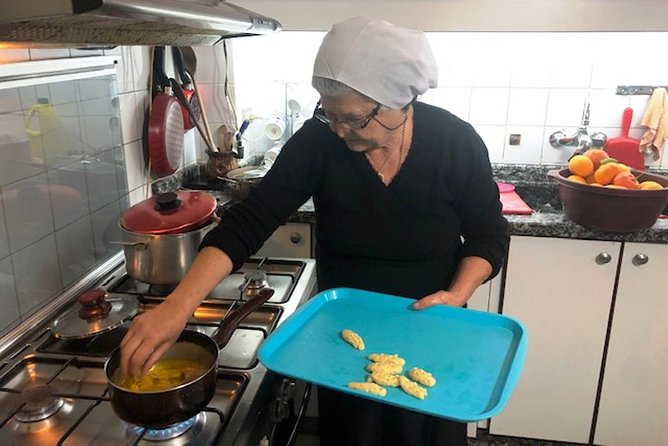
Your exact menu can vary, but it often includes dishes like these. Knowing the menu in advance helps you decide what to prioritize and what to ask about.
Appetizer and savory courses you may make
Chickpeas with lemon, olive oil and garlic sauce
This kind of dish is all about the sauce and the balance. You learn how flavors cling to chickpeas, and you get a feel for how Lebanese seasoning can be simple but not bland.
Tabouli (salad)
Tabouli is herb-forward. Expect to work with chopped herbs and build the dressing so it coats without going watery. This is one of those dishes where technique is everything, not just ingredients.
Kibbi (minced meat with herbs and nuts)
Kibbi teaches you how herbs and nuts can turn a meat base into something bright and textured. If you eat meat, this is a satisfying course. If you are vegetarian, you can ask what options are available, since dietary meals can be provided with advance notice.
Mtabal (grilled mashed eggplant with tahini, lemon juice, garlic)
Mtabal is smoky, creamy, tangy, and garlicky. The key skill is mashing and mixing so it becomes smooth and well-seasoned, not just eggplant with random toppings.
Dessert
Maakaroun (deep fried semolina fingers soaked in sugar syrup)
This is a classic sweet finish. Even if you only get one dessert step, you’ll likely learn how the syrup changes the final texture. It’s also a good reminder that Lebanese meals often end with indulgence, not just fruit.
If you have a preference, tell your hosts during booking. The more specific you are about what you love or avoid, the better the odds your experience lines up with your taste.
Lunch at the family table: turning cooking into a real meal experience
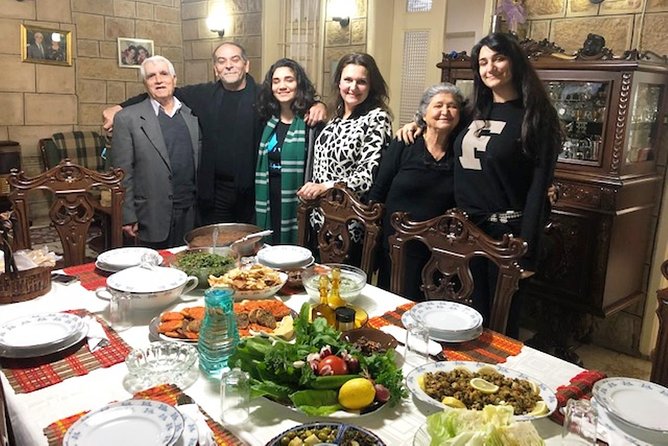
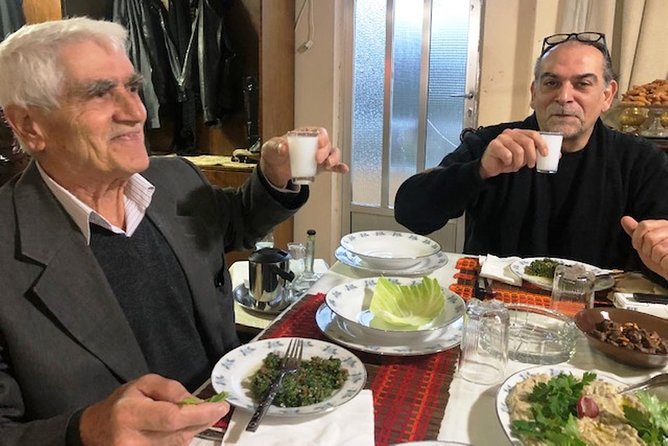
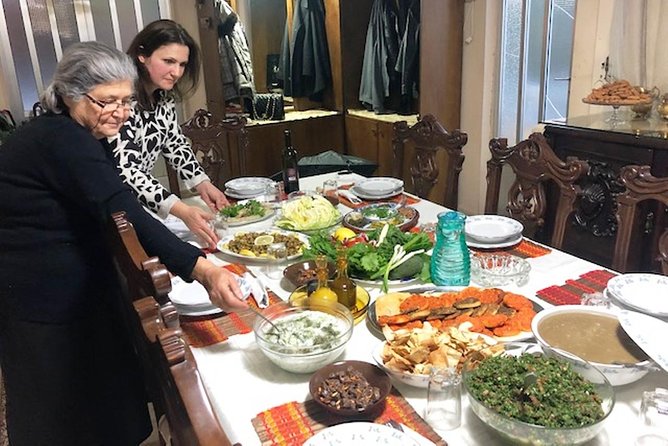
After cooking, you eat together at the dining table with Amal and her parents. This is where the experience shifts from workshop mode to holiday mode. You are not standing around waiting for a plated lunch. You are part of the meal, and that changes how you taste.
Expect a traditional Lebanese meal that matches what you cooked. The menu might include chickpeas with lemon, tabouli, kibbi, mtabal, and dessert like maakaroun. Drinks are included as part of the lunch experience.
If you care about pacing, this format is a win. Cooking first helps you appreciate the food later. You’ll notice how flavors develop when everything lands on the table together, not in separate bite-sized samples.
Dietary needs, allergies, and what to say when you book
This is one of the most useful details to know upfront: dietary accommodations can be provided. Vegetarian, vegan, and halal meals are available, and you should advise at time of booking.
Allergies are handled as well, but you need to be clear. If anyone in your party has allergies, dietary restrictions, or food preferences, tell the operator during booking.
Practical note: make your request specific. Instead of only saying allergy, list the ingredient if you know it. Instead of only saying vegetarian, say whether you eat eggs or dairy, if that matters for your preferences.
Also remember that Lebanese cooking often uses common ingredients like olive oil, garlic, lemon, tahini, and herbs. It is usually simple to adjust, but hosts can only adjust accurately if you communicate early.
Price and value: is $142 really fair for a private class?
At $142 per person, you are paying for more than cooking instructions. You are paying for:
- a private format, meaning your group gets dedicated attention
- a full multi-course lunch you help make
- access to a home kitchen and family recipes
- hotel pickup and drop-off, which saves time and stress
In Beirut, guided food experiences can vary wildly. What makes this one feel like good value is the combo: private hands-on cooking plus you eat the result, in a family home, with garden-fresh ingredients. This is not just a meal ticket. It is a skill-building experience tied to what you actually taste.
It is also worth noting that group discounts are offered, so if you have a small travel group, ask about how the pricing changes for multiple people.
The main value risk is your expectations. If you think you are booking a short restaurant meal with a side demo, you might feel it is pricey. If you want a hands-on, family-led lunch that teaches you how Lebanese dishes come together, the price starts to feel very reasonable.
Who this cooking class is perfect for, and who should skip it
This experience is a great fit if you want:
- an authentic, home-style cooking day outside central Beirut
- a private learning format, with time to ask questions
- a multi-course Lebanese lunch that goes beyond one dish
- fresh herbs and vegetables, including garden-sourced ingredients
It also works well for people who like structured experiences. The day has a clear flow: welcome, cooking practice, then lunch.
You might want to skip it if:
- you only want street food sampling and do not want to cook
- you dislike hands-on activities
- you are very time constrained and cannot fit about 3 hours with transfers
If you are traveling solo, the private nature can still feel special, since your group is still just you. If you are traveling with family, it can be a fun way to share a meal experience, as long as everyone is comfortable with the cooking pace.
A few things to know before you go
- The tour is private, only your group participates.
- Confirmation happens within 48 hours of booking, subject to availability.
- You’ll have a mobile ticket.
- The class is near public transportation, but you still get hotel pickup and drop-off.
If weather is a factor, the home setup helps. There is a fireplace indoors and a terrace outdoors, so you are not at the mercy of conditions.
Should you book this Lebanese cooking class in Aramoun?
Book it if you want a Lebanese meal with a story you can taste. The strongest reasons are practical: you cook an appetizer, salad, and dessert in a real home kitchen, then you sit down to eat what you made, using garden-fresh ingredients. The private setup also means you get more attention than you would in a larger group format.
I would not book it if you want only sightseeing or only dining. This is about learning food and sharing lunch with the family hosts. You’ll get the most out of it if you show up curious and ready to participate.
If you do book, plan one extra thing well: use your booking notes to flag allergies or dietary preferences early. That is the difference between “they can try” and “everything fits.”
FAQ
How long is the cooking class and meal?
It runs for about 3 hours (approx.), including cooking and the traditional lunch.
Is this tour private?
Yes. It is a private tour/activity, and only your group will participate.
Where does the class take place?
The cooking and dining happen in Aramoun, a suburb outside Beirut, at Amal’s beautiful family home.
Do you offer pickup and drop-off in Beirut?
Yes. Pickup is offered, with convenient drop-off at your Beirut hotel.
What will I cook during the class?
You’ll cook a Lebanese appetizer, a salad, and a dessert using family recipes and authentic Lebanese cooking techniques and ingredients.
What dishes might be included?
Your menu might include chickpeas with lemon, olive oil and garlic sauce, tabouli, kibbi, mtabal, and dessert such as maakaroun.
Can the meal be vegetarian, vegan, or halal?
Vegetarian, vegan and halal meals can be provided. You need to advise at time of booking.
What about allergies or dietary restrictions?
If anyone in your party has allergies, dietary restrictions, or food preferences, you should advise at time of booking.
When will I get confirmation after booking?
Confirmation will be received within 48 hours of booking, subject to availability.
What is the cancellation policy?
Free cancellation is available. You can cancel up to 24 hours in advance for a full refund. If you cancel less than 24 hours before the start time, the amount paid will not be refunded.
Private Departures in Lebanon
- Jeita Grotto,Harissa&Byblos Full-Day PRIVATE-CAR Trip from Beirut
★ 5.0 · 222 reviews - Private Anjar and Baalbek Tour from Beirut with Departure Ticket
★ 5.0 · 79 reviews - Guided Private Full Day Tour to Baalbek, Anjar and Chateau Ksara
★ 5.0 · 60 reviews - Semi-Private Tour to Jeita Grotto, Harissa & Byblos with Lunch
★ 5.0 · 52 reviews - PRIVATE city Tour of authentic Tripoli and vibrant Batroun
★ 5.0 · 51 reviews
Elsewhere in Lebanon
- Guided Small-Group Tour to Baalbek, Anjar and Ksara with Lunch
★ 5.0 · 511 reviews - Guided Small-Group Tour to Jeita, Harissa, Byblos with Lunch
★ 5.0 · 361 reviews - Paragliding Trip Over Lebanon – Jounieh Bay
★ 5.0 · 257 reviews - Jeita Grotto,Harissa&Byblos Full-Day PRIVATE-CAR Trip from Beirut
★ 5.0 · 222 reviews - First Paragliding Club in Lebanon – Since 1992
★ 5.0 · 193 reviews
Lebanon at the Table
- Authentic Lebanese Cooking Lesson and Meal with Tania’s Family in Beirut
★ 5.0 · 62 reviews - Authentic Lebanese Meal in Beirut in Tania’s Family Home
★ 5.0 · 15 reviews - Full day Tripoli private great guide/all-in + rustic meal
★ 5.0 · 7 reviews - Traveling Spoon Lebanese Mezze Private Online Cooking Class
★ 5.0 · 4 reviews
Other Lebanon trips we have written up





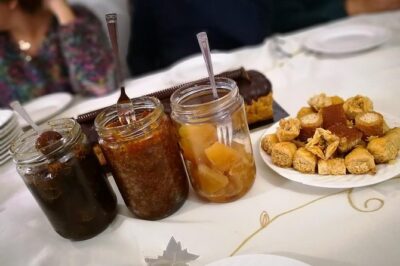
Lebanese Cooking Classes & Food Tours, compared.
 ★ 5.0Authentic Lebanese Cooking Lesson and Meal with Tania’s Family in BeirutFrom $10062 reviews
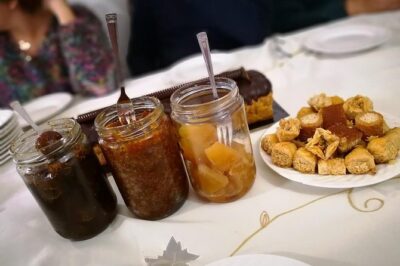 ★ 5.0Authentic Lebanese Meal in Beirut in Tania’s Family HomeFrom $7015 reviews
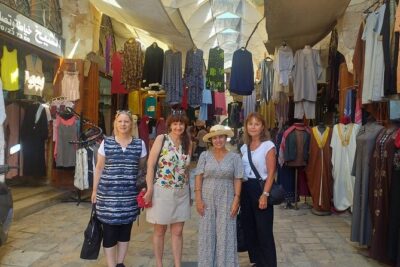 ★ 5.0Full day Tripoli private great guide/all-in + rustic mealFrom $997 reviews
 ★ 5.0Traveling Spoon Lebanese Mezze Private Online Cooking ClassFrom $1,0004 reviews
Every list this tour turns up in