
REVIEW · QADISHA VALLEY & THE CEDARS OF GOD
Private Trip to Qadisha Valley, Bcharri and Cedars of God
One day, three Lebanon icons. This private full-day trip from Beirut strings together Qadisha Valley monasteries, Cedars of God, and stops tied to Khalil Gibran and local mountain culture.
I especially like the door-to-door setup, because it cuts down the stress of getting out of Beirut and into the hills. I also enjoy the variety, you go from early Christian cave settings to a forest of ancient cedar trees, then on to the Khalil Gibran Museum in Bcharre.
One thing to consider is that lunch is not included, so you will want to plan for food and water during a long day out of town.
In This Review
- Key highlights I’d prioritize
- Why this Qadisha and Cedars day tour makes sense
- Getting started from Beirut, 8:30 am, no fuss
- Mseilha Fort: a quick history stop with strong views
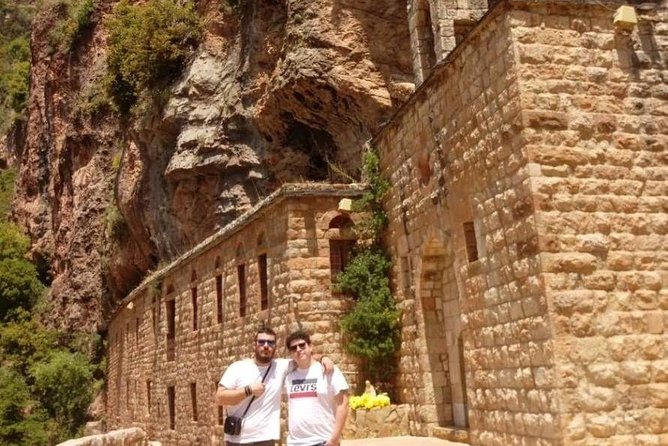
- Qadisha Valley: early Christian monasteries carved into the rock
- Bcharre: churches, winter sports roots, and the poet’s hometown
- Gibran Museum in Bcharre: art, artifacts, and the former monastery
- Cedars of God forest: 375 trees and a Bible-linked story
- Deir Qozhaya: Saint Anthony the Great and the eremitic backdrop
- Comfort, timing, and the one thing you must plan: lunch
- Price and value: what $75 per person really buys
- Guide matters, and this operator has a standout track record
- Who this tour is perfect for
- Should you book this private Qadisha Valley and Cedars day trip?
- FAQ
- What time does the tour start?
- How long is the private tour?
- What’s included in the price?
- Is lunch included?
- Is admission included for all stops?
- How much time do you spend at the Gibran Museum?
- Is this tour only for my group?
- What is the cancellation policy?
Key highlights I’d prioritize
- Door-to-door pickup and drop-off from your Beirut hotel keeps the day smooth.
- Qadisha Valley monasteries in rugged cliffs tie the scenery to the story of early Christianity.
- Gibran Museum in Bcharre (former Mar Sarkis Monastery) with lots of original artwork.
- Cedars of God forest with 375 trees and Bible-linked cultural importance.
- Deir Qozhaya monastery in the Qozhaya Valley, linked to hermit life history.
- Guide quality and relaxed pacing, with names like Albert, Hassan, Natasha, and Kasem showing up in the operator’s strongest feedback.
Other climbs up to the Qadisha Valley and the old cedars
- Guided Small-Group Tour to Qadisha, Bcharee & Cedars with Lunch★ 5.0 · 39 reviews
- Cedars of Lebanon, Qozhaya, & Bcharre – With Lunch (4G on Board)★ 4.5 · 34 reviews
- Cedars, Bsharre & Kozhaya Day Tour★ 5.0 · 15 reviews
- Small-Group Tour with Lunch to Qadisha Valley, Bcharre and Cedars★ 5.0 · 12 reviews
Why this Qadisha and Cedars day tour makes sense
This is one of those Lebanon itineraries that works because it connects ideas, not just locations. You start with monastery life carved into mountain rock, then shift to the cedar tree, Lebanon’s national symbol and a material prized for major religious buildings. Add Khalil Gibran in Bcharre and you get a day that feels like Lebanon’s culture and faith history are speaking to each other.
Also, the private format matters. You do not have to run after a group, and the schedule is built so a guide can adjust the rhythm if you have questions or you want one extra photo stop.
Where this tour can feel a bit tight is the sheer amount of driving and the short time window at a couple of places. Qadisha Valley is listed as about 10 minutes, so you will want to decide early what you most want to see.
Getting started from Beirut, 8:30 am, no fuss
The day begins at 8:30 am. Pickup and drop-off are included, and you ride in an air-conditioned vehicle with a professional guide. For a mountain route, that comfort is not a luxury. Even on clear days, temperatures can shift as you climb.
Because it is private, you can treat this day like your own itinerary. If you are the type who likes to ask questions as you go, this format tends to feel better than a rigid bus tour.
Mseilha Fort: a quick history stop with strong views
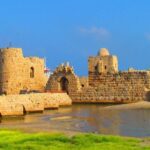
One of the best “extra” moments is the stop at Mseilha Fort. Built in the 17th century by Emir Fakhreddine II, it was designed to guard the route from Tripoli to Beirut. The fort sits on a long, narrow limestone rock near the Nahr el-Jawz River.
Even if you only get a short look, this place adds context. The monasteries and cedar forest might be the main attraction, but the Lebanese mountains have long been strategic. Seeing the fort helps you understand why people built along these routes in the first place.
If you are into photography, arrive with your camera ready. The rock setting and river proximity can make for quick, scenic stops.
Prefer your own guide? These private Lebanon trips reviewed well
Qadisha Valley: early Christian monasteries carved into the rock
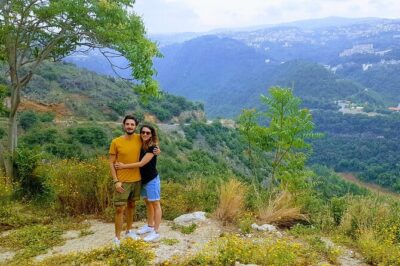
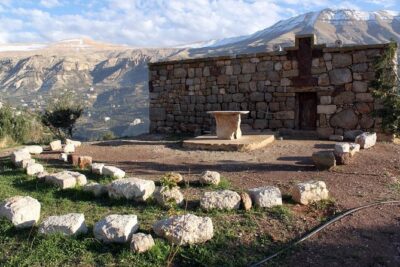
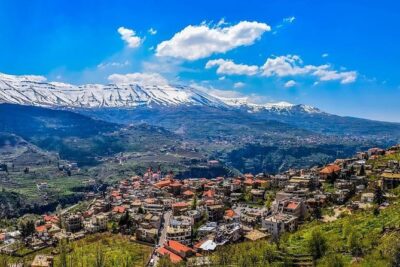
Qadisha Valley is one of the most important settlement sites of the first Christian monasteries, set inside an unusually rugged setting. Here, monasteries are found in caves, along with cultivated terraces tied to very early Christianity.
The key point for you is this: the beauty is not only the views. It is the way the architecture and the religious life are shaped by the cliffside terrain. If you come expecting a tidy “tourist village,” you might be surprised. This is more about stone, caves, and the sense of history pinned to the mountain.
The schedule lists this stop as about 10 minutes. That is not long, so I suggest you use that time intentionally. Decide if you want a brief orientation walk, a look at the carved monastery areas, or just the best overlook for photos. A good guide will point out the details that matter most in the short window.
Admission is free for this stop, so you are not losing time to ticket lines.
Bcharre: churches, winter sports roots, and the poet’s hometown
Next up is Bcharre, a town known for churches, cedar-related heritage, and the hometown connection to Khalil Gibran (listed here as Khalil Jubran). The town has around 37 churches, which gives it the feel of a place where faith is woven into everyday life.
Two other details I like about Bcharre are practical and interesting:
- It is associated with the last preserved original Cedars of God nearby.
- It also has deep skiing roots, including the Cedars Ski Resort and Lebanon’s first ski lift built in 1953.
If you visit in colder months, conditions can shift quickly in these heights. One of the strongest bits of feedback mentions snow still on the ground, so come prepared for weather that changes fast.
Admission is free for Bcharre as a stop, so you can spend your money where it actually matters, like the museum.
Gibran Museum in Bcharre: art, artifacts, and the former monastery
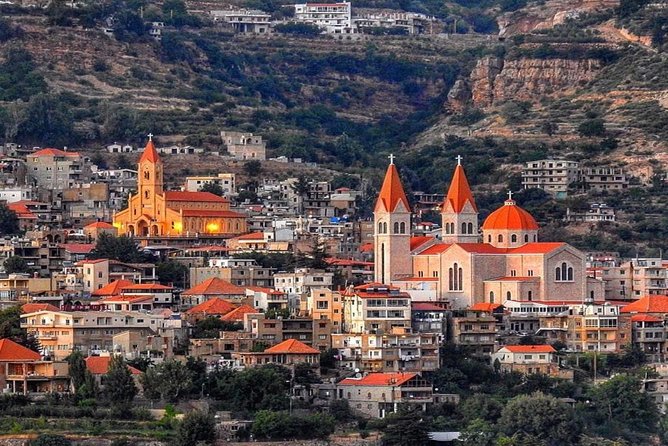
The Gibran Museum is dedicated to Lebanese writer, philosopher, and artist Khalil Gibran. The museum is based in the former Monastery of Mar Sarkis, which makes the experience feel more layered than a standard art stop.
You are given about 30 minutes here. That is a real advantage for many people, because you can appreciate the highlights without feeling trapped. The museum includes 440 original paintings and drawings of Gibran, plus his tomb. You also see his furniture and belongings from his studio when he lived in New York City, along with private manuscripts.
One practical tip: if you care a lot about art details, try to focus on the pieces your guide calls out. A short visit works best when you do not try to see everything at once.
Admission is not included in the tour price for this stop, so factor that into your day planning.
Cedars of God forest: 375 trees and a Bible-linked story
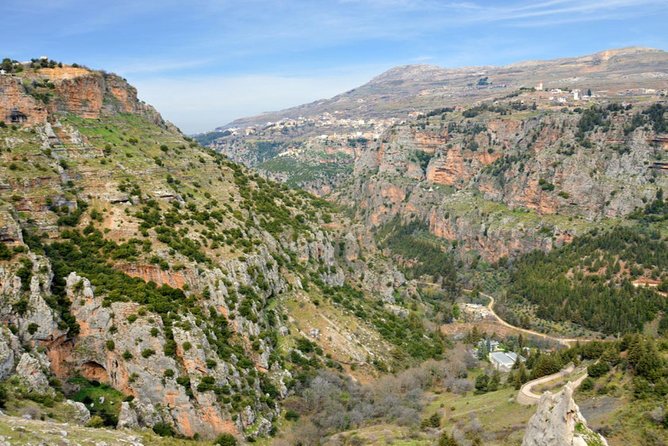
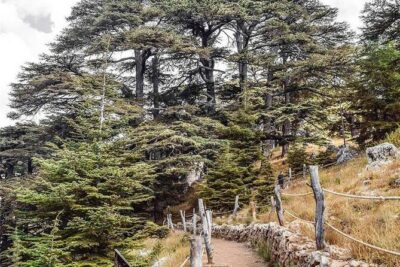
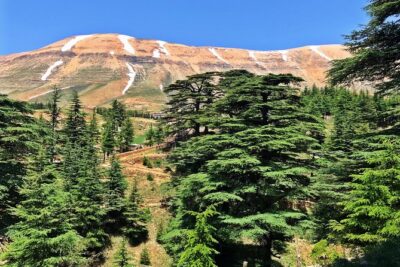
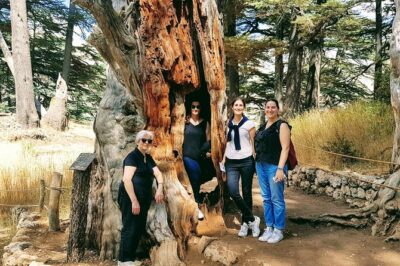
The highlight for many people is the Cedars of God forest, described as the last remains of antique forests. Here you are visiting a rare site where the cedar still grows, with about 375 trees.
What makes this stop more than a scenic walk is the cultural weight. Cedars were highly prized in ancient times and were among the valued construction materials for great religious buildings. The cedar also appears 103 times in the Bible, and the cedar is the symbol of Lebanon on the flag.
The stop is about 45 minutes, and admission is free. That combination is a good value. You get time to slow down, spot different trees, and take in the atmosphere without extra entry costs.
If you are the type who likes to understand what you are looking at, use this moment to ask your guide why these trees mattered historically. The story makes the forest feel bigger than the number of trunks you see.
And yes, if the weather has teeth, the cedar area can feel even more dramatic. If there is snow, you will likely want shoes with decent grip.
Deir Qozhaya: Saint Anthony the Great and the eremitic backdrop
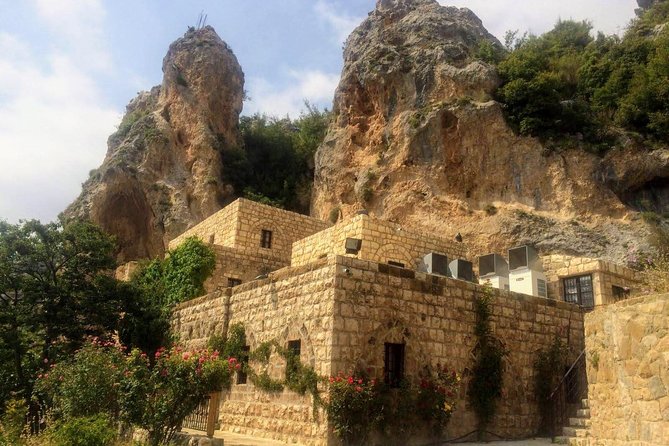
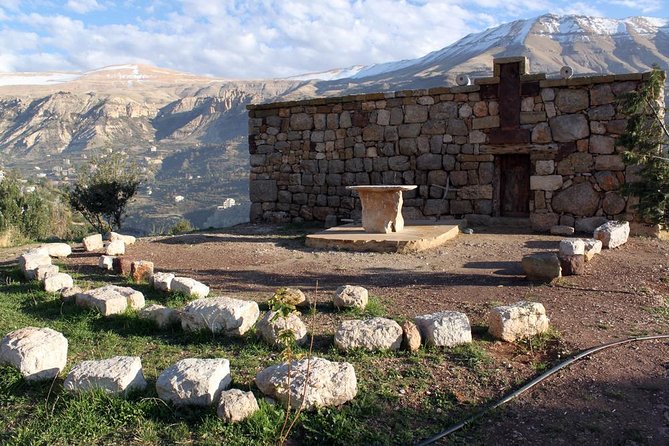
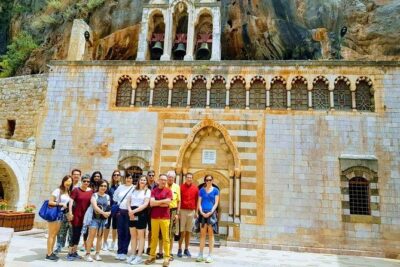
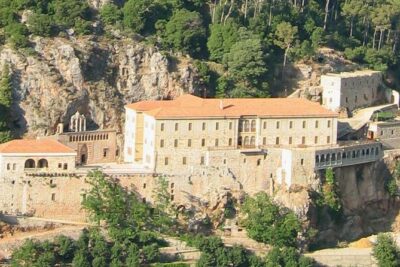
Finish with Deir Qozhaya, home to the Monastery of Saint Anthony the Great. It sits at about 950 meters above sea level in the Qozhaya Valley.
This is one of the best places to enjoy the “mountain living” context. Pine and oak trees cover the hills, and fruit trees grow throughout the valley. The valley extends into Valley of Qannubin to form the larger Qadisha Valley, which ties the stops together as one connected region.
Historically, scholars believe the monastery was first built and occupied by hermits at the beginning of the fourth century. It was looted, set on fire, and razed several times, but vestiges remain dating back to the seventh century.
Your time here is about 30 minutes, and admission is free. In that window, you will mostly want to take in the setting and any remaining structures your guide highlights. This is not the kind of place where you need hours to understand the point. The location and the story do most of the work.
Comfort, timing, and the one thing you must plan: lunch
This is an all-day outing, about 8 hours total. The vehicle is air-conditioned, and you get a professional guide. Still, you will be away from Beirut for most of the day, so do not rely on buying a perfect meal on the go.
Lunch is not included, so I recommend you bring snacks or plan to eat before or after the tour. Also keep water handy. Mountain roads can make even short walks feel longer than you expect.
A small but real scheduling note: the stops are not all equal in length. Qadisha Valley is about 10 minutes, while the Cedars of God forest gets about 45 minutes. If you have limited energy or limited interest in one of the stops, focus your time and energy where your priorities are highest.
Price and value: what $75 per person really buys
At $75 per person, this tour is priced for a day that includes the big costs people forget about: hotel pickup and drop-off from Beirut, private transportation, and a professional guide. You are not just paying for sights, you are paying for access, logistics, and someone handling the timing.
Because the tour is private, value tends to work best when your group shares the cost. The operator also lists group discounts, which is a clue that the math improves as more people join.
Compared to piecing together multiple drivers and separate tickets, this one-day combo can feel efficient. Especially if you want both the religious heritage (Qadisha, Deir Qozhaya) and the Lebanon icon (cedars) in one clear route.
Only add the museum admission cost where it applies, since the Gibran Museum is listed as not included.
Guide matters, and this operator has a standout track record
The biggest recurring strength is guide quality. Names like Albert, Hassan, Natasha, and Kasem appear in the best feedback, with consistent themes: they are on time, personable, and good at turning history into something you can picture.
Albert is singled out for courtesy, knowledge, humor, and attention to care during the day. Natasha is praised for kindness and for thinking through the details. Hassan is described as making the day feel laid back and comfortable, with plenty of time to see what you came to see. Kasem is noted for being knowledgeable and kind.
You should expect a professional guide, but the reason I call this out is simple: when your stops are carved into stone and driven around mountain roads, a great guide helps you focus. They point out what to notice fast, and they keep the day from feeling rushed.
Who this tour is perfect for
This is a smart fit if you want:
- A private day tour from Beirut with hotel transfers
- Major Lebanon highlights without planning headaches
- A mix of faith history, cedar heritage, and Khalil Gibran culture
- A guide who makes the story clear, not just recited
It may be less ideal if you want a slow, deep hike through every monastery area. The schedule includes short windows at some key points, like Qadisha Valley.
Should you book this private Qadisha Valley and Cedars day trip?
If your goal is a single, efficient day that hits Qadisha Valley, the Cedars of God forest, and the cultural stops in Bcharre, I think this is worth booking. The route makes sense, you get time where it counts, and the price includes what usually drains your day: transportation and guide support.
Book it if you like guided clarity and you want Lebanon’s big symbols in one outing. I would hesitate only if you are very food-dependent during tours and do not want to think about lunch at all, since lunch is not included.
If you do book, go in with a simple plan: prioritize Qadisha Valley for orientation, use the Cedars of God time to slow down, and use Gibran Museum for the art highlights your guide points out.
FAQ
What time does the tour start?
The tour start time is 8:30 am.
How long is the private tour?
The duration is about 8 hours.
What’s included in the price?
Included features are hotel pick up and drop off, comfortable private transportation, a professional guide, and an air-conditioned vehicle.
Is lunch included?
No, lunch is not included.
Is admission included for all stops?
Qadisha Valley, Bcharre, the Cedars of God, and Deir Qozhaya are listed as free. The Kahlil Gibran Museum admission is not included.
How much time do you spend at the Gibran Museum?
You get about 30 minutes at the Gibran Museum.
Is this tour only for my group?
Yes. It is a private tour, so only your group participates.
What is the cancellation policy?
You can cancel for a full refund if you cancel at least 24 hours before the experience starts, with cutoff times based on the local time in Lebanon.
Private Departures in Lebanon
- Jeita Grotto,Harissa&Byblos Full-Day PRIVATE-CAR Trip from Beirut
★ 5.0 · 222 reviews - Private Anjar and Baalbek Tour from Beirut with Departure Ticket
★ 5.0 · 79 reviews - Guided Private Full Day Tour to Baalbek, Anjar and Chateau Ksara
★ 5.0 · 60 reviews - Semi-Private Tour to Jeita Grotto, Harissa & Byblos with Lunch
★ 5.0 · 52 reviews - PRIVATE city Tour of authentic Tripoli and vibrant Batroun
★ 5.0 · 51 reviews
Elsewhere in Lebanon
- Guided Small-Group Tour to Baalbek, Anjar and Ksara with Lunch
★ 5.0 · 511 reviews - Guided Small-Group Tour to Jeita, Harissa, Byblos with Lunch
★ 5.0 · 361 reviews - Paragliding Trip Over Lebanon – Jounieh Bay
★ 5.0 · 257 reviews - Jeita Grotto,Harissa&Byblos Full-Day PRIVATE-CAR Trip from Beirut
★ 5.0 · 222 reviews - First Paragliding Club in Lebanon – Since 1992
★ 5.0 · 193 reviews
Up the Qadisha Valley
- Guided Small-Group Tour to Qadisha, Bcharee & Cedars with Lunch
★ 5.0 · 39 reviews - Cedars of Lebanon, Qozhaya, & Bcharre – With Lunch (4G on Board)
★ 4.5 · 34 reviews - Cedars, Bsharre & Kozhaya Day Tour
★ 5.0 · 15 reviews - Small-Group Tour with Lunch to Qadisha Valley, Bcharre and Cedars
★ 5.0 · 12 reviews - Small Group Tours to Qadisha Valley, Bcharre and Cedars with lunch and all fees
★ 5.0 · 9 reviews
Other Lebanon trips we have written up
Qadisha Valley & the Cedars of God, compared.
 ★ 5.0Guided Small-Group Tour to Qadisha, Bcharee & Cedars with LunchFrom $6539 reviews
 ★ 4.5Cedars of Lebanon, Qozhaya, & Bcharre – With Lunch (4G on Board)From $9534 reviews
 ★ 5.0Cedars, Bsharre & Kozhaya Day TourFrom $17415 reviews
 ★ 5.0Small-Group Tour with Lunch to Qadisha Valley, Bcharre and CedarsFrom $6012 reviews
 ★ 5.0Small Group Tours to Qadisha Valley, Bcharre and Cedars with lunch and all feesFrom $999 reviews
 ★ 4.5Private Trip to Qadisha Valley, Cedars Forest of God and Baalbek TemplesFrom $1506 reviews
 ★ 5.0PRIVATE Tour to Cedars of God, Besharre & Qozhaya ValleyFrom $1133 reviews
 ★ 4.5Beirut to Qadisha Valley, Bcharri & Cedar: Daily Tours with LunchFrom $653 reviews
Every list this tour turns up in