
REVIEW · QADISHA VALLEY & THE CEDARS OF GOD
Small Group Tours to Qadisha Valley, Bcharre and Cedars with lunch and all fees
Caves, cedars, and old churches. This day trip strings together three big Northern Lebanon hits in a small group with a real driver-guide, not just a bus shuffle. I like the mix of UNESCO-listed Qadisha Valley monasteries and caves plus the classic cedar forest, and you also get time in Bcharré for Khalil Gibran’s world.
The value is in the door-to-door setup and included fees, so you are not doing math in the middle of the day. One possible drawback: it is a long 9-hour ride with timed stops, so you should be ready for tight visits if you want to linger.
In This Review
- Key points before you go
- UNESCO Qadisha Valley, Bcharré, and Cedars in one 9-hour loop
- Pickup at 8:00 from Beirut, minivan comfort, and the group size reality
- Qadisha Valley: monasteries and caves tied to early Christian life
- Bcharré: the city of churches, Khalil Gibran’s hometown, and quick cedar-town breaks
- Gibran Museum in Bcharré: Monastery Mar Sarkis turned art and manuscripts
- Cedars of God forest: 375 trees, Bible mentions, and why this site matters
- St Anthony Monastery: 950 meters up in Qozhaya Valley
- Lunch in Bcharré: included food that keeps the day moving
- Price and value: what $99 covers in time, tickets, and transport
- How to get the best day from your Qadisha-Cedars schedule
- Should you book this Qadisha Valley, Bcharré, and Cedars tour?
- FAQ
- What time does the tour start?
- How long is the Qadisha Valley, Bcharré, and Cedars tour?
- Is pickup and drop-off included?
- Does the price include lunch?
- Are entrance fees and tickets included?
- What stops are included on the tour?
- How much time is spent at each major stop?
- What group size should I expect?
- Is free cancellation available?
Key points before you go
- Max 8 feel, plus a stated tour cap of 15 travelers, so the day stays manageable.
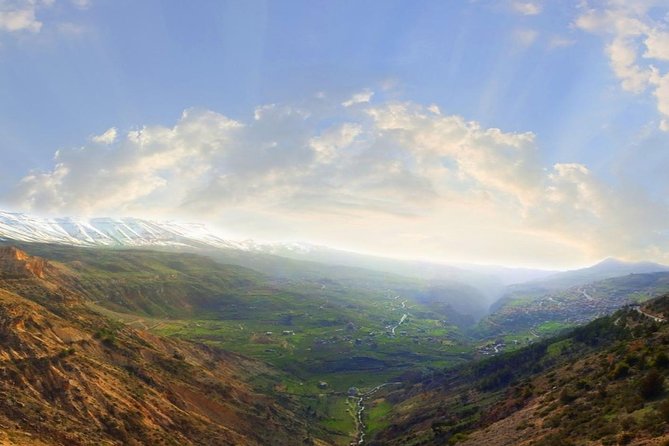
- UNESCO Qadisha Valley monasteries and caves, set in dramatic, rugged terrain.
- Bcharré village + Gibran Museum in the poet’s hometown, with tickets included.
- Cedars of God forest visit for about an hour, ideal for photos and calm.
- Maronite Monastery of St Anthony at about 950 meters, with strong early-Christian context.
- Lunch in Bcharré is included, which keeps the day from turning into snack math.
Other climbs up to the Qadisha Valley and the old cedars
- Guided Small-Group Tour to Qadisha, Bcharee & Cedars with Lunch★ 5.0 · 39 reviews
- Cedars of Lebanon, Qozhaya, & Bcharre – With Lunch (4G on Board)★ 4.5 · 34 reviews
- Cedars, Bsharre & Kozhaya Day Tour★ 5.0 · 15 reviews
- Small-Group Tour with Lunch to Qadisha Valley, Bcharre and Cedars★ 5.0 · 12 reviews
UNESCO Qadisha Valley, Bcharré, and Cedars in one 9-hour loop
If you want Northern Lebanon in one shot, this route makes sense. You start with Qadisha Valley, a UNESCO World Heritage Site tied to early Christian settlement life, with monasteries and caves tucked into a harsh, rock-cut setting. Then you pivot to Bcharré for culture, and finish with the Cedars of God, one of the rare places where cedars still grow.
What I like most is how the day links religion, art, and place. You see caves used by early monastic life in Qadisha Valley, then you walk into a museum devoted to Khalil Gibran, and finally you stand under the cedars that show up in biblical references. It gives you a fuller picture than doing just one highlight and calling it a win.
Pickup at 8:00 from Beirut, minivan comfort, and the group size reality
The tour runs from 8:00am and includes hotel pickup and drop-off, so you avoid the Beirut parking-and-taxi lottery. Transport is by air-conditioned minivan, which matters once you start winding through mountain roads.
Group size is the one detail worth noticing. The experience description emphasizes a maximum eight travelers for personal attention, while the broader tour listing states a maximum of 15 travelers. Either way, it stays small compared with big day-tour buses, and that usually means better pacing and fewer lost-person moments.
You also get a mobile ticket, which is handy for a day that already has enough moving parts. If you like knowing you are covered for admissions and fees, this format is built for that.
Qadisha Valley: monasteries and caves tied to early Christian life
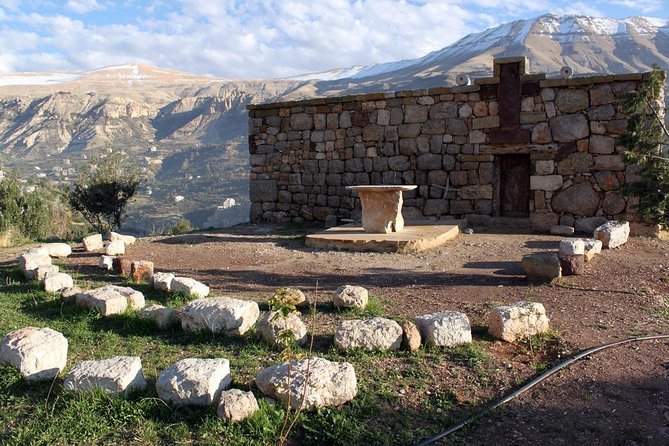
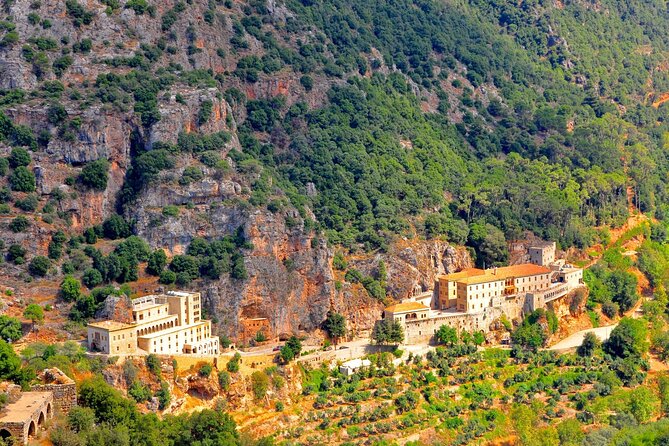
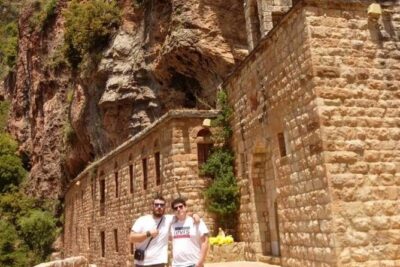
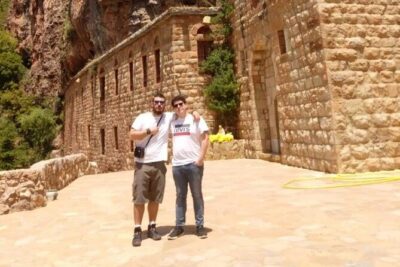
Qadisha Valley is listed as one of the most important early Christian settlement sites. The area includes caves, monasteries, and cultivated terraces connected with very early phases of Christianity, carved into an intense terrain that shaped how people lived and worshiped.
In practical terms, this stop is where you switch from Lebanon-as-a-country to Lebanon-as-a-time-machine. These monasteries were not built for comfort. They were built for a spiritual life that leaned toward remoteness and endurance, and the setting still feels like that.
Because the tour timing is structured, plan to take photos, read what you can, and ask your guide questions instead of trying to memorize everything on your own. If you go into it with curiosity, you will get more out of the time you have.
Trips where the mezze stop is part of the deal
Bcharré: the city of churches, Khalil Gibran’s hometown, and quick cedar-town breaks
Bcharré is the jump-off point for a lot of Northern Lebanon identity. It’s known as the city of churches, with about 37 churches, which gives you a strong sense of how religious communities shaped everyday life. It’s also tied directly to Khalil Gibran, whose birthplace is honored by a museum in town.
You will also hear about the cedars connection here. Bcharré is described as the town with the only remaining and preserved original Cedars of God, which makes the later cedar forest stop feel connected rather than random sightseeing.
Expect about 30 minutes in this first town stop. That is enough to get your bearings, walk a short stretch, and enjoy the mountain-town atmosphere, but not enough for deep shopping or a long café crawl. Come with a clear plan: pick one or two photo areas and then move on.
Gibran Museum in Bcharré: Monastery Mar Sarkis turned art and manuscripts
The Gibran Museum used to be the Monastery of Mar Sarkis, so you are walking into a place with its own layered backstory. The museum focuses on Khalil Gibran, the Lebanese writer, philosopher, and artist, and it is set up as a biographical collection that pulls together artwork and personal items.
This stop is around 30 minutes, and the museum content is dense. You are looking at 440 original paintings and drawings, plus his tomb. There are also his furniture and belongings from his New York City studio, along with private manuscripts.
The practical tip here is mindset. In a half hour, you cannot read every label. Instead, choose a few themes you care about, then let the guide fill in the rest with context. If your guide is someone like Albert, you are likely to get clear explanations and professional, kind pacing, based on guide feedback from past days.
Cedars of God forest: 375 trees, Bible mentions, and why this site matters
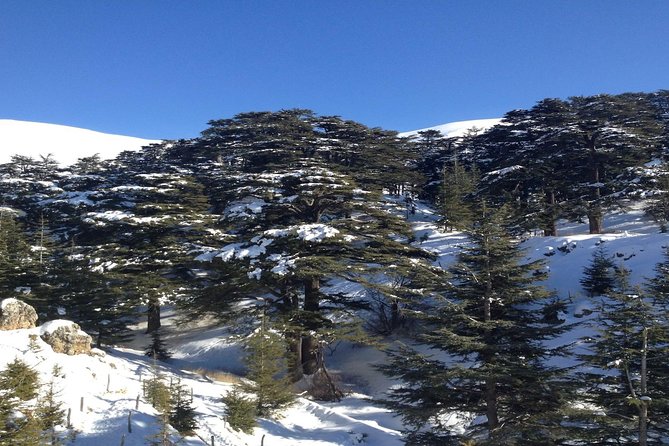
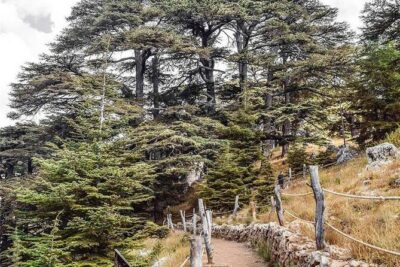
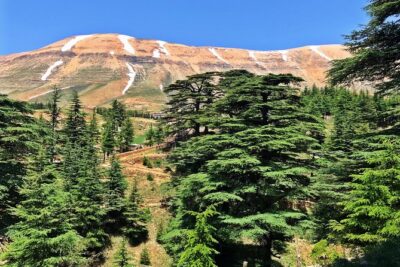
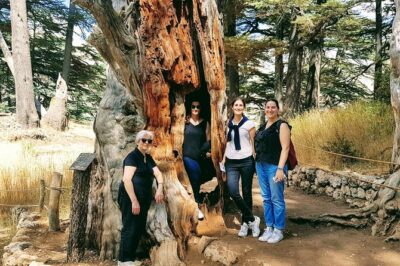
This is the stop most people remember. The Cedars of God forest has 375 trees and is described as the last remains of antique forests where cedars still grow. In the modern sense, that means you are not just seeing scenery. You are visiting a living symbol with deep cultural weight.
The cedars were prized in ancient times and were used in construction for major religious buildings. The Bible references cedar imagery 103 times, which is exactly the kind of detail that helps the place feel less like a generic photo spot and more like a meaningful landmark. And since the cedar is also tied to Lebanon’s flag, this stop connects to national identity too.
You get about 1 hour here. That is a good window to slow down, take photos, and enjoy the quiet. Wear shoes that grip, because forest paths and ground can be uneven even when the visit is easy. If you are chasing the perfect cedar shot, do it early in the hour, then spend the back half just looking.
St Anthony Monastery: 950 meters up in Qozhaya Valley
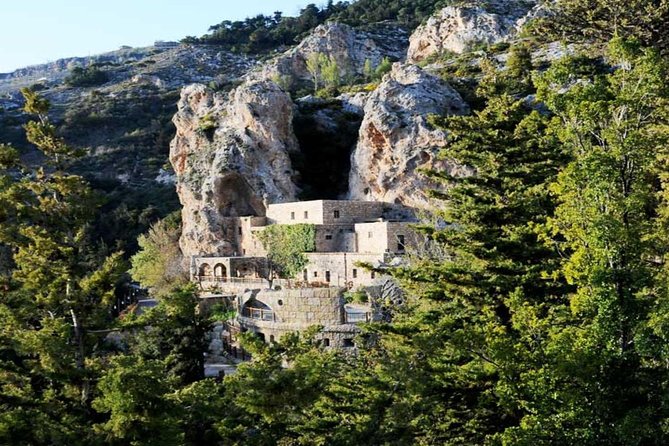
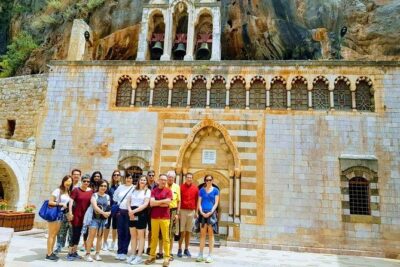
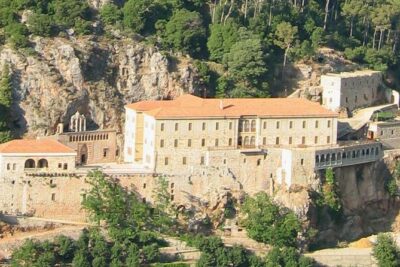
After the cedars, you head to the Maronite Monastery of St Anthony the Great, located at roughly 950 meters above sea level in the Valley of Qozhaya. The surrounding hills are covered with pine and oak trees, and the valley also grows fruit trees, which helps explain why this area supported long-term religious life.
This stop is also about 1 hour, and it has real depth. Historians and scholars are described as supposing the monastery began around the beginning of the fourth century, first occupied by hermits. It was looted and set on fire multiple times, razed to the ground at least once, yet vestiges remain dating to around the seventh century.
The feeling you should aim for here is respectful quiet. These places were shaped by solitude and faith, not tourism. Even if you only see remnants, the story of endurance does the heavy lifting, and your guide can help you connect the site to early Christian eremitic life in Lebanon.
Lunch in Bcharré: included food that keeps the day moving
Lunch is included at a local restaurant in Bcharré, so you do not have to hunt for a meal mid-route. That is a big deal on a structured 9-hour day, because it prevents the usual chaos of deciding between a scenic view and a restaurant line.
What you should expect from lunch timing is simple: it fits into the tour day, not into your own schedule. With timed stops at Bcharré, the museum, the cedars, and St Anthony, lunch works as recovery, not as a long, lazy sit-down.
If you are sensitive to road-food timing, bring a light appetite. You are doing several hours of sightseeing after, and your energy will thank you.
Price and value: what $99 covers in time, tickets, and transport
The price is $99 per person, and the biggest value move is that this covers more than a driver. You get transport in an air-conditioned minivan, a tour leader, hotel pickup and drop-off, and admission and tickets to the sites, plus lunch.
At $99, the math usually comes down to this: you are paying to remove friction. Instead of coordinating transport, buying separate tickets, and trying to stitch the day together yourself, you get a planned route with included costs. That matters most if you are short on time in Beirut or you do not want to negotiate details on the go.
It also helps that the day is designed around iconic places: Qadisha Valley for the UNESCO monastic setting, Bcharré for Gibran and church-town identity, and the Cedars of God for the cedar connection to religion and Lebanon.
This tour is best if you like seeing the headline sites but still want a guide who can explain what you are looking at.
How to get the best day from your Qadisha-Cedars schedule
First, plan your clothing. You will be outside at least for parts of the cedars and monastery stops, and mountain weather can be changeable. Past feedback includes a reminder to be prepared for weather, so bring a layer you can add or remove.
Second, pack for pace. Stops are about 30 minutes at Bcharré and the Gibran Museum, then about 1 hour each for the cedars and St Anthony. That is plenty if you focus, but not enough if you get stuck waiting around. Use those blocks to do what you came for.
Third, bring curiosity, not just a camera. This is a day where context changes everything: early Christian caves in Qadisha Valley, a monastery repurposed into Gibran’s museum, and cedar symbolism that shows up in religious text. A good guide makes those links click.
Finally, when you see monasteries and church spaces, keep the tone calm. You are visiting active heritage sites, and moving quietly helps you connect to the place rather than just passing through it.
Should you book this Qadisha Valley, Bcharré, and Cedars tour?
Book it if you want a well-packaged, small-group day from Beirut that hits the big Northern Lebanon spiritual and cultural themes: Qadisha Valley, Khalil Gibran in Bcharré, and the Cedars of God. The included lunch and tickets are a real time-saver, and the overall structure keeps you from getting stuck in logistics.
Skip it or consider your expectations if you are the type who needs a lot of free roaming time. The stops are timed, so you get highlights, not long stays. Also check that the pace works for you if you prefer slow, lingering travel.
If you like history with a human-scale feel and you want to see cedars that are more than a postcard, this is a strong match.
FAQ
What time does the tour start?
The tour start time is 8:00am.
How long is the Qadisha Valley, Bcharré, and Cedars tour?
It runs for about 9 hours.
Is pickup and drop-off included?
Yes, hotel pickup and drop-off are included.
Does the price include lunch?
Yes, lunch at a local restaurant is included.
Are entrance fees and tickets included?
Yes, admission and tickets to the sites are included.
What stops are included on the tour?
The tour includes Qadisha Valley, Bcharré, the Gibran Museum, the Cedars of God, and the Maronite Monastery of St Anthony.
How much time is spent at each major stop?
Bcharré is about 30 minutes, the Gibran Museum is about 30 minutes, the Cedars of God is about 1 hour, and the St Anthony Monastery is about 1 hour.
What group size should I expect?
The experience is described as small group with a maximum of eight travelers, and the tour listing states a maximum of 15 travelers.
Is free cancellation available?
Yes. You can cancel for a full refund up to 24 hours before the experience start time. If you cancel less than 24 hours before, the amount paid is not refunded.
More of Lebanon, Reviewed
- Guided Small-Group Tour to Baalbek, Anjar and Ksara with Lunch
★ 5.0 · 511 reviews - Guided Small-Group Tour to Jeita, Harissa, Byblos with Lunch
★ 5.0 · 361 reviews - City Sightseeing Beirut Hop-On Hop-Off Bus Tour
★ 4.5 · 87 reviews - Private Anjar and Baalbek Tour from Beirut with Departure Ticket
★ 5.0 · 79 reviews - Guided Private Full Day Tour to Baalbek, Anjar and Chateau Ksara
★ 5.0 · 60 reviews
Elsewhere in Lebanon
- Guided Small-Group Tour to Baalbek, Anjar and Ksara with Lunch
★ 5.0 · 511 reviews - Guided Small-Group Tour to Jeita, Harissa, Byblos with Lunch
★ 5.0 · 361 reviews - Paragliding Trip Over Lebanon – Jounieh Bay
★ 5.0 · 257 reviews - Jeita Grotto,Harissa&Byblos Full-Day PRIVATE-CAR Trip from Beirut
★ 5.0 · 222 reviews - First Paragliding Club in Lebanon – Since 1992
★ 5.0 · 193 reviews
Up the Qadisha Valley
- Guided Small-Group Tour to Qadisha, Bcharee & Cedars with Lunch
★ 5.0 · 39 reviews - Cedars of Lebanon, Qozhaya, & Bcharre – With Lunch (4G on Board)
★ 4.5 · 34 reviews - Cedars, Bsharre & Kozhaya Day Tour
★ 5.0 · 15 reviews - Small-Group Tour with Lunch to Qadisha Valley, Bcharre and Cedars
★ 5.0 · 12 reviews - Private Trip to Qadisha Valley, Bcharri and Cedars of God
★ 5.0 · 6 reviews
Other Lebanon trips we have written up
Qadisha Valley & the Cedars of God, compared.
 ★ 5.0Guided Small-Group Tour to Qadisha, Bcharee & Cedars with LunchFrom $6539 reviews
 ★ 4.5Cedars of Lebanon, Qozhaya, & Bcharre – With Lunch (4G on Board)From $9534 reviews
 ★ 5.0Cedars, Bsharre & Kozhaya Day TourFrom $17415 reviews
 ★ 5.0Small-Group Tour with Lunch to Qadisha Valley, Bcharre and CedarsFrom $6012 reviews
 ★ 5.0Private Trip to Qadisha Valley, Bcharri and Cedars of GodFrom $756 reviews
 ★ 4.5Private Trip to Qadisha Valley, Cedars Forest of God and Baalbek TemplesFrom $1506 reviews
 ★ 5.0PRIVATE Tour to Cedars of God, Besharre & Qozhaya ValleyFrom $1133 reviews
 ★ 4.5Beirut to Qadisha Valley, Bcharri & Cedar: Daily Tours with LunchFrom $653 reviews
Every list this tour turns up in