
REVIEW · BAALBEK, ANJAR & KSARA DAY TRIPS
Sightseeing all-inclusive Private Tour to Baalbek and Ksara
Roman giants and wine tastings, all in one day. This all-inclusive private tour strings together Baalbek’s Roman temples with quick, meaningful sacred stops, then ends with a Château Ksara wine tasting plus lunch. I like how the day is built around guided context, not just standing in front of big stones and guessing.
Two things I’d especially put on your checklist: you get a local guide for Baalbek, and the tasting at Château Ksara is included so you can plan the day without adding costs later. One drawback to consider is timing. The sites are spread across a full half-day, so you’ll move on fairly quickly, especially at the shorter stops.
That said, the big win is convenience. You start with round-trip Beirut hotel pickup in an air-conditioned vehicle, and you’re with only your group, so the pace feels controlled and you can actually hear the guide over the day.
In This Review
- Key things to know before you go
- What you’re really getting in about 6 hours
- Baalbek’s Roman temples: where scale does the talking
- What to watch for during the guided time
- A quick reality check
- The fast stops that add meaning: Sayyida Khawla and the Stone of the Pregnant Woman
- Sayyida Khawla Shrine, a belief tied to Karbala’s journey
- The Stone of the Pregnant Woman, Roman monolith power
- Why I think these two stops are worth it
- Aanjar’s Umayyad Ruins: a change of empire in the same day
- Lunch in Lebanon, then Château Ksara in the Beqaa Valley
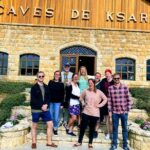
- Château Ksara: more than a tasting room
- How to get the most out of the tasting hour
- Price and value: what $75 actually buys you
- The feel of the day: what tends to go right
- Who this tour suits best
- Should you book the Baalbek and Ksara private tour?
- FAQ
- What time does the tour start?
- How long is the private tour?
- Does the tour include pickup from my Beirut hotel?
- Is this a private tour?
- What’s included in the price?
- Which stops are part of the day?
- Is lunch and wine tasting covered?
- Can I cancel for a refund?
- Is the tour suitable for most travelers?
Key things to know before you go
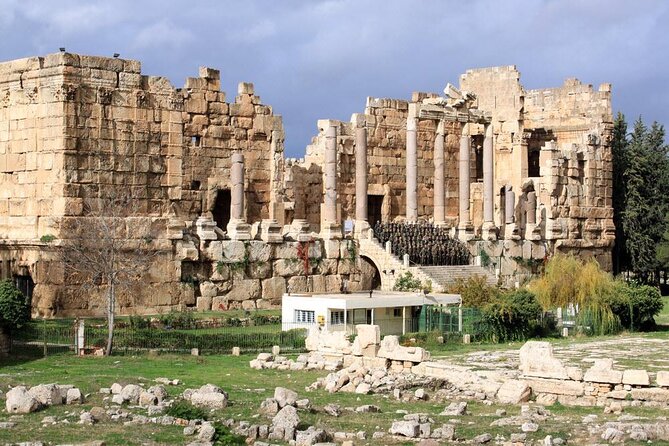
- Baalbek with a local guide: you get real explanations for the Roman complex and the Triad of Heliopolis.
- Private, just your group: less waiting around, more flexibility in how you spend your time on-site.
- Lunch plus wine tasting included: your $75 goes further than a basic transport-only day.
- Short, powerful side stops: Sayyida Khawla shrine and the Stone of the Pregnant Woman add meaning without eating the whole schedule.
- Château Ksara history baked into the visit: Jesuit roots, Lebanon’s first dry wine, and a tasting at the Beqaa Valley winery.
- Aanjar’s Umayyad Ruins on the route: a nice empire contrast between Roman scale and later history.
More runs out to Baalbek, Anjar and the Ksara cellars
- Guided Small-Group Tour to Baalbek, Anjar and Ksara with Lunch★ 5.0 · 511 reviews
- Anjar, Baalbek & Ksara Day Trip – With Lunch (4G on Board)★ 4.5 · 181 reviews
- Baalbek – Anjar – Ksara Trip From Beirut★ 4.5 · 80 reviews
- Private Anjar and Baalbek Tour from Beirut with Departure Ticket★ 5.0 · 79 reviews
What you’re really getting in about 6 hours
This is designed as a smooth, guided “greatest hits” day out of Beirut. You start at 9:00 am and the total time is about 6 hours, so it’s long enough to feel like a real excursion, but not so long that it turns into a travel marathon.
The practical value is the combo of round-trip transfers and an air-conditioned vehicle. In Lebanon, that matters because even on a good day, getting out to the Bekaa Valley area takes time and you do not want to waste part of your visit stuck in transit stress.
Then there’s the way the tour is paced. Baalbek is the centerpiece with 1 hour 30 minutes and entry included. The shrine and the Stone of the Pregnant Woman are shorter stops, so you get variety without losing the main focus. And the ending is intentionally easier, with an hour at Château Ksara for lunch and wine tasting.
Baalbek’s Roman temples: where scale does the talking
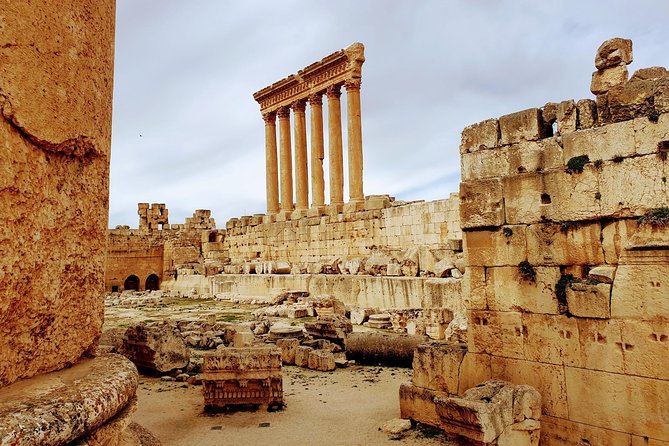
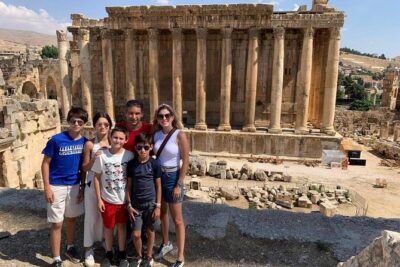
Baalbek sits at about 1,150 meters altitude, at the foot of the south-west slope of Anti-Lebanon, bordering the fertile plain of the Bekaa. That setting helps explain the atmosphere. You’re not just in a ruin field, you’re looking at a sanctuary that served people who made the journey on purpose.
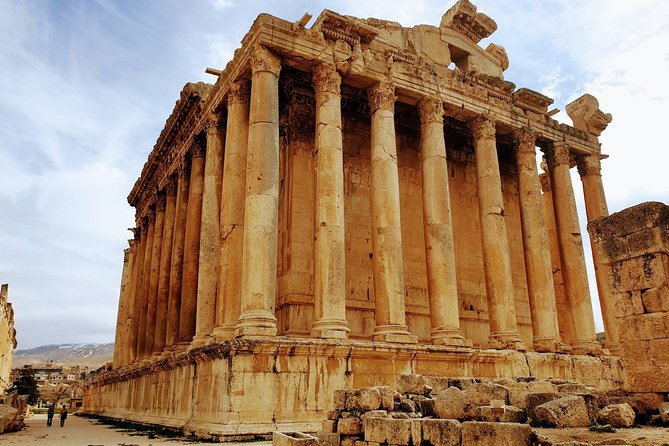
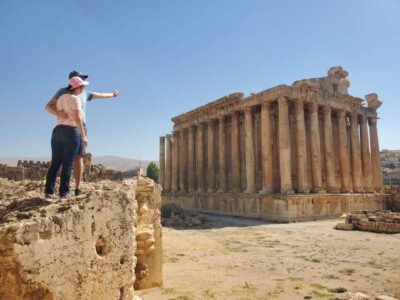
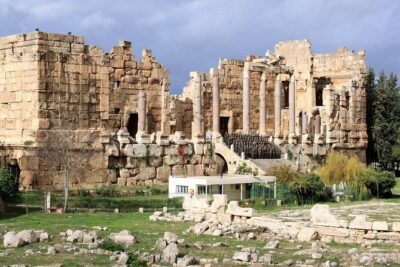
The tour centers on the complex of Roman temples, which reached its peak during Roman times. The colossal constructions were built across more than two centuries, so even if you know your Roman history, it’s still impressive to realize this was a long project, not a quick build. It’s also described as a model of Imperial Roman architecture, meaning the artistry is tied to engineering and planning, not only decoration.
Here’s what I love about doing Baalbek with a local guide: the Triad of Heliopolis is not just a name. The temples are tied to three deities, Jupiter, Venus, and Bacchus, a Romanized framing of an essentially Phoenician cult. The guide helps you connect what you see on the ground to what pilgrims came to venerate, which makes the place feel less like a photo stop and more like a story.
What to watch for during the guided time
You’ll have 1 hour 30 minutes at Baalbek with admission included. Use that block to slow down and notice how the complex is structured. Instead of trying to capture everything in pictures, I’d aim for a few anchor moments:
- Find a viewpoint where you can see how the colossal elements relate to each other.
- Pay attention to how the guide explains Roman religious life and imperial ambition.
- Let your brain switch from today’s landscape to a sanctuary setting where pilgrims thronged to venerate the deities.
Prefer your own guide? These private Lebanon trips reviewed well
A quick reality check
Baalbek is outdoors and you’ll be walking. If you’re sensitive to heat or sun, bring water and wear something that keeps you comfortable. The tour gives you transport and guides, but it cannot change the weather.
The fast stops that add meaning: Sayyida Khawla and the Stone of the Pregnant Woman
After the main temple complex, the day turns more intimate. The schedule includes two smaller stops that are brief on paper, but memorable in a different way than the massive ruins.
Sayyida Khawla Shrine, a belief tied to Karbala’s journey
The Sayyida Khawla Shrine is only about 5 minutes in the plan and entry is free. It’s a mosque erected on the site where Sayyida Khawla, described as the daughter of Imam al-Hussein and the grandson of the Prophet Muhammad, is believed to have been buried.
The local story adds context: people of Baalbek believe that when the caravan of captives of Karbala passed through Baalbek, Khawla passed away and was buried there. Even if you’re not studying religious history on the spot, this sort of detail helps you see the site as living memory, not just heritage tourism.
The Stone of the Pregnant Woman, Roman monolith power
Next is the Stone of the Pregnant Woman, allotted about 15 minutes, and it’s also free to enter. This is a worked Roman monolith, paired with another ancient stone block nearby. Together, they’re described as among the largest monoliths ever quarried.
The guide’s framing matters here. These blocks were presumably intended for the nearby Roman temple complex, and they represent a type of monolithic gigantism that was unparalleled in antiquity. In other words, it’s not just a big rock. It’s evidence of scale, logistics, and ambition.
Why I think these two stops are worth it
You could easily skip short stops and still say you saw Baalbek. But these add a second layer to the day. One place points to a belief connected to a historical journey. The other points to the engineering and ambition of Roman monumental building. Together, they make the day feel fuller than a single-empire checklist.
Aanjar’s Umayyad Ruins: a change of empire in the same day
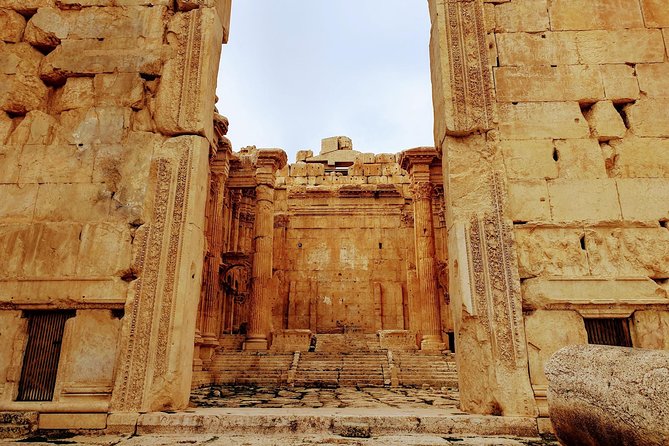
Your tour also continues to Aanjar to see the Umayyad Ruins. This is a smart move for anyone who finds Roman sites overwhelming. You get the feeling of Lebanon as a place where layers stack over time.
The provided information doesn’t spell out the exact length of the Aanjar stop, but it is included as part of the route between the Baalbek area and the wine region in the Beqaa Valley. That means you’ll experience it as a meaningful sidebar rather than the main event.
If you’re the kind of traveler who likes contrasts, treat this as your palate cleanser between worlds. After Roman scale and sanctuary logic, the Umayyad layer gives you a different architectural and historical tone.
Practical note: because the schedule is structured around Baalbek and Château Ksara, don’t expect to wander indefinitely. Use the stop to get oriented and soak in what looks distinct to you, then let the day move forward.
Lunch in Lebanon, then Château Ksara in the Beqaa Valley
After the ruins, you get a Lebanese lunch that’s included. I value that because it keeps the day from turning into a scramble for food between sites. When you’re spending hours on foot and in transit, hunger steals your attention fast.
Then the tour shifts into a more relaxed mode at Château Ksara, with 1 hour on-site and wine tasting fees included.
Château Ksara: more than a tasting room
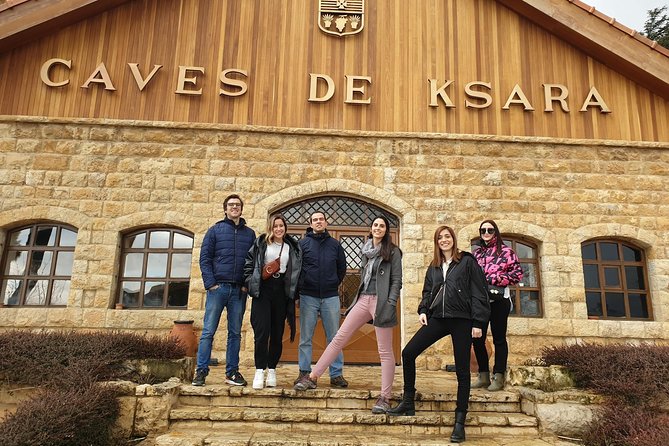
Château Ksara is a winery in the Beqaa Valley. It was founded in 1857 by Jesuit priests, and it’s credited with developing the first dry wine in Lebanon. The winery produces roughly 3 million bottles annually and exports to over 40 countries.
That blend of local origin and international reach is exactly why this ending works well after heritage sites. You’re not just switching locations, you’re switching themes from ancient religion and empire to a living tradition of agriculture and production.
How to get the most out of the tasting hour
You’ll have about an hour at the estate, and tasting is included. I suggest you do two things during that time:
- Ask the guide or staff what makes their dry style distinctive in their context, since the winery’s claim to fame is tied to that dry tradition.
- Pace yourself. If you’re planning to enjoy the full day, don’t treat it like a sprint. Give yourself time to notice aromas and flavors, not only what you like most.
And if you’re not a wine super-fan, don’t panic. This winery visit still works as a cultural stop because you learn where the wine industry story starts, and you taste in an environment that’s built for visitors.
Price and value: what $75 actually buys you
At $75 per person, you’re paying for more than a ride. This price point covers:
- Private, round-trip transportation from your Beirut hotel
- Air-conditioned vehicle
- A tour leader
- A local guide in Baalbek
- Baalbek entrance fees
- Lunch
- Wine tasting fees
- Mobile ticket
That’s the value logic. If you tried to DIY this, the parts you’d likely pay separately are exactly the expensive-sounding ones: entrance tickets, guides, and the tasting package. In a private setting, convenience also has a cost. Here it’s bundled.
Also note the tour includes group discounts, which can make this kind of itinerary even easier to justify if you travel with friends or family.
One thing to be mindful of is that the itinerary is structured around the main beats. If you love ruins and want to linger in each spot for hours, you might find the shorter stops feel brief. But if you want strong coverage with guiding and included meals, it’s good bang for the buck.
The feel of the day: what tends to go right
The most consistently praised aspects of this tour are the combination of the sites themselves with the people running the experience. You’re set up with a driver for smooth logistics and a guide for Baalbek for the cultural explanations. That pairing is why the day tends to feel pleasant and educative rather than chaotic.
From a traveler’s point of view, here’s what that usually means for you:
- Less time figuring out where to stand and what to look at.
- More time understanding why the ruins matter.
- A calmer experience, because someone else handles routing and timing.
And because it’s private, your group sets the vibe. You’re not squeezed into a shared schedule full of unknown pace habits.
Who this tour suits best
This is a strong fit for:
- History-minded travelers who want guided Roman Baalbek with context
- Travelers who also care about culture, not just sightseeing photos
- Wine lovers or curious tasters who want an included tasting at a historically significant winery
- Anyone who prefers a private half-day plan instead of piecing together buses, tickets, and timing
It may be less ideal if:
- You want deep, slow exploration at every stop. Baalbek is given the longest time, but Sayyida Khawla and the Stone of the Pregnant Woman are brief.
- You’re sensitive to walking and outdoor sun. You’ll be outdoors for the ruins, and weather can change comfort levels.
Should you book the Baalbek and Ksara private tour?
I’d recommend booking if you want a guided, well-timed day that covers Baalbek, adds a couple of meaningful stops, includes lunch, and ends with a Château Ksara tasting. The pricing makes sense because entry fees, the Baalbek local guide, lunch, and tasting are included.
If you’re on the fence, here’s your quick decision checklist:
- You like the idea of having a guide explain what you’re seeing at Baalbek.
- You want a private day that runs from Beirut pickup to a winery finish without extra planning.
- You’ll enjoy the contrast between Roman sanctuaries and later wine culture in the Beqaa Valley.
And if plans change, you can cancel for free up to 24 hours in advance of the experience start time, based on local time. That gives you some breathing room.
FAQ
What time does the tour start?
The tour starts at 9:00 am.
How long is the private tour?
It runs for about 6 hours.
Does the tour include pickup from my Beirut hotel?
Yes. Round-trip transfers from your Beirut hotel are included.
Is this a private tour?
Yes. It’s a private tour, and only your group participates.
What’s included in the price?
Included items are private transportation, an air-conditioned vehicle, a tour leader, a local guide in Baalbek, lunch (Lebanese lunch), wine tasting fees, and entrance fees to the Baalbek site.
Which stops are part of the day?
The day includes Baalbek (temples), Sayyida Khawla Shrine, the Stone of the Pregnant Woman, and Château Ksara. The itinerary overview also includes Aanjar to see the Umayyad Ruins.
Is lunch and wine tasting covered?
Yes. Lunch and wine tasting fees are included.
Can I cancel for a refund?
Yes, you can cancel for free up to 24 hours in advance for a full refund.
Is the tour suitable for most travelers?
Most travelers can participate.
More of Lebanon, Reviewed
- Guided Small-Group Tour to Baalbek, Anjar and Ksara with Lunch
★ 5.0 · 511 reviews - Guided Small-Group Tour to Jeita, Harissa, Byblos with Lunch
★ 5.0 · 361 reviews - City Sightseeing Beirut Hop-On Hop-Off Bus Tour
★ 4.5 · 87 reviews - Private Anjar and Baalbek Tour from Beirut with Departure Ticket
★ 5.0 · 79 reviews - Guided Private Full Day Tour to Baalbek, Anjar and Chateau Ksara
★ 5.0 · 60 reviews
Elsewhere in Lebanon
- Guided Small-Group Tour to Baalbek, Anjar and Ksara with Lunch
★ 5.0 · 511 reviews - Guided Small-Group Tour to Jeita, Harissa, Byblos with Lunch
★ 5.0 · 361 reviews - Paragliding Trip Over Lebanon – Jounieh Bay
★ 5.0 · 257 reviews - Jeita Grotto,Harissa&Byblos Full-Day PRIVATE-CAR Trip from Beirut
★ 5.0 · 222 reviews - First Paragliding Club in Lebanon – Since 1992
★ 5.0 · 193 reviews
Baalbek and the Bekaa, Compared
- Guided Small-Group Tour to Baalbek, Anjar and Ksara with Lunch
★ 5.0 · 511 reviews - Anjar, Baalbek & Ksara Day Trip – With Lunch (4G on Board)
★ 4.5 · 181 reviews - Baalbek – Anjar – Ksara Trip From Beirut
★ 4.5 · 80 reviews - Private Anjar and Baalbek Tour from Beirut with Departure Ticket
★ 5.0 · 79 reviews - Guided Private Full Day Tour to Baalbek, Anjar and Chateau Ksara
★ 5.0 · 60 reviews
Other Lebanon trips we have written up
Baalbek, Anjar & Ksara Day Trips, compared.
 ★ 5.0Guided Small-Group Tour to Baalbek, Anjar and Ksara with LunchFrom $65511 reviews
 ★ 4.5Anjar, Baalbek & Ksara Day Trip – With Lunch (4G on Board)From $95181 reviews
 ★ 4.5Baalbek – Anjar – Ksara Trip From BeirutFrom $3480 reviews
 ★ 5.0Private Anjar and Baalbek Tour from Beirut with Departure TicketFrom $7579 reviews
 ★ 5.0Guided Private Full Day Tour to Baalbek, Anjar and Chateau KsaraFrom $10060 reviews
 ★ 5.0Lebanon tour Baalbek ruins & Ksara w/pick-up, lunch,guide+entriesFrom $13035 reviews
 ★ 4.9Baalbek Temples & Ksara Caves w/pick-up,guide, entries+lunchFrom $14034 reviews
 ★ 5.0Small Group Tours to Baalbek, Anjar & Chateau Ksara with lunch and TicketsFrom $7529 reviews
Every list this tour turns up in