
REVIEW · TRIPOLI, BATROUN & THE NORTH
Guided Small-Group Tour to Tripoli and Batroun with Lunch
One day, two older-than-you-think cities. This small-group tour from Beirut gives you a guided, door-to-door route through Tripoli and Batroun, with real neighborhood stops like khans, mosques, hammams, and souks, plus a proper Lebanese restaurant lunch. I especially liked the hotel pickup and drop-off, because it saves time when your day is already packed, and I also loved the way lunch feels built-in, not an afterthought. One thing to plan for: the Citadel of Tripoli has entrance costs that are not included, and some hammam sites are not operating, so you may be seeing them in a more historic, less active mode than you expect.
The day runs about 8 hours, starting at 8:30 am, and it is a mix of guided stops and short walks through older streets. If you prefer driving yourself, this is still a nice compromise because you skip car hire stress, while keeping the schedule tight enough to see both cities without feeling rushed.
In This Review
- Key things that make this tour work
- A small-group day that keeps the pace human
- Beirut pickup to Tripoli streets: how your day runs
- Tripoli first, because it sets the tone
- Citadel Saint Gilles (Qal’at Sinjil): what you get in 30 minutes
- Al Mansouri Great Mosque and Taynal Mosque: architecture you can read
- Souk Al-Harajb and the Tripoli souks: more than shopping
- Khan Al-Khayyatin: trades inside a big courtyard
- Tripoli soap factory Khan el masriyen: the surprise stop
- Hammams in Tripoli: living traditions, fading ones, and what you should expect
- From fair grounds to sweets: Tripoli beyond the monuments
- El Mina port: sea air and ancient-to-modern continuity
- Batroun and the Phoenician sea wall: short, clear, memorable
- Lunch in a Lebanese restaurant: why it is part of the value
- Price and value versus self-drive stress
- What to bring for comfort and quick enjoyment
- Should you book this Tripoli and Batroun tour?
- FAQ
- What is the price of the tour?
- How long is the experience and what time does it start?
- Does this tour include hotel pickup and drop-off?
- Is lunch included?
- Are entrance fees included for the stops?
- What is the group size?
- What is the cancellation policy?
Key things that make this tour work
- Maximum 15 people keeps the guide’s attention focused where you need it
- Door-to-door hotel pickup means you start clean, not stressed
- Tripoli’s layered sites move from citadel views to mosques, souks, khans, hammams
- Soap Khan and the working trades vibe add color beyond monuments
- Lunch is included so you do not spend your day hunting for something open
- Batroun’s Phoenician sea wall is short, specific, and easy to appreciate
Further north, these Tripoli and Batroun days rated well
- Aaqoura Lakes – Baatara Waterfall – Batroun★ 4.5 · 55 reviews
- PRIVATE city Tour of authentic Tripoli and vibrant Batroun★ 5.0 · 51 reviews
- Full-Day Guided Tour of Northern Lebanon with Hotel Pickup★ 5.0 · 8 reviews
- Full day Tripoli private great guide/all-in + rustic meal★ 5.0 · 7 reviews
A small-group day that keeps the pace human
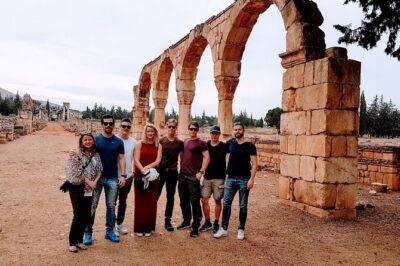
This is a classic “two cities in one day” plan, but done in a way that feels workable. With a maximum of 15 people, your guide can actually answer questions as you go, instead of racing everyone forward like a checklist. In my favorite moments on tours like this, you are not just watching sights, you are also picking up context about why they were built, how they were used, and what still survives today.
Tripoli is the bigger half of the day, and that is a good thing. You get time to wander the souks and then step into the city’s older institutions: khans for trades, hammams for daily life, and mosques on top of earlier layers. Batroun is more focused and calmer, with a sea wall that gives you a clear landmark to remember.
The tour also uses air-conditioned transport, which matters when you are out for most of the day and the schedule is packed. Even if you love walking, having comfortable rides between stops helps you keep energy for the walking sections.
Beirut pickup to Tripoli streets: how your day runs
The tour starts at 8:30 am, and it is designed to run from Beirut with pickup and drop-off at your hotel. That “door-to-door” style matters in Lebanon, because driving and parking can eat time fast. You also get a mobile ticket, which tends to reduce the hassle of check-in on a busy morning.
From there, the day flows like this: you spend the bulk of the morning in Tripoli, with longer blocks for the main city visit and the souks, then several shorter stops for specific monuments and architectural details. Citadel time is limited, so you are going to get the big picture and the main viewpoint rather than a slow museum crawl.
The practical upside: you will see a lot without it turning into a blur. The tradeoff: the short stops mean you should come ready to stand, look up, and ask questions, rather than expecting long free time at every site.
Tripoli first, because it sets the tone
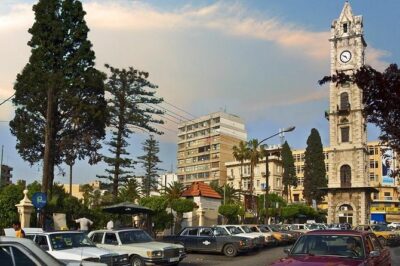
Tripoli’s main visit is about 3 hours, and it is a strong introduction to the city’s age. The tour focuses on the fact that Tripoli dates back to Phoenician times and has preserved many historic layers. It also reminds you that Tripoli is not only big monuments. The daily-life structures matter too, like hammams, souks, and khans (trade caravanserai-style buildings).
You also get clear historical anchors: the tour points out that many buildings are registered historical sites, and that there are surviving mosques from Mamluke and Ottoman times. That helps you look at what you see with better context. Even when you are just passing through a corridor or entering a courtyard, it is easier to understand what it used to do.
Guided departures across Lebanon we have looked at

Citadel Saint Gilles (Qal’at Sinjil): what you get in 30 minutes
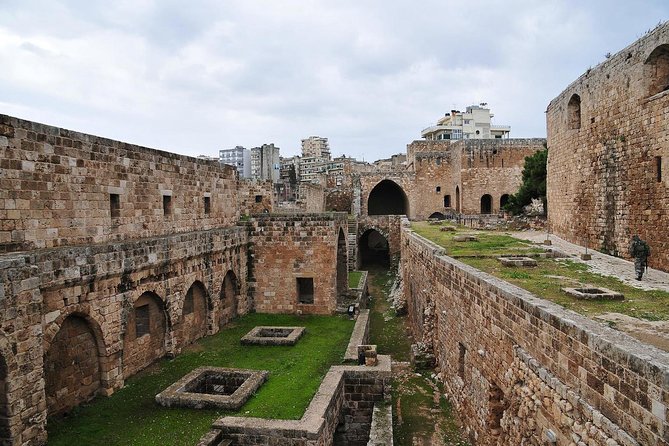
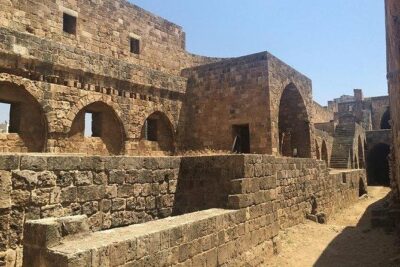
Your Citadel stop is about 30 minutes, and this is one of the places where you will feel the difference between “viewing” and “studying.” The Citadel of Tripoli, called Qal’at Sinjil, is imposing and has been renovated and changed many times. It includes octagonal Fatimid constructions later converted to a church by the Crusaders, plus Crusader structures from the 12th and 13th centuries, Mamluke additions, and later Ottoman modifications.
The key practical detail: entrance for this stop is not included. So you should budget extra if the site charges a ticket at the gate. If you are traveling on a tight budget, this is the one part of the day where the “cheap and easy” feeling of the tour can slip a bit, just because of that added cost.
The payoff is the big-city overview. Even in a short visit, the size is clear, with the Citadel described as about 140 meters long and 70 meters wide, and you can see why restorations under Mustafa Barbar Agha shaped the current state.
Al Mansouri Great Mosque and Taynal Mosque: architecture you can read
After the Citadel, you get two mosque stops that work well back-to-back. They are both free to enter, and each is built on older sites, which is part of what makes the architecture feel like a timeline you can walk through.
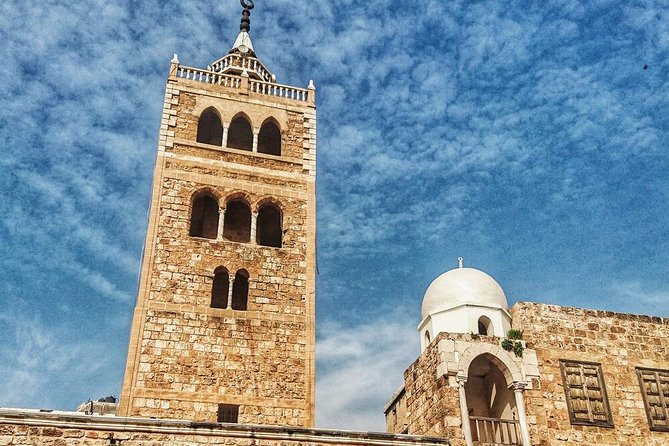
At Al Mansouri Great Mosque, construction started in 1294 and was completed in 1315. The tour notes that it was built on the ruined 12th-century Crusader cathedral of St. Mary of the Tower. Inside, you get a vaulted prayer hall around a large courtyard. What I like about this stop is the “western elements in an Islamic setting” angle the tour highlights, including the northern entrance and a bell tower transformed into a minaret. You are not just admiring, you are learning how buildings change roles over time.
At Taynal Mosque, built in 1336, the tour points out that some Crusader church materials were reused, including granite columns with late Roman capitals placed in the prayer hall. There is also an adjoining domed mausoleum holding the tomb of the founder, Saif Ed-Dine Taynâl. Again, it is a short stop, but the details are specific enough that you can actually remember them afterward.
A practical note: mosques are active places in many destinations, so plan to dress and behave accordingly. The tour gives you entry access, and it is the kind of stop where you will feel grateful for a guide to explain what you are seeing.
Souk Al-Harajb and the Tripoli souks: more than shopping
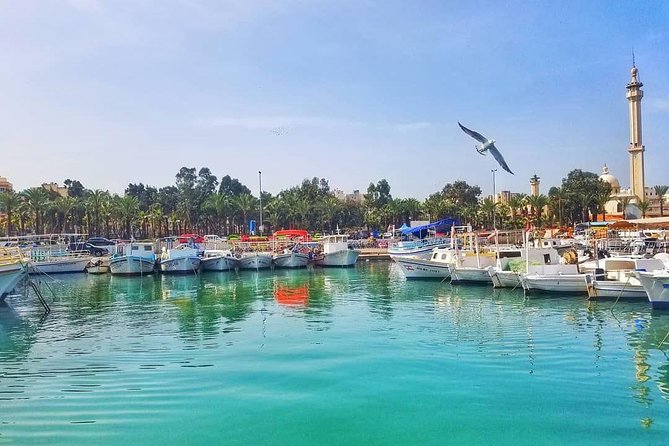
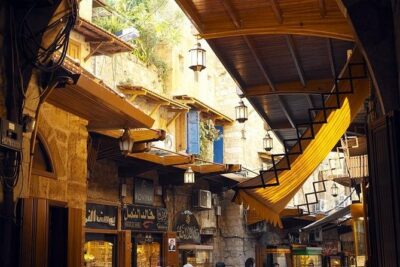
Then comes the souks, and this is where the tour becomes sensory. The Tripoli souks are described as busy, colorful, and full of narrow passages and hidden alleys, with smells and sounds that make it feel like a scene with characters and props.
You will spend about 1 hour at Souk Al-Harajb, and the tour sets up what you are walking through by naming the wider souk system: Attareen, Bazerkan, Haddadin, Haraj, Kameh, Koundarjiyeh, Nahhasin, Samak, and Sayyaghin. Even if you do not visit every single one, knowing the names helps you realize this is not random market chaos, it is an organized network.
One reason I like this kind of stop is that souks are where you see how heritage stays useful. The tour also notes a food souk with fresh produce and meat and fish, which helps you connect the architecture to everyday life.
Also, here is a real value point: most of these souk and mosque visits are free to enter, so your money mostly goes toward guiding and transportation, not ticket fees.
Khan Al-Khayyatin: trades inside a big courtyard
After the souks, you get a short visit to Khan Al-Khayyatin. This is part of the Tripoli souk complex, and it is described as a long rectangular building with a covered central courtyard and shops on either side, about 40 by 80 meters.
The name, Khan al Khayyatin, gives you the trade focus: tailors and related crafts like needles, thread, and sewing machines. The stop is brief, around 5 minutes, so it is not a “sit and learn” moment. It is more like a pause to show how trade life was structured into buildings, not just stalls.
Tripoli soap factory Khan el masriyen: the surprise stop
Next is the Tripoli Soap Factory, also called Khan As Sabon or Soap Khan. This is one of those stops that feels oddly fascinating once you are there, because it connects everyday products to big political control.
The tour describes the Soap Khan as built at the beginning of the 17th century. Originally, it was intended as a military barracks to garrison Ottoman troops, built in the center of the city so the pasha could control any uprising. That historical twist changes how you see the building. You stop thinking only about commerce and start seeing power, urban planning, and security.
The structure is described as large and rectangular, with two-story arcaded corridors around a fountain courtyard. Even in a short visit, you get a sense of how soap production and storage trade could fit into a broader urban function.
Hammams in Tripoli: living traditions, fading ones, and what you should expect
Tripoli’s hammams are a strong theme in this tour, with several stops that are mostly very short, each about 5 minutes. The tour even labels the hammams by name and gives you the “state of play,” which is useful.
First is Hammam El-Abed, described as the only functioning hammam in Tripoli, probably built at the end of the 17th century. The tour notes typical pierced domes of Mamluke and Ottoman public bath architecture, plus interior details like cushions, a central fountain, and traditional fittings, described as a living museum.
Then you have multiple non-operating or under-restoration hammams:
- Hammam Al-Jadid, built around 1740, called the New Bath and described as the largest in Tripoli, but it has not been in operation since the 1970s.
- Ezzeddine Hammam, given to the city by its Mamluke governor, with a mausoleum beside it, and the hammam in continual use until recently, now under restoration.
Here is the consideration: if you expect to experience steam and bathing, this may not match that dream. The tour is focused on sight and context, and some stops are about faded grandeur rather than active bathing. Still, seeing the domes, the courtyards, and the historical fittings gives you a rare peek into daily life structures that many cities have lost.
From fair grounds to sweets: Tripoli beyond the monuments
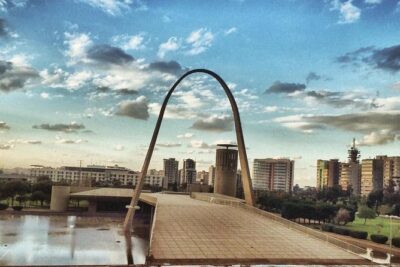
After the hammams, you get a quick stop at Rachid Karami International Fair grounds. The tour describes the exhibition center as one of the five largest in the world, and it notes there are 15 structures designed by Oscar Niemeyer in 1963. The big story is that the project was unfinished due to abandonment during Lebanon’s civil war in 1975.
This stop is not about architecture for its own sake. It is about seeing how large civic projects can be interrupted, and how a city carries that in the present.
Next is Hallab 1881, a landmark for Lebanese sweets. The tour says it has operated since 1881, originating from Tripoli, and highlights Abdul Rahman Hallab as a pioneer in Lebanese sweets. It notes that Kasr El Helou is considered one of Tripoli’s most renowned landmarks, visited by thousands of people from around the globe. The tour time here is about 15 minutes, so it is a quick taste of local reputation.
El Mina port: sea air and ancient-to-modern continuity
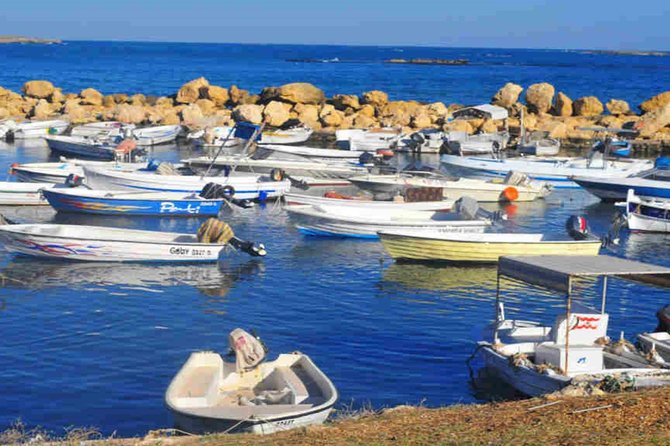
Then you head to El Mina Port, described as a coastal town that acts as the harbor city for modern neighboring Tripoli. The tour ties it to deeper time by noting it occupies the location of the old Phoenician city of Tripoli.
You also get a practical nature note: El Mina has nine islands, and four of them are natural reservations meant to breed fish and preserve the natural habitat. Even though your stop is short (about 15 minutes), it gives you a sense that this coast is not only for boats and buildings, it is also for protected marine life.
If you like connecting city walking with coastline context, this is a nice button on the Tripoli day.
Batroun and the Phoenician sea wall: short, clear, memorable
After Tripoli, the tour shifts to Batroun for about 30 minutes. Batroun is described as one of the world’s oldest cities, established more than three millennia ago, and once a Phoenician metropolis. It is known for ancient castles and churches, quality citrus fruits, beaches, and modern nightlife.
That mix is why Batroun works for a half-day style end of the trip. You get a city identity, not just a single monument. In a short timeframe, you can still understand what people love here.
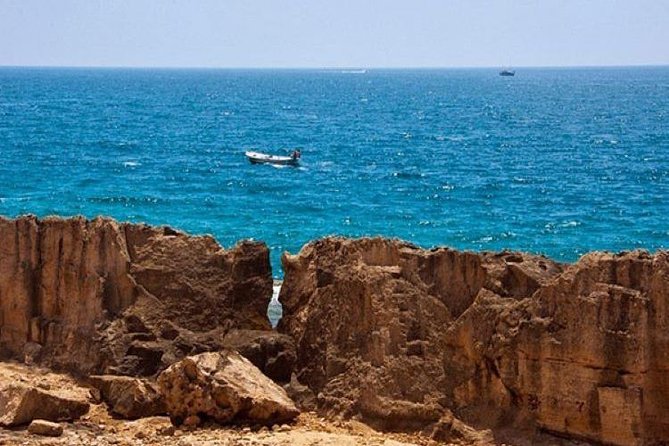
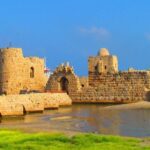
Then comes the highlight that is extremely easy to picture: the Phoenician Wall. The tour explains it started as a natural structure made of petrified sand dunes, then the Phoenicians reinforced it gradually with rocks. The wall in its present form is described as taking shape in the first century BC. Later, during Roman times, it functioned again as a quarry. The tour also notes it was protection against sea storms and invaders, which gives the structure a reason beyond “cool old stones.”
The dimensions are specific: about 225 meters long and 1 to 1.5 meters thick. Some sections have crumbled, but what remains still acts as a bulwark against the sea for residents. You get about 20 minutes here, which is just enough time to understand it without turning it into a long trek.
Lunch in a Lebanese restaurant: why it is part of the value
Lunch is included, and it is described as a Taste of real Lebanon with a fresh, authentic meal at a local restaurant. The biggest practical value of included lunch is not food alone. It is schedule protection. With an 8-hour day and multiple stops, having lunch handled lets the tour keep moving without forcing you into the “find a place that is open right now” scramble.
It also helps you recover between the Tripoli density and the Batroun finish. After you have walked through souks, khans, mosques, and hammams, a proper sit-down meal makes the day feel earned.
Based on the overall feedback for this tour, guests strongly like the way food is integrated, not tacked on.
Price and value versus self-drive stress
At $65 per person, this is not expensive for an 8-hour guided day that includes hotel pickup and drop-off, an air-conditioned vehicle, and a restaurant lunch. The itinerary is heavy on free or low-cost stops, with most sites marked as free to enter. The Citadel of Tripoli has admission not included, so that is the one cost you might need to add.
The value equation is simple:
- You pay for guiding and transportation, not a long list of expensive tickets.
- You save the cost and hassle of car hire.
- You avoid wasting time navigating older neighborhoods on your own.
If you are the kind of traveler who enjoys walking and asking questions, this price makes sense. If you only want a quick highlights version and hate standing and short viewing stops, you might feel the day is too packed.
What to bring for comfort and quick enjoyment
This is a walking-heavy old-city style day with plenty of short stops, courtyards, and entrances. I would pack like this:
- Comfortable shoes for uneven sidewalks and quick transitions between sites
- Light layers, since you could be in sun and then in cooler interior spaces
- A small water bottle, since you will be out most of the day
- A respectful outfit for mosque visits
Also, bring curiosity. The tour hits multiple layers at Citadel sites and reused architectural pieces in the mosques and khans. If you like details, you will get more from each stop.
Should you book this Tripoli and Batroun tour?
I recommend booking if you want a guided, small-group day that covers Tripoli’s everyday heritage and ends with Batroun’s Phoenician sea wall in a clean, memorable way. It is especially worth it if you do not want to deal with car hire and driving stress, but you still want a real day out with active city walking.
Skip it or consider a different option if you need deep time at a single site, because the structure here is about multiple stops, many of them short. And remember the hammam expectations: at least one hammam is functioning, but others are not currently operating or are under restoration, so this is about seeing the places, not booking bathing time.
If you want a practical taste of Lebanon beyond the most obvious stops, this day trip is a strong value.
FAQ
What is the price of the tour?
The tour costs $65.00 per person.
How long is the experience and what time does it start?
It runs about 8 hours, and the start time is 8:30 am.
Does this tour include hotel pickup and drop-off?
Yes, hotel pick up and drop off are included.
Is lunch included?
Yes, lunch is included, served at an authentic Lebanese restaurant.
Are entrance fees included for the stops?
Many sites are free to enter, but the Citadel Saint Gilles (Qal’at Sinjil) has admission not included.
What is the group size?
This tour has a maximum of 15 travelers.
What is the cancellation policy?
You can cancel for a full refund up to 24 hours in advance of the experience’s start time. If you cancel less than 24 hours before start time, the amount paid is not refunded.
More of Lebanon, Reviewed
- Guided Small-Group Tour to Baalbek, Anjar and Ksara with Lunch
★ 5.0 · 511 reviews - Guided Small-Group Tour to Jeita, Harissa, Byblos with Lunch
★ 5.0 · 361 reviews - City Sightseeing Beirut Hop-On Hop-Off Bus Tour
★ 4.5 · 87 reviews - Private Anjar and Baalbek Tour from Beirut with Departure Ticket
★ 5.0 · 79 reviews - Guided Private Full Day Tour to Baalbek, Anjar and Chateau Ksara
★ 5.0 · 60 reviews
Elsewhere in Lebanon
- Guided Small-Group Tour to Baalbek, Anjar and Ksara with Lunch
★ 5.0 · 511 reviews - Guided Small-Group Tour to Jeita, Harissa, Byblos with Lunch
★ 5.0 · 361 reviews - Paragliding Trip Over Lebanon – Jounieh Bay
★ 5.0 · 257 reviews - Jeita Grotto,Harissa&Byblos Full-Day PRIVATE-CAR Trip from Beirut
★ 5.0 · 222 reviews - First Paragliding Club in Lebanon – Since 1992
★ 5.0 · 193 reviews
Tripoli, Batroun and the Northern Coast
- Aaqoura Lakes – Baatara Waterfall – Batroun
★ 4.5 · 55 reviews - PRIVATE city Tour of authentic Tripoli and vibrant Batroun
★ 5.0 · 51 reviews - Full-Day Guided Tour of Northern Lebanon with Hotel Pickup
★ 5.0 · 8 reviews - Full day Tripoli private great guide/all-in + rustic meal
★ 5.0 · 7 reviews - Tripoli City Lebanon Trip
★ 5.0 · 7 reviews
Other Lebanon trips we have written up


Tripoli, Batroun & the North, compared.
 ★ 4.5Aaqoura Lakes – Baatara Waterfall – BatrounFrom $6055 reviews
 ★ 5.0PRIVATE city Tour of authentic Tripoli and vibrant BatrounFrom $11351 reviews
 ★ 5.0Full-Day Guided Tour of Northern Lebanon with Hotel PickupFrom $828 reviews
 ★ 5.0Full day Tripoli private great guide/all-in + rustic mealFrom $997 reviews
 ★ 5.0Tripoli City Lebanon TripFrom $457 reviews
 ★ 5.0Byblos and Tripoli TourFrom $1504 reviews
 ★ 5.0Private Full-Day Tour to Byblos and Tripoli from BeirutFrom $653 reviews
Every list this tour turns up in